
Siren And Wrt Token Analysis: Market Risks And Reconstruction Opportunities
 Aime Summary
The decentralized finance landscape in March 2026 presents a dichotomy between established protocols facing structural challenges and new assets targeting real-world impact. Siren Protocol, a decentralized options infrastructure, continues to operate via specialized smart contracts that mint bTokens and wTokens to represent buy and sell rights according to protocol documentation. Simultaneously, World Rebuilding Trust (WRT) has emerged as a Solana-based token designed to facilitate transparent capital allocation for post-conflict reconstruction as detailed in analysis. Investors are currently navigating a market where token development has evolved from a niche experiment into a core business growth strategy for modern startups according to Nasscom insights.
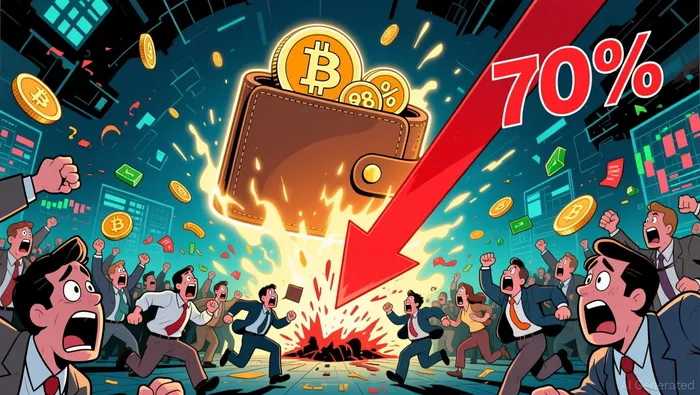
Recent market events have highlighted the fragility inherent in leveraged trading environments, with $363 million in futures contracts liquidated within a single hour. This volatility underscores the risks associated with high leverage and crowded trades, which can trigger cascading forced closures when price movements breach margin calls as market analysis indicates. The SIREN token itself suffered a 70% drop after analysts revealed that a single entity likely controls 88% of its circulating supply according to MEXC reporting. Such centralization risks undermine the decentralized ethos of the project and trigger mass sell-offs driven by fear of manipulation as reported.
In contrast, WRT aims to solve transparency issues in international aid by tokenizing exposure to infrastructure projects in regions recovering from conflict as defined in analysis. The project utilizes a fixed supply of 1 billion tokens with no mint authority, ensuring inflation resistance for long-term holders according to technical specifications. As of March 2026, the asset experienced a significant price correction, dropping its market cap to approximately $40,000 due to profit-taking by early whales according to market data. This decline is attributed to liquidity flushing rather than a fundamental failure of the protocol's rebuilding fund structure as analysis suggests.
How Do Token Centralization Risks Affect DeFi Protocol Viability?
Centralization remains a critical vulnerability for decentralized finance protocols, as evidenced by the recent turmoil surrounding the SIREN token. Investigations by on-chain analysts indicated that approximately 88% of the circulating supply could be controlled by a single wallet address according to MEXC reporting. This concentration poses significant risks to price stability and decentralized governance, as a single holder could potentially manipulate markets or execute a rug pull as analysis indicates. The event has intensified scrutiny on token distribution practices within the BNBBNB-- Chain ecosystem, highlighting the market's growing intolerance for opaque launch structures as reported.
Investors and developers are now expected to provide verifiable data on token allocations, including vesting schedules and treasury management, to maintain legitimacy according to industry standards. The rapid sell-off demonstrates how quickly sentiment can shift when fundamental concerns regarding supply distribution are revealed to the public as market data shows. Despite these risks, Siren Protocol maintains its utility through a custom Automated Market Maker designed for options pricing, which depends on underlying asset price, time decay, and volatility according to protocol documentation. The protocol continues to incentivize Liquidity Providers who deposit collateral in exchange for trading fees to maintain liquidity for niche strike prices as described.
What Role Does Tokenization Play In Post-Conflict Reconstruction Finance?
World Rebuilding Trust represents a shift toward Real-World Asset tokenization by creating a transparent mechanism for capital allocation in war-torn regions as detailed in analysis. The project differentiates itself through a Sovereign Rebuilding Instrument model that allows retail investors to participate in large-scale infrastructure funding previously reserved for institutions according to technical documentation. Approximately 40% of the supply is allocated to a dedicated rebuilding fund, managed via smart contracts that release capital only upon verified physical milestones as specified. This structure aims to solve historical issues of administrative overhead and lack of transparency in international aid as analysis indicates.
The token operates within a governance model where a Founding Council manages deployment, but the ledger remains public, allowing every transaction to be tracked according to technical specifications. WRT leverages Solana's high throughput for micro-donations and macro-investments, positioning itself as a retail-accessible version of RWA tokenization as described. While it offers high-potential returns aligned with ESG goals, it carries significant volatility risks typical of small-cap assets according to market analysis. The investment thesis relies on the Flight to Tangibility trend, where capital shifts toward assets representing physical infrastructure rather than pure speculation as reported.
Why Are Liquidity And Regulatory Compliance Paramount For Token Investors?
Selecting a cryptocurrency exchange requires analyzing structural factors beyond simple fee comparison, with liquidity being a primary determinant of market efficiency according to Finder research. High-volume exchanges can match buyers and sellers quickly, whereas low liquidity leads to price fluctuations and slippage that can erode investor returns as analysis shows. Security and custody are critical components of the exchange ecosystem, requiring users to verify if platforms offer self-custody or hold private keys in online and offline wallets according to industry guidelines. Regulatory compliance also varies, with some operators needing to register with bodies like AUSTRAC for AML and CTF compliance as reported.
The cost structure includes not just trading fees but also deposit and withdrawal costs, which can vary by payment method and currency according to exchange data. When comparing exchanges, investors should assess the breadth of supported assets and whether platforms offer advanced features like margin trading or derivatives as noted. In the 2026 market landscape, Siren has integrated Layer 2 solutions to reduce gas fees, making sophisticated hedging strategies accessible to retail traders according to protocol documentation. However, the presence of high leverage in the broader market creates a fragile environment prone to cascading forced closures when price movements trigger margin calls as market analysis indicates.

Blending traditional trading wisdom with cutting-edge cryptocurrency insights.
Latest Articles
Stay ahead of the market.
Get curated U.S. market news, insights and key dates delivered to your inbox.


AInvest
PRO
AInvest
PRO



Comments
No comments yet