
SIREN Surges Then Crashes Amid Concerns Over Token Concentration and Governance Risks
 Aime Summary
SIREN's token price surged 143.24% in 24 hours but plummeted 56.3% shortly thereafter, driven by liquidity fragmentation and governance concerns according to market analysis. - Onchain analytics suggest a single entity may control over half of the SIREN token supply, raising concerns about decentralization, unilateral governance control, and potential market manipulation as reported. - Cross-chain bridges are critical for blockchain interoperability, yet they face risks such as smart contract flaws, validator vulnerabilities, and phishing threats according to security analysis.
SIREN's recent price movements have captured attention in the digital assets market, with sharp volatility observed over a 24-hour period. The token rose nearly 143% in early March 2026 before experiencing a steep decline of over 56% just days later. Analysts attribute these swings to liquidity dynamics and concerns over the token's governance structure. The token's circulating supply and market cap have made it particularly sensitive to shifts in investor sentiment.
The token's rapid price swings raise questions about the stability of mid-cap DeFi tokens with high circulating supply and limited institutional support. SIREN's market cap fell from over $1.3 billion to below $800 million during the 24-hour plunge, highlighting the structural vulnerabilities in the token's design and governance model. Market participants are advised to monitor key support levels to gauge whether the token can stabilize after the recent sell-off.
Onchain analytics have flagged potential concentration of SIREN's token supply in a single entity, with unverified claims suggesting that one party may control up to 66.5% of the total supply. Such a level of ownership could undermine decentralized governance processes and open the token to manipulation. Analysts recommend using on-chain tools and transaction hashes to verify wallet distributions and assess the validity of these claims.
What Drives SIREN's Volatility?
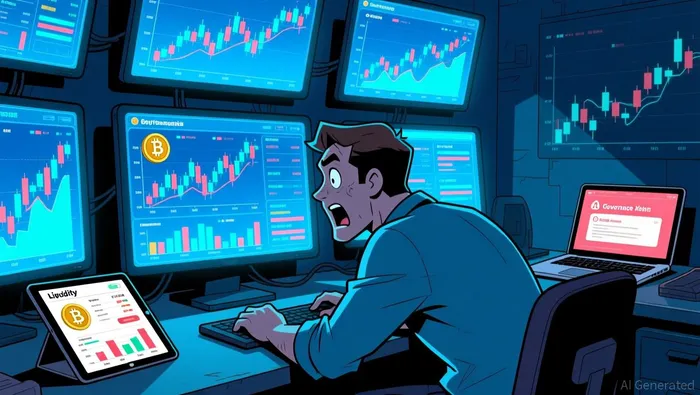
SIREN's dramatic price movements have drawn scrutiny from both retail and institutional investors. The token's volatility is attributed to liquidity fragmentation across trading venues and the lack of a robust governance model. These factors have amplified the impact of whale exits and cascading liquidations during the recent price drop.
The token's circulating supply of 728.2 million out of 1 billion exacerbates its vulnerability to large-scale selling pressure. In comparison to more stable assets, SIREN exhibits greater exposure to short-term price swings, which could deter long-term institutional interest. This makes it a high-risk, high-reward proposition for investors.
The recent price action also occurred amid broader institutional interest in tokenized finance. The CFTC's regulatory clarity and endorsements from figures like Larry Fink have spurred adoption of blockchain-based financial products. However, SIREN's structural weaknesses remain unaddressed and could limit its appeal to risk-averse investors.
What Are the Governance and Decentralization Risks?
Unverified claims that a single entity may control over 66% of the SIREN token supply raise red flags about its decentralization. Such a concentration of ownership could enable unilateral governance decisions, bypassing community input and reducing transparency. Analysts stress the importance of independent verification using blockchain explorers and labeled-entity analytics to confirm token distribution.
The lack of clear governance mechanisms makes SIREN particularly susceptible to manipulation. If a single entity holds a majority of the token supply, it could influence voting outcomes or alter network parameters without community consensus. This would undermine the core principles of decentralized finance and erode investor trust.
Cross-referencing with transaction hashes and wallet analytics is necessary to obtain an accurate snapshot of token distribution. Without this transparency, investors face execution risks for community proposals and are unable to make informed decisions about the token's long-term prospects.
The broader DeFi ecosystem is also grappling with governance risks. As projects grow in size and complexity, the need for robust governance frameworks becomes more critical. SIREN's recent volatility and onchain concentration highlight the importance of designing governance models that promote decentralization and transparency.
What Role Do Cross-Chain Bridges Play in the Ecosystem?
SIREN's price action coincided with growing adoption of cross-chain bridges as essential infrastructure for the multi-chain financial landscape. These bridges enable seamless interactions between otherwise isolated blockchains, facilitating asset transfers and smart contract execution across different networks.
However, the use of cross-chain bridges is not without risks. Smart contract flaws, validator vulnerabilities, and phishing threats remain significant concerns. The "lock-and-mint" approach used by many bridges has made them attractive targets for exploitation, leading to substantial losses in past incidents.
Investors and developers are encouraged to use non-custodial, swap-based bridges for everyday transfers, reserving lock-and-mint solutions for specialized DeFi needs. This helps mitigate risks and ensures greater control over funds. The Total Value Locked (TVL) in bridges has exceeded $21.94 billion as of March 2026, underscoring their importance in the evolving crypto ecosystem.
As the industry continues to expand, the demand for secure and reliable bridge solutions is expected to rise. Platforms that prioritize security and transparency are likely to gain greater user trust, while those with a history of vulnerabilities may struggle to attract adoption. The success of cross-chain bridges will ultimately depend on their ability to address risks and provide seamless, secure user experiences.

Blending traditional trading wisdom with cutting-edge cryptocurrency insights.
Latest Articles
Stay ahead of the market.
Get curated U.S. market news, insights and key dates delivered to your inbox.


AInvest
PRO
AInvest
PRO



Comments
No comments yet