
SIREN Price Surges 284% Amid Volatility and Liquidity Concerns
 Aime Summary
- SIREN surged 284% in 24 hours on April 4, 2026, but remains 84.3% below its all-time high of $3.61.
- The volume-to-market-cap ratio exceeded 57%, suggesting concentrated activity potentially driven by institutional or whale trading.
- A 7-day price drop of 68.3% indicates extreme short-term volatility, with the rally only partially recovering from a recent drawdown.
SIREN recorded a 284% price surge from $0.132 to $0.565 on April 4, 2026. The rapid increase followed a 68% weekly decline, suggesting a mean reversion pattern rather than fundamental strength. The $235 million trading volume nearly matched the token's $412 million market cap, signaling concentrated trading activity by large holders or institutions.
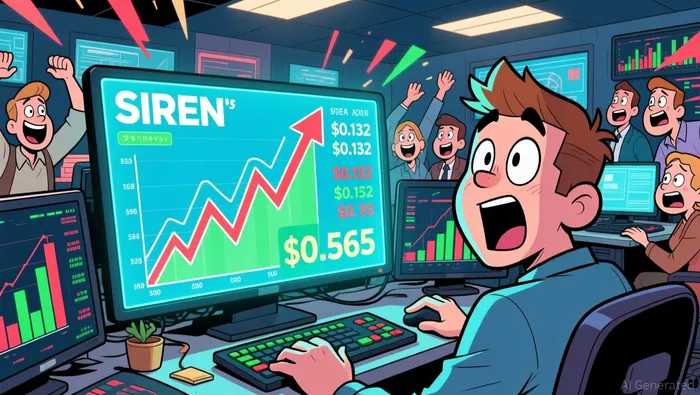
The surge occurred against a backdrop of continued weakness. SIREN remained 84.3% below its all-time high, which was reached just two weeks earlier on March 22, 2026. This volatility raises concerns about the sustainability of the rally and the potential for market manipulation.
The volume-to-market-cap ratio of 57% is significantly higher than typical altcoin trading patterns. This high ratio indicates aggressive accumulation or coordinated trading activity by large players. The intraday price range showed a 24-hour high of $0.582 and a low of $0.132, reflecting extreme volatility.
What Does the SIREN Price Volatility Mean for Investors?
The SIREN price surge appears to be driven by short-term speculative activity rather than long-term fundamentals. The 284% increase occurred within a broader downtrend, with the token experiencing an 84% decline in just two weeks from its March 22 high. This volatility suggests that the rally may be driven by technical factors or coordinated buying rather than news-driven appreciation.
The token's circulating supply of 728.2 million tokens represents 72.8% of the maximum supply of 1 billion tokens. This high circulating supply increases the likelihood of future selling pressure as more tokens become available.
What Are the Key Risk Factors for SIREN Holders?
SIREN's price volatility poses substantial risk for investors. The token's price history shows extreme boom-bust cycles, with a +2,050% increase from the March 2025 low followed by a -84% decline from the March 2026 high. This pattern indicates a highly speculative asset driven by momentum trading rather than fundamental value accumulation.
The high volume-to-market-cap ratio and the absence of clear fundamental catalysts suggest that the 284% price surge is more likely a result of technical factors or coordinated buying rather than genuine project growth. Additionally, the token's circulating supply of 728.2 million tokens represents a 27% supply overhang, which could create selling pressure as vesting schedules unlock.
What Is the Broader Market Context for SIREN?
At a market cap rank of #104, SIREN occupies an interesting position in the cryptocurrency hierarchy. The token's $412 million valuation places it above numerous established DeFi protocols but below major layer-1 competitors. The market cap increased by $304.3 million in 24 hours, matching the price appreciation almost perfectly.
The token's volatility is significantly higher than that of similar-sized tokens with sustainable growth. Tokens with sustainable growth typically show volume-to-market-cap ratios under 30% and weekly volatility below 40%. SIREN's metrics exceed both thresholds by wide margins, suggesting that the current price represents temporary equilibrium rather than fair value discovery.
The SIREN price surge highlights the risks and opportunities in the mid-cap crypto space. The token's extreme volatility and lack of fundamental catalysts suggest that investors should approach the asset with caution. The recent price movement reflects the broader challenges faced by mid-cap crypto projects in maintaining liquidity and stability in a highly speculative market.

Blending traditional trading wisdom with cutting-edge cryptocurrency insights.
Latest Articles
Stay ahead of the market.
Get curated U.S. market news, insights and key dates delivered to your inbox.


AInvest
PRO
AInvest
PRO



Comments
No comments yet