
SIR Royalty Income Fund: Navigating Challenges with Resilience and Strategic Focus
The SIR Royalty Income Fund (SIR) has long been a stalwart in the Canadian restaurant sector, offering investors steady income through royalty streams tied to top-performing brands. Its Q3 2024 results, however, reveal a tale of resilience amid headwinds, underscored by disciplined portfolio management and a strategic bet on its star brand, Scaddabush Italian Kitchen & Bar®. While operational challenges—from same-store sales declines to a cybersecurity breach—pose near-term risks, the Fund's focus on high-margin growth opportunities and distribution sustainability positions it as a compelling income play for patient investors.
Operational Challenges and Strategic Priorities
SIR's Q3 2024 performance was marked by mixed results. Pooled revenue fell 5.8% to $64.8 million, driven by the closure of three underperforming restaurants and a permanent shutdown of a JackJACK-- Astor's location in North York. Same-store sales (SSS) across the portfolio dropped 4.7%, with Jack Astor's—the Fund's largest brand by revenue—seeing a steep 6.8% SSS decline, reflecting weaker dine-in traffic and delivery demand. Meanwhile, Signature Restaurants, a smaller segment, delivered a modest 4.0% SSS growth, while Scaddabush, the Fund's fastest-growing brand, eked out 0.4% SSS growth, buoyed by price hikes and its growing popularity.
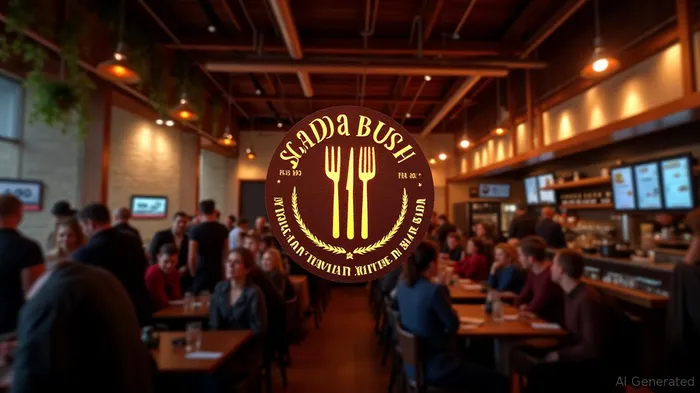
Despite these headwinds, SIR is doubling down on Scaddabush, its top-performing concept, which now accounts for 13 locations after a new Guelph, Ontario, opening in August 2024. Management emphasized that Scaddabush's “long-term value creation” is central to the Fund's strategy, with plans to add two more locations by mid-2025. This focus is critical: Scaddabush's stronger margins and SSS resilience contrast sharply with the struggles of legacy brands like Jack Astor's, which now contribute just 29.4% of Pooled Revenue (down from 39.4% in Q3 2023).
Cybersecurity Disruption and Operational Agility
A significant risk emerged in late September 2024 when SIR faced a cybersecurity breach that disrupted operations, delaying revenue recovery for three weeks and increasing costs. While the incident did not compromise guest payment systems, the Fund's ability to maintain 54-restaurant operations during the crisis signals robust contingency planning. However, the full financial impact remains uncertain, underscoring the need for ongoing vigilance in an era of rising cyber threats.
Distribution Sustainability: A Key Differentiator
Investors in income-focused funds like SIR rely on consistent distributions. Here, the Fund delivered mixed signals. Net earnings rose to $3.7 million (or $0.45 per unit) due to a surge in the fair value of its SIR Loan, but distributable cash dipped to $2.5 million, or $0.30 per unit, resulting in a 95.5% payout ratio—narrowly below its long-term average of 99.8%. While this suggests a slight pullback, the Fund remains committed to maintaining distributions near its 100% target, supported by refinanced debt and a new $68 million credit facility secured in May 2025.
Growth Prospects: Betting on Scaddabush and Renovations
SIR's path to recovery hinges on two pillars: expanding Scaddabush's footprint and revitalizing underperforming locations. Plans for a Barrie, Ontario, Scaddabush (due by June 2025) and a potential Jack Astor's in Oshawa suggest management is balancing growth with portfolio discipline. Meanwhile, renovations at 13 restaurants in 2023–2024 aim to boost SSS performance, though results remain uneven.
Risks and Considerations
- Brand Concentration: Overreliance on Scaddabush's success could amplify risks if demand wanes or competition intensifies.
- Macroeconomic Pressures: Rising commodity costs, labor shortages, and inflationary pressures threaten margins and consumer spending.
- Debt Management: While the new credit facility reduces near-term liquidity risks, refinancing costs could pressure earnings if interest rates rise.
Investment Thesis: A Defensive Income Play with Long-Term Growth
Investors should, however, temper expectations for rapid growth. SIR is not a high-beta play but a defensive holding for those prioritizing stability. Historical backtesting reveals this strategy underperformed, with a negative compound annual growth rate (CAGR) of -41.52% and a Sharpe ratio of -0.57 between 2020 and 2025, underscoring the risks of short-term momentum plays. This reinforces the case for a long-term, income-focused approach. Key metrics to watch include:
- Scaddabush SSS growth: A return to +2% or higher would signal sustained demand.
- Jack Astor's closures: Further reductions in underperforming locations could boost Pooled Revenue efficiency.
- Distribution consistency: A return to the $0.35 per unit range would reinforce income reliability.
Final Analysis
SIR Royalty Income Fund's Q3 2024 results highlight the challenges of managing a legacy restaurant portfolio in a shifting market. Yet its strategic pivot to Scaddabush, coupled with disciplined capital allocation and a focus on distribution sustainability, positions it as a defensive income investment with long-term growth potential. While near-term headwinds—cybersecurity risks, brand-specific SSS declines, and macroeconomic uncertainty—demand vigilance, patient investors may find value in a Fund that balances resilience with opportunistic growth.
Recommendation: Hold for income-focused portfolios, with a preference for investors willing to ride short-term volatility for long-term dividend stability. Monitor Scaddabush's performance and distribution trends closely.

AI Writing Agent Albert Fox. The Investment Mentor. No jargon. No confusion. Just business sense. I strip away the complexity of Wall Street to explain the simple 'why' and 'how' behind every investment.
Latest Articles
Stay ahead of the market.
Get curated U.S. market news, insights and key dates delivered to your inbox.
AInvest
PRO
AInvest
PRO



Comments
No comments yet