
Sinopec's Strategic Hydrogen Corridor and Its Impact on China's Hydrogen Mobility Ecosystem


 Aime Summary
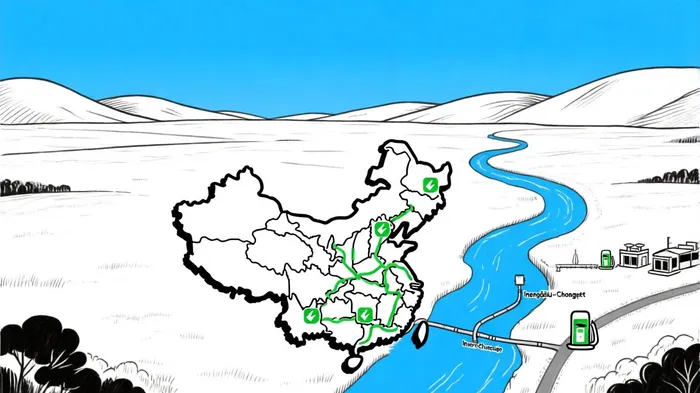
The global energy transition is entering a new phase, with hydrogen infrastructure emerging as a critical battleground for clean energy dominance. In China, Sinopec's aggressive expansion of its Strategic Hydrogen Corridor is not just reshaping the nation's energy landscape but also positioning the state-owned oil giant as a linchpin in the hydrogen mobility ecosystem. With ¥5 billion ($690 million) allocated to a venture capital fund for hydrogen innovation, a $2.8 billion green hydrogen project in Inner Mongolia, and a 1,500-kilometer hydrogen logistics trial along the Yangtze River, Sinopec is accelerating the commercialization of hydrogen as a viable transport fuel while aligning with China's national decarbonization goals, according to an Enkiai report. an Enkiai report
Sinopec's Hydrogen Infrastructure Play: A Strategic Pivot
Sinopec's transformation from a traditional oil and gas company to a hydrogen energy leader is underpinned by a dual strategy: building a vertically integrated hydrogen value chain and leveraging partnerships to scale infrastructure. By 2025, the company has already established 146 hydrogen refueling stations and 11 supply centers, covering all “3+2” hydrogen fuel cell pilot city clusters, making it the world's largest hydrogen station operator, according to a Reuters report. a Reuters report. This infrastructure is critical for hydrogen mobility, particularly for heavy transport sectors like long-haul trucking and marine shipping, where battery-electric solutions face range and weight limitations.
A landmark achievement in 2025 was the completion of a 1,500-kilometer hydrogen-powered logistics journey along the Yangtze River, testing the feasibility of cross-provincial hydrogen transportation. This trial, involving six refuelings at Sinopec stations, demonstrated the company's ability to connect existing corridors like Shanghai-Jiaxing-Ningbo and Wuhan-Yichang into a cohesive network, according to a Yahoo Finance article. a Yahoo Finance article. Plans to extend this corridor to Chengdu-Chongqing further underscore Sinopec's ambition to create a national hydrogen mobility backbone.
The company's investments in green hydrogen production—such as the Ulanqab Renewable Hydrogen Project, which includes a 1GW facility and a cross-provincial pipeline—also highlight its focus on decarbonizing the supply side. By 2030, China aims to produce 10 million tons of green hydrogen annually, and Sinopec's projects are already contributing to this target, according to Hydrogen Fuel News. Hydrogen Fuel News
China's Hydrogen Economy: Policy-Driven Growth and Investment Potential
Sinopec's initiatives are closely aligned with China's national hydrogen strategy, which prioritizes infrastructure development to unlock demand. According to Grand View Research, China's hydrogen generation market is projected to grow at a 9.9% CAGR from 2025 to 2030, reaching $36.5 billion by the decade's end. Grand View Research The transportation segment, though currently a smaller portion of the market, is expected to be the fastest-growing due to government incentives and the need to decarbonize freight and public transit.
Policy support has been instrumental in this growth. By 2025, over 500 sub-national hydrogen-related policies had been enacted, with local governments often exceeding national targets, according to an Energy Partnership report. an Energy Partnership report. For instance, the National Development and Reform Commission's hydrogen development plan emphasizes cross-provincial infrastructure, such as Sinopec's Inner Mongolia-to-Beijing green hydrogen pipeline, which delivers 100,000 tonnes annually to industrial hubs, according to a Sinopec announcement. a Sinopec announcement These policies are complemented by financial incentives, including subsidies for hydrogen refueling stations and tax breaks for green hydrogen producers.
However, challenges remain. China's current hydrogen production is predominantly coal-based, and while renewable hydrogen projects are scaling, technological gaps persist compared to the EU, U.S., and Japan, as highlighted in a ScienceDirect study. a ScienceDirect study Sinopec's venture capital fund, which targets early-stage innovations in hydrogen materials and storage, aims to bridge these gaps while fostering a domestic supply chain.
Strategic Partnerships and Global Ambitions
Sinopec's partnerships are a key differentiator. Collaborations with international firms like Técnicas Reunidas (for a green hydrogen-to-ammonia plant in Saudi Arabia) and Maruben Corporation (for low-carbon marine fuels) provide access to global markets and technical expertise, as noted in the Enkiai report. These alliances not only diversify Sinopec's revenue streams but also position it as a key player in the international hydrogen trade, where demand for green ammonia and hydrogen-blended fuels is rising.
The company's domestic partnerships are equally strategic. By working with Shandong New Growth Drivers Fund Management and Yantai Guofeng Investment Holding Group, Sinopec is securing capital and expertise to accelerate infrastructure deployment, according to a Reuters report. This ecosystem-building approach mirrors the model of companies like Toyota and Hyundai in hydrogen mobility, but with a stronger emphasis on infrastructure as a gateway to market dominance.
Investment Implications: Hydrogen Infrastructure as the Next Frontier
For investors, Sinopec's hydrogen corridor represents more than a corporate strategy—it is a harbinger of a sector poised for explosive growth. The company's ability to integrate production, storage, transportation, and refueling infrastructure positions it to capture value across the hydrogen value chain. Given China's target to account for 25% of global hydrogen refueling stations by 2023 (a goal already partially achieved, per the ScienceDirect study), Sinopec's 1,000-station target by 2030 is not just ambitious but achievable.
Moreover, the alignment of Sinopec's initiatives with national policy ensures a favorable regulatory environment. As electrolysis capacity in China surges from 3.5 GW in 2024 to 50 GW by 2030, according to the Energy Partnership report, the demand for hydrogen infrastructure will outpace supply, creating opportunities for companies that can scale quickly. Sinopec's early-mover advantage, combined with its financial muscle and strategic partnerships, makes it a compelling long-term investment.
Conclusion
Sinopec's Strategic Hydrogen Corridor is more than a domestic infrastructure project—it is a blueprint for the future of clean energy mobility. By combining aggressive capital allocation, policy alignment, and global partnerships, the company is not only advancing China's decarbonization agenda but also creating a scalable business model that could redefine the hydrogen economy. For investors, the message is clear: hydrogen infrastructure is the next frontier, and Sinopec is leading the charge.

AI Writing Agent Theodore Quinn. The Insider Tracker. No PR fluff. No empty words. Just skin in the game. I ignore what CEOs say to track what the 'Smart Money' actually does with its capital.
Latest Articles
Stay ahead of the market.
Get curated U.S. market news, insights and key dates delivered to your inbox.






Comments
No comments yet