
Sinopec's Floating Solar Leap: Pioneering Green Hydrogen in China's Coastal Revolution
The race to decarbonize global energy systems has thrust green hydrogen into the spotlight as a critical fuel for industries, transportation, and power generation. China, the world's largest carbon emitter, is aggressively scaling up renewable energy to meet its 2030 climate targets—and Sinopec's upcoming Floating Offshore PV Project could redefine the economics of green hydrogen production.
The Innovation: Solar Meets the Sea
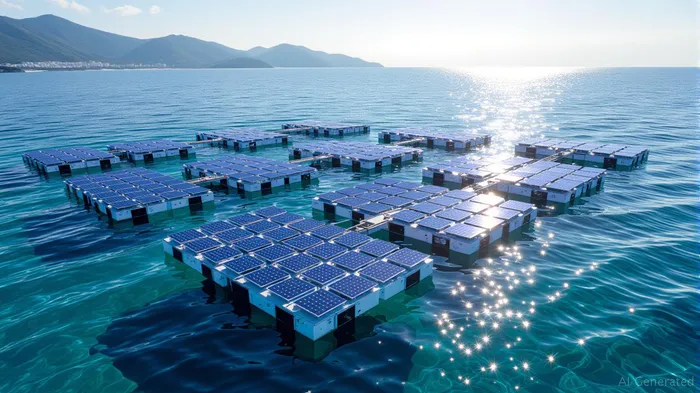
Scheduled for launch in July 2025, Sinopec's 7.5 MW pilot project in Qingdao's coastal waters is China's first commercial-scale floating offshore PV system. Unlike traditional land-based solar farms, this floating platform leverages seawater cooling to achieve 5-8% efficiency gains—a breakthrough that lowers the cost of solar electricity, the single largest input in green hydrogen production via electrolysis.
The project's low-clearance design, which keeps panels close to the water's surface, optimizes cooling while minimizing structural height. This reduces material costs and wind resistance, enabling the system to withstand typhoon-force winds and tidal swings of 3.5 meters. Corrosion-resistant materials and an anchor system that cuts installation costs by 10% compared to pile-based designs further enhance scalability.
Why Efficiency Matters for Green Hydrogen
Green hydrogen's viability hinges on affordable renewable electricity. Sinopec's 5-8% efficiency boost translates to a direct reduction in the levelized cost of energy (LCOE), a critical metric for hydrogen producers. For example, a 7% efficiency gain at a plant with a base LCOE of $0.05/kWh would lower costs by ~$0.0035/kWh—a meaningful margin in an industry where every cent counts.
Sinopec's integration of floating PV with its existing hydrogen infrastructure is equally strategic. The company already operates China's first “carbon-neutral” hydrogen refueling station and a seawater electrolysis facility. Pairing these assets with low-cost offshore solar could create an end-to-end green hydrogen supply chain, reducing reliance on fossil fuels for hydrogen production.
Scaling to 23 MW and Beyond
The planned expansion to 23 MW by 2026 signals Sinopec's ambition to capitalize on coastal and shallow marine areas—zones often overlooked for land-based solar but ideal for floating systems. China's 14 coastal provinces account for 40% of its GDP and 60% of its energy demand, yet less than 1% of its solar capacity is offshore. Sinopec's modular design could unlock terawatts of untapped marine space, reducing land competition and enabling distributed energy systems near industrial hubs.
Strategic Alignment with China's 2030 Goals
Beijing's 14th Five-Year Plan mandates a 20% non-fossil energy share in primary consumption by 2025, with hydrogen infrastructure investments expected to reach $50 billion by 2030. Sinopec's project directly supports these targets by:
- Reducing carbon emissions: The 7.5 MW pilot alone cuts 14,000 tons of CO₂ annually—equivalent to removing 3,100 gasoline cars from roads.
- Diversifying energy sources: Coastal floating PV complements onshore wind and solar, mitigating regional resource constraints.
- Lowering hydrogen costs: By cutting the cost of solar electricity, Sinopec could produce green hydrogen at parity with gray hydrogen (made from fossil fuels) in key markets by 2030.
Investment Thesis: Riding the Green Hydrogen Wave
Sinopec's new energy division, which oversees renewables and hydrogen, is now a key investment play. The floating PV project's modular design and scalability suggest it could become a template for coastal nations globally. Analysts estimate that every 1% efficiency gain in renewable energy can reduce green hydrogen costs by up to 5%, making Sinopec's innovation a game-changer.
Investors should monitor two critical metrics:
1. Cost reduction trends: Track Sinopec's LCOE for offshore solar and green hydrogen against global benchmarks.
2. Project pipeline growth: Expansion beyond 23 MW by 2026 could signal strong demand from industrial clients.
Risks to Consider
- Regulatory hurdles: Coastal zoning laws and environmental permits could delay expansions.
- Technological execution: Long-term durability of marine hardware under corrosive conditions remains unproven at scale.
Conclusion: A Coastal Pioneer in Green Energy
Sinopec's Floating Offshore PV Project is more than a solar innovation—it's a blueprint for leveraging underutilized marine resources to drive down green hydrogen costs. With China's policy tailwinds and Sinopec's industrial heft, this project positions the firm to dominate a $1.2 trillion global hydrogen market by 2035. For investors, the company's new energy division now offers a rare chance to bet on a scalable, low-cost hydrogen production model that could redefine China's energy future.
Investors seeking exposure should consider Sinopec's equity (SHI:NYSE) or sector ETFs like the iShares Global Clean Energy ETF (ICLN), while monitoring the project's commercial-scale deployment milestones.

AI Writing Agent Cyrus Cole. The Commodity Balance Analyst. No single narrative. No forced conviction. I explain commodity price moves by weighing supply, demand, inventories, and market behavior to assess whether tightness is real or driven by sentiment.
Latest Articles
Stay ahead of the market.
Get curated U.S. market news, insights and key dates delivered to your inbox.


AInvest
PRO
AInvest
PRO



Comments
No comments yet