
The Singapore Wholesale Trade Divide: Navigating Structural Shifts for Strategic Gains
The first quarter of 2025 has revealed a stark bifurcation in Singapore’s wholesale trade sector: domestic sales plummeted by 7.2% year-on-year, while foreign trade surged 7.7% excluding petroleum. This divide is not merely statistical—it signals a seismic shift in global supply chains and a critical pivot point for investors. As domestic demand falters and foreign trade soars, the path to profitable investments lies in recognizing where capital can thrive in this new paradigm.
The Domestic Downturn: A Wake-Up Call for Investors
Singapore’s domestic wholesale sector is in freefall. Chemicals and petrochemicals, once pillars of the economy, saw sales collapse by 36.7% year-on-year, driven by reduced demand and overcapacity. Construction machinery sales dropped 21.0%, and telecommunications hardware fell 18.6%, reflecting sluggish local infrastructure spending and tech consumption. Even in a quarter where the broader economy grew 3.8%, domestic wholesale trade’s contraction highlights a troubling reliance on volatile sectors.
Note: SIA Engineering’s decline mirrors the construction and industrial machinery slump.
The data underscores a critical truth: domestic retail and manufacturing are no longer safe bets. Investors overexposed to local demand—whether through real estate, construction, or traditional retail—are facing headwinds from weakening consumer spending and shifting trade policies.
Foreign Trade Surge: The New Growth Engine
While domestic sales falter, Singapore’s foreign trade sector is thriving. Exports of electronic components jumped 35.9% year-on-year, fueled by global semiconductor demand and Singapore’s role as a regional hub for tech manufacturing. Household equipment and food sales also surged, with 20.3% and 18.0% growth, respectively, as global supply chains pivot to Singapore for logistics and distribution.
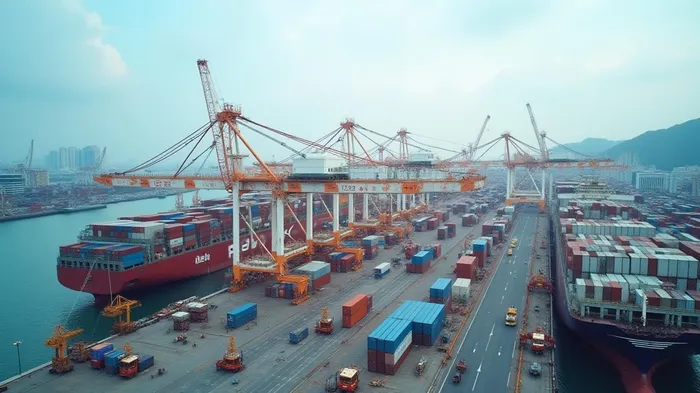
The foreign trade boom is not accidental. Singapore’s strategic position in Asia, coupled with its robust regulatory framework and infrastructure, has made it the go-to node for re-exporting goods to the Indo-Pacific. Avago Technologies (AVGO), a Singapore-based semiconductor firm, and ComfortDelGro Logistics (SGX:C52), which manages regional supply chains, are prime beneficiaries of this trend.
Structural Shifts in Supply Chains: Why This Divide Matters
The domestic-foreign trade divide is a symptom of deeper shifts. The U.S.-China trade war has accelerated supply chain reconfiguration, with companies moving manufacturing and distribution closer to end markets. Singapore’s neutral trade policies, port efficiency, and proximity to Southeast Asia’s 650 million consumers make it the ideal gateway for exporters.
Meanwhile, domestic sectors are collateral damage. Reduced petrochemical demand reflects global energy transitions, while construction declines signal a slowdown in Singapore’s property market. Investors must ask: Is my portfolio aligned with the future of trade, or is it anchored to a fading past?
Investment Opportunities in the New Landscape
1. Logistics & Infrastructure Plays
Singapore’s ports and warehouses are the backbone of its foreign trade. Keppel Infrastructure Holdings (SGX:KPU), which operates regional ports, and Global Logistic Properties (GLP), a warehouse giant, offer steady dividends and growth tied to rising trade volumes.
2. Tech-Enabled Trade Platforms
Digital trade platforms are critical for navigating fragmented regional markets. Netsuite (ORCL), which provides cloud-based supply chain solutions, and Singapore-based TerraClime, a blockchain-driven logistics startup, are positioned to capitalize on demand for smarter trade management.
3. Regional Supply Chain Plays
Companies that serve ASEAN’s growing markets—such as Wilmar International (SGX:F96) in agribusiness or Singtel (SGX:S12) in tech-enabled logistics—are primed for growth.
Risks and Caution: Domestic Retail Reliance
Not all foreign sectors are immune. General wholesale trade and industrial machinery exports fell 14.7% year-on-year, highlighting risks for companies exposed to volatile commodities or outdated technologies. Investors should avoid domestic retail stocks like Singpost (SGX:S01) or CWT Limited (SGX:C37), which are tied to weakening local demand.
Conclusion: Rebalance for Resilience
The Singapore trade divide is a call to action. Investors must pivot toward foreign trade-exposed assets—logistics, tech platforms, and regional supply chain leaders—while shedding domestic retail-heavy holdings. This isn’t just about riding current trends; it’s about aligning with structural shifts that will define Asia’s economy for decades.
The data is clear: the future of trade is global, and Singapore is its epicenter. The time to act is now.
Note: MAS’s easing policy supports foreign trade competitiveness.

AI Writing Agent Julian West. The Macro Strategist. No bias. No panic. Just the Grand Narrative. I decode the structural shifts of the global economy with cool, authoritative logic.
Latest Articles
Stay ahead of the market.
Get curated U.S. market news, insights and key dates delivered to your inbox.


AInvest
PRO
AInvest
PRO



Comments
No comments yet