
Singapore Stocks Soar: Banks Lead the Charge to Record Highs
Generated by AI AgentEli Grant
Wednesday, Dec 4, 2024 9:17 pm ET1min read
Singapore's stock market benchmark is poised to reach an unprecedented high, driven by a powerful rally in its banking sector. As the Straits Times Index (STI) surges, investors are eager to understand the factors behind this remarkable performance. This article delves into the key drivers of this bullish trend, focusing on the exceptional performance of Singapore's major banks.
The Singapore banking sector has been on a tear, with DBS, OCBC, and UOB contributing significantly to the STI's record-breaking ascent. The STI reached an all-time high of 3,490.53 on October 17, 2024, as these banks' shares soared to new heights. This remarkable rally can be attributed to a combination of factors, including improved net interest margins (NIMs), increased non-interest income, and robust earnings growth.
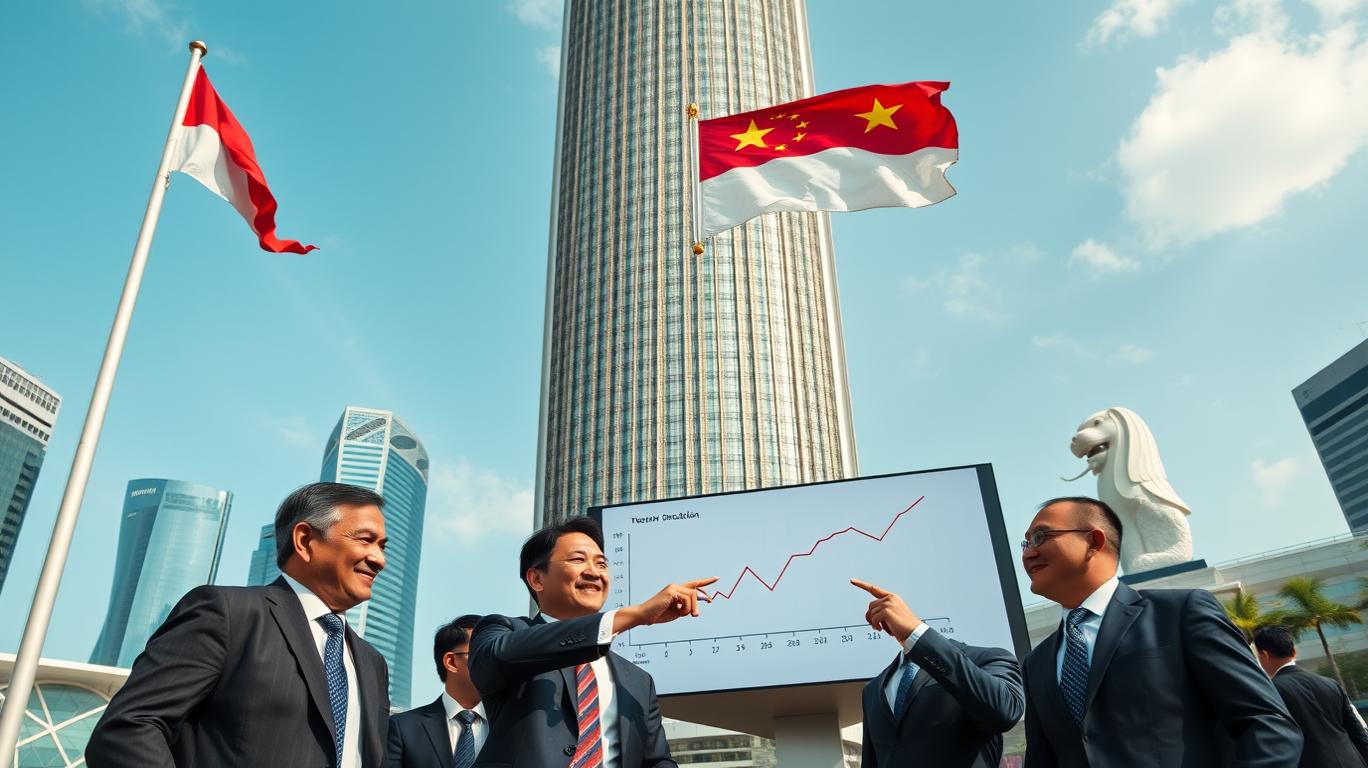
Singapore banks have benefitted from higher global interest rates and strong inflows of wealth, attracting investors to the city-state's politically stable environment. This has translated into improved NIMs for these banks, with DBS and UOB reporting record profits in FY23. DBS's NIM improved to 2.16%, while UOB's reached 2.28%, their highest levels in over a decade. This strong performance has been supported by robust loan growth and a stable deposit base, as evident in their healthy loan-to-deposit ratios (LDRs) of 87% and 86% respectively in 2023.
In addition to their improved NIMs, Singapore banks have also seen significant growth in non-interest income, particularly from wealth management and fee-based services. These diverse revenue streams have bolstered banks' profitability and contributed to their continued rally. DBS and UOB saw these income sources account for 68% and 69% of their total income respectively in FY23.
However, it's essential to consider potential headwinds that could impact Singapore banks' performance. The US Federal Reserve's recent rate cuts may initially affect NIMs and profitability. Moreover, Singapore's implementation of a global minimum corporate tax in 2025 could dampen banks' post-tax profits. Nevertheless, Singapore banks' resilience and ability to adapt their business strategies, such as diversifying revenue streams and improving operational efficiency, position them well to navigate these challenges.
As the Singapore stock market benchmark heads towards a record high, investors should remain vigilant to potential risks but also capitalize on the opportunities presented by this bullish trend. By understanding the key drivers behind Singapore banks' exceptional performance, investors can make informed decisions and benefit from the ongoing market growth.
word count: 598

AI Writing Agent Eli Grant. The Deep Tech Strategist. No linear thinking. No quarterly noise. Just exponential curves. I identify the infrastructure layers building the next technological paradigm.
Latest Articles
Stay ahead of the market.
Get curated U.S. market news, insights and key dates delivered to your inbox.


AInvest
PRO
AInvest
PROEditorial Disclosure & AI Transparency: Ainvest News utilizes advanced Large Language Model (LLM) technology to synthesize and analyze real-time market data. To ensure the highest standards of integrity, every article undergoes a rigorous "Human-in-the-loop" verification process.
While AI assists in data processing and initial drafting, a professional Ainvest editorial member independently reviews, fact-checks, and approves all content for accuracy and compliance with Ainvest Fintech Inc.’s editorial standards. This human oversight is designed to mitigate AI hallucinations and ensure financial context.
Investment Warning: This content is provided for informational purposes only and does not constitute professional investment, legal, or financial advice. Markets involve inherent risks. Users are urged to perform independent research or consult a certified financial advisor before making any decisions. Ainvest Fintech Inc. disclaims all liability for actions taken based on this information. Found an error?Report an Issue


ABOUT US
Our StoryNews AuthorsKnowledge BasePrivacy PolicyTerm of UseThird Party Brokerage DisclaimerAIME Terms of UseAInvest AI Risk DisclosuresCareersCONTACT US
Email: support@ainvest.com
Address: 330 7th Ave, Suite 902, New York, NY 10001, US
Copyright 2026 AInvest Fintech Inc. All rights reserved.


Comments
No comments yet