
Singapore Retail Sales Plunge 4.1% After Strong Rebound
 Aime Summary
Singapore's retail sector861183-- took an unexpected hit in April 2026, with retail861183-- sales declining by 4.1% in the latest monthly report. This sharp drop contrasts with the prior month's strong 6.0% increase and suggests a possible cooling in consumer spending amid ongoing economic uncertainty. While small businesses in the city-state continue to invest in hiring and innovation, the retail sector's performance highlights a growing divide between business resilience and consumer behavior.
What the Latest Retail Sales Data Reveals About Singapore's Consumer Behavior
The drop in retail sales is notable as it reflects shifting patterns in consumer spending. Unlike the prior month's rebound, the April reading suggests that households may be tightening budgets or delaying non-essential purchases. This aligns with broader global trends where inflationary pressures and macroeconomic uncertainty continue to dampen consumer confidence. Although businesses are expanding and investing in productivity-enhancing technology, the retail data underscores that consumer demand remains a critical wildcard in Singapore's economic outlook.
Retail sales figures are closely watched for their ability to capture immediate shifts in consumer behavior. A contraction in this indicator often foreshadows broader economic slowdowns or changes in domestic demand. In Singapore's case, the decline could reflect a combination of factors, including higher savings rates, reduced discretionary spending, or a shift in consumption patterns toward online or non-retail sectors.
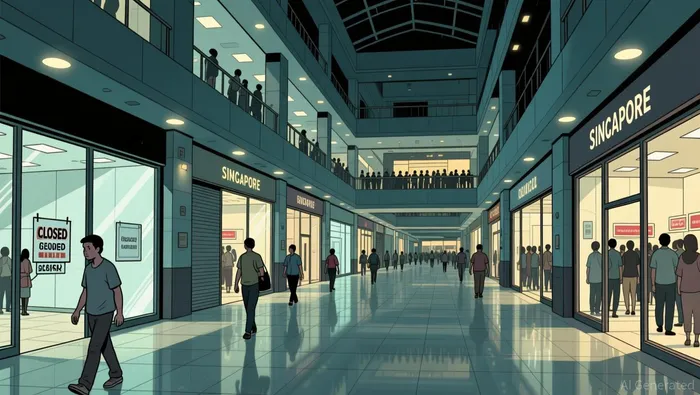
How the Drop in Retail Sales Compares to Previous Trends
The latest retail sales reading contrasts sharply with the strong 6.0% increase reported in the prior month, which had raised hopes for a stronger-than-expected rebound in consumer activity. The previous month's gain was likely driven by seasonal factors, promotional events, and pent-up demand following the early part of the year. However, the current contraction suggests that these drivers may have run their course, and that consumer spending is now more sensitive to macroeconomic signals such as inflation, interest rates, and employment outlooks.
This volatility is not uncommon in Singapore's retail sector, which is highly exposed to both domestic and international economic conditions. The recent drop, however, is the largest monthly decline since 2024 and raises questions about the durability of the sector's recent momentum. For context, the annual growth rate of retail sales in Singapore has remained relatively stable in recent years, but monthly fluctuations tend to be more pronounced due to the city-state's open economy and exposure to global trade dynamics.
Why This Indicator Matters for Local Businesses and Global Investors
Retail sales are more than just a headline number—they have tangible implications for both local businesses and global investors. For businesses, a decline in sales may signal the need to adjust inventory, marketing strategies, or product offerings to meet shifting consumer preferences. In Singapore, where small businesses are actively investing in innovation and hiring, the retail sales data serves as a real-time barometer of demand and can influence business planning and capital allocation.
For investors, the drop in retail sales could be an early signal of softening domestic demand, which may influence broader economic indicators such as GDP and employment data. While Singapore's overall economic outlook remains cautiously optimistic—supported by strong performance in the electronics sector and continued hiring—retail data adds a layer of complexity. Investors may want to monitor upcoming inflation data, employment reports, and business confidence surveys to gauge whether the current retail weakness is an isolated blip or part of a broader trend.
As the data landscape continues to evolve, the retail sales figures are a reminder of the nuanced dynamics at play in Singapore's economy. While businesses remain resilient and optimistic about the future, consumer behavior continues to be a critical variable that could shape the city-state's path ahead.

Stay ahead of the market.
Get curated U.S. market news, insights and key dates delivered to your inbox.


AInvest
PRO
AInvest
PRO



Comments
No comments yet