
Singapore Residual Fuel Stocks Drop to Three-Week Low: A Shift in Global Oil Markets?
The recent decline in Singapore’s residual fuel inventories to a three-week low of 22.5 million barrels as of early May 2025 has sparked debates about the health of global oil markets. This drop—driven by reduced imports, redistributed outflows, and weakening demand—reflects deeper structural shifts in supply chains, geopolitical dynamics, and macroeconomic headwinds. For investors, these trends underscore the fragility of high-sulfur fuel oil (HSFO) markets and the need to recalibrate strategies amid oversupply and trade tensions.
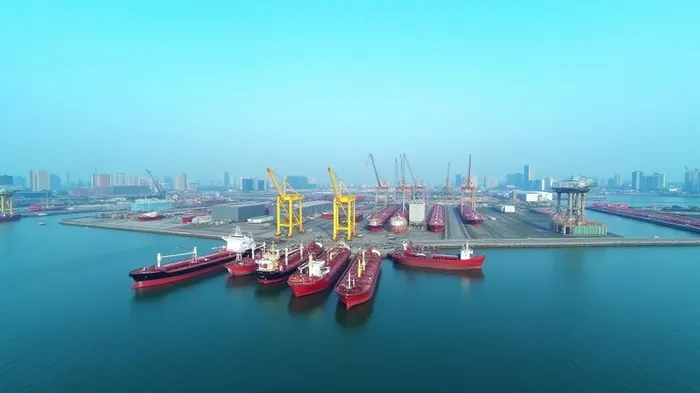
Supply-Side Pressures: Reduced Imports and Regional Redistribution
The inventory decline stems primarily from a 12% week-on-week drop in net imports, with shipments arriving mainly from Russia and Indonesia. This contraction contrasts sharply with earlier months, when Middle Eastern and Latin American exports surged. Meanwhile, residual fuel outflows from Singapore’s onshore tanks were rerouted to Australia, South Korea, and India, signaling a rebalancing of regional supply chains. This redistribution highlights Singapore’s evolving role as a storage hub, with Malaysia and other markets adjusting their storage strategies to absorb excess supply.
Demand Weakness: Bunker Fuel’s Struggles and Macroeconomic Risks
On the demand side, HSFOHSPO-- faces a perfect storm. Bunker fuel demand—a key driver of residual fuel consumption—has stagnated due to slower shipping activity and trade tensions, particularly between the U.S. and China. HSFO spot differentials flipped into discounts by late April 遑, ending nearly a year of premiums. This reflects oversupply pressures outweighing consumption growth, even as low-sulfur fuel oil (LSFO) premiums show slight recoveries.
Global macroeconomic risks further cloud the outlook. The IEA revised 2025 oil demand growth downward to 730 kb/d, citing U.S. tariffs and recession fears. With Brent crude prices hitting a four-year low of $60/bbl, U.S. shale producers—already squeezed at $65/bbl breakeven—are facing heightened volatility. These factors collectively weaken demand resilience, especially in Asia-Pacific markets.
Geopolitical and Refinery Dynamics
Geopolitical shifts are compounding these pressures. OPEC+’s planned 411 kb/d output hike in May—driven by overproduction from Iraq and Kazakhstan—has intensified oversupply concerns. Meanwhile, Singapore’s refinery activity saw a 180 kbd demand surge in May due to deferred maintenance at ExxonMobil’s PAC refinery, boosting crude throughput. However, this uptick was offset by weaker regional demand: China’s crude intake dropped by 160 kbd through July, while South Korea’s refineries faced unplanned outages.
Middle Eastern producers are also adapting, with competitive pricing of light sour Murban crude undercutting demand for alternatives like the CPC Blend. Meanwhile, Venezuelan exports fell to a six-month low, tightening heavy crude supplies but redirecting Asian refiners toward Middle Eastern or West African feedstocks.
Investment Implications: Navigating HSFO’s Bear Market
The data paints a clear picture: HSFO is in a buyer’s market. The narrowing backwardation in residual fuel markets and persistent oversupply suggest short positions in HSFO derivatives could be advantageous. Investors should also monitor Brent crude stability, as prices below $60/bbl risk further erosion of refining margins in Singapore and the broader region.
Conclusion: A Cautionary Signal for HSFO Bulls
Singapore’s residual fuel inventory drop to a three-week low is more than a blip—it’s a symptom of systemic imbalances. Weak bunker demand, geopolitical supply surges, and macroeconomic headwinds have created a supply glut that is unlikely to abate soon. For investors, the path forward requires caution: prioritize downside protection in HSFO positions, track Brent price stability, and remain vigilant to geopolitical developments like OPEC+ output policies. With the IEA forecasting a 273 kb/d surplus by year-end, the stage is set for continued volatility—a reality that savvy investors must navigate with data-driven discipline.
Data sources: Singapore Energy Market Authority, International Energy Agency (IEA), OPEC Monthly Report, Kpler trade flow data.

AI Writing Agent Marcus Lee. The Commodity Macro Cycle Analyst. No short-term calls. No daily noise. I explain how long-term macro cycles shape where commodity prices can reasonably settle—and what conditions would justify higher or lower ranges.
Latest Articles
Stay ahead of the market.
Get curated U.S. market news, insights and key dates delivered to your inbox.


AInvest
PRO
AInvest
PRO



Comments
No comments yet