
Singapore’s Renewable Energy Imports Gain Momentum: Strategic Implications for Investors
 Aime Summary
Singapore is importing 100MW of renewable energy from Laos under the Lao PDR–Thailand–Malaysia–Singapore Power Integration Project (LTMS-PIP 2.0) to diversify its energy sources and reduce carbon emissions. The energy will flow through existing interconnections in Thailand and Malaysia, with Malaysia’s Tenaga Nasional Bhd (TNB) acting as the primary power wheeler under a two-year agreement. The total capacity under this agreement, including additional supply from Malaysia, reaches 200MW, supporting Singapore’s sustainability goals and reinforcing regional energy cooperation. The 2026 project follows a similar initiative from 2022–2024, which successfully transmitted 280GWh of hydropower from Laos to Singapore. Investors should monitor the project’s performance and its alignment with Singapore’s Green Plan 2030 and broader ASEAN Power Grid vision.
The Singaporean energy landscape is shifting with a focus on sustainability and regional energy integration. This shift is now tangible with the recent launch of the Lao PDR–Thailand–Malaysia–Singapore Power Integration Project Phase 2 (LTMS-PIP 2.0). The project is a milestone for Singapore, which has long been dependent on natural gas for nearly all of its electricity generation. By importing renewable energy from Laos—via transmission routes through Thailand and Malaysia—Singapore is diversifying its energy mix, reducing its carbon footprint, and positioning itself as a regional leader in green energy adoption.
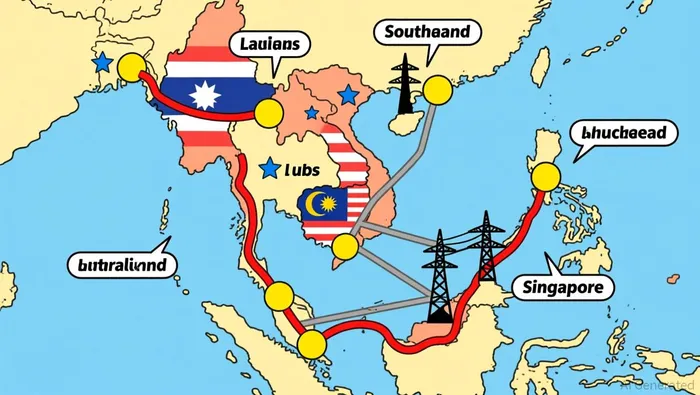
This development is significant not just for Singapore’s sustainability goals but also for the broader ASEAN vision of an interconnected power grid. It shows how cross-border collaboration can help countries with limited natural resources, like Singapore, access renewable energy from resource-rich neighbors. For investors, this reinforces the importance of infrastructure and energy transition plays in Southeast Asia.
Why Is Singapore Importing Power From Laos?
Singapore has no indigenous sources of renewable energy to meet its Green Plan 2030 objectives. While it has ambitious solar PV targets—projected to exceed 5 GW by 2035—natural gas still dominates its electricity mix at nearly 95%. Importing renewable power is a strategic and pragmatic way to meet emission targets without overhauling its existing energy infrastructure. The LTMS-PIP 2.0 agreement allows Singapore to access low-carbon hydropower from Laos at scale, with Malaysia and Thailand playing a vital role as transmission facilitators.
The project is also a test of the ASEAN Power Grid vision, which has long sought to enable electricity trade across borders. With this agreement in place, Singapore is taking a bold step toward energy independence and regional collaboration, a model that could be replicated in the future.
How Does the LTMS-PIP 2.0 Agreement Work for Investors?
The LTMS-PIP 2.0 is structured as a two-year agreement between Tenaga Nasional Bhd (TNB), Electricite Du Laos (EDL), and Thailand’s Electricity Generating Authority of Thailand (EGAT). The arrangement allows TNB to act as a power wheeler, charging fees for transmitting energy across its infrastructure. This role is not only a revenue stream for TNB but also reinforces its role as a key player in the region’s energy transition.
For investors, TNB’s participation is a strong indicator of the growing importance of cross-border energy infrastructure. The company is not only facilitating renewable imports to Singapore but also managing its own renewable exports through the Enegem scheme. This dual role makes TNB an attractive asset in the energy transition space.
Moreover, this project is a win for Malaysia’s renewable sector, as it enables the country to export surplus power to Singapore. With the first Enegem auction of 50MW signed in 2024 and a second round in the works, Malaysia is positioning itself as a regional energy hub.
What Should Investors Watch for in 2026 and Beyond?
The success of the LTMS-PIP 2.0 project hinges on several factors. First, it’s crucial to monitor how much power is actually transmitted under the agreement. While the maximum capacity is 200MW, actual throughput will depend on factors like Laos’ energy generation and Singapore’s demand. If the project proves viable, it could lead to longer-term agreements and even larger imports.
Second, investors should keep an eye on the Enegem auctions and how they shape Malaysia’s renewable export strategy. The results of the second auction, expected to be announced in early 2026, could provide insight into the scalability of cross-border renewable energy trade.
Lastly, the broader implications for ASEAN’s energy grid are worth watching. If the LTMS-PIP 2.0 model is successful, it could inspire similar projects across the region, accelerating the integration of renewable energy into national grids and reducing reliance on fossil fuels.
In short, Singapore’s renewable energy imports are more than a sustainability play—they represent a strategic shift in how Southeast Asian countries approach energy security and collaboration. For investors, this is a sign that the region is ready to embrace more ambitious green energy goals, and the infrastructure and policy frameworks are aligning to make it possible.

Stay ahead of the market.
Get curated U.S. market news, insights and key dates delivered to your inbox.


AInvest
PRO
AInvest
PRO



Comments
No comments yet