
Singapore Refining Co. Cuts Runs to 60% as Strait of Hormuz Blockade Sparks Physical Supply Shock


 Aime Summary
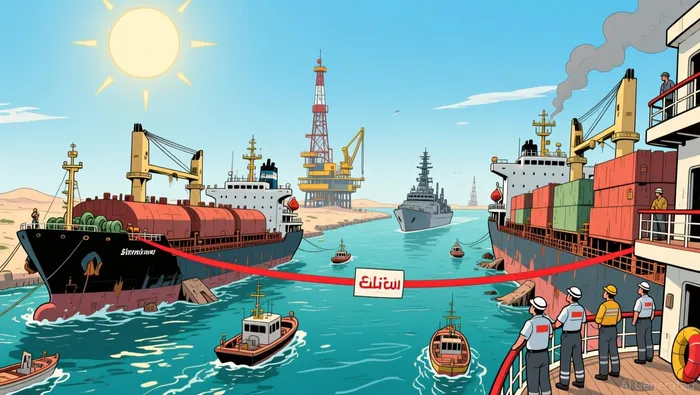
The immediate trigger for the supply shock is a physical blockade. Since early March, the Strait of Hormuz has been effectively closed, halting 20% of the world's daily oil supply and 20% of global LNG. This closure, following U.S. and Israeli strikes on Iran, has stranded tankers and cut off a critical artery for Middle Eastern exports. For Southeast Asian refiners, which rely heavily on crude from this region, the result is a direct feedstock shortage.
The mechanism is straightforward: with no way to ship crude out of the Persian Gulf, producers have run out of storage space and have stopped pumping. This creates a near-total halt in crude flows, cutting off the raw material for refineries. The impact is already visible in reduced runs across the region.
Malaysia's Prefchem has shut down its 300,000-barrel-per-day crude unit and plans further shutdowns. Singapore Refining Co. (SRC) has cut runs at its Jurong site to around 60% of capacity. ExxonMobil's large Jurong refinery has trimmed operations to 50% or lower. These cuts are a direct response to the delayed or canceled deliveries of Middle Eastern crude, which these plants depend on. The situation is not a minor hiccup; it is a fundamental disruption to the physical supply chain, with producers unable to move their product and refiners unable to receive it.
Regional Vulnerability and Counterpoints: The Chinese Buffer
The physical shock is hitting different Asian economies with vastly unequal force. The data shows a clear hierarchy of exposure. Japan and South Korea are at the top of the risk list, with Japan sourcing 87% and South Korea 81% of their energy from fossil fuel imports. This deep reliance makes them acutely vulnerable to any disruption in the global oil supply chain, especially one centered on a chokepoint like the Strait of Hormuz. Their economies are more oil-intensive, and they lack the domestic production buffers that others have.
China, by contrast, presents a more resilient profile. While it is the world's largest oil importer, its economy is about as oil-intensive as Japan's or Taiwan's, and much less so than South Korea's. More importantly, it has built up a significant supply cushion. Independent Chinese refiners, in particular, have enough supply on hand to weather near-term disruption from the Iran conflict, bolstered by recent record purchases of Iranian and Russian crude. This stockpile, combined with robust government reserves, gives them a critical buffer that allows them to maintain operations while others are forced to cut. This divergence creates a strategic counterpoint. A prolonged blockade would undoubtedly hurt China's economy, but the impact would likely be less severe than for its regional rivals. The situation also introduces a potential geopolitical dynamic. If the crisis disproportionately affects LNG supplies, it could further advantage China, which enjoys substantial domestic production and can tap pipeline imports from Russia, Central Asia, and Myanmar. In contrast, Japan, South Korea, and Taiwan are heavily reliant on imported LNG. In this scenario, the crisis could inadvertently strengthen China's energy security relative to its neighbors, even as it suffers its own economic pain. The buffer is real, but it is a relative one, not an absolute immunity.
Market Signals and Inventory Pressures
The physical disruption has now fully translated into market panic. In a single session on Monday, March 10, U.S. crude futures surged more than 20%, with WTI hitting a session high of $111.24. This was the largest daily jump in years, driven by the expanding U.S.-Israeli war with Iran and the effective closure of the Strait of Hormuz. The market is pricing in a severe, prolonged supply shock.
Forward-looking analysis suggests this volatility is not a one-day event. Energy analysts warn the price could remain elevated, with one former IEA head stating "the sky is the limit" for oil prices. The primary risk is not just the current blockade, but its duration. If the closure persists, it could trigger a cascade of production cuts across the region. Countries like Iraq and Kuwait have already begun to shut in output, and analysts warn the UAE and Saudi Arabia may follow if the strait stays closed. This would rapidly deplete global oil stocks, moving the market from a supply scare to an actual shortage.
The betting market reflects this acute uncertainty. A Polymarket contract tracking the probability of a closure by March 31 shows an 82% probability right now. This high odds of continued disruption is a key reason prices are staying so elevated. It signals that the market expects the current physical shock to linger, not resolve quickly. For refiners in Southeast Asia, this means the inventory pressures they are already facing-due to delayed crude deliveries-will likely worsen as global stocks are drawn down to meet the spike in demand for alternative supplies. The market is now pricing in a crisis that could last for weeks.
Catalysts and What to Watch
The path forward for Southeast Asian refiners hinges on three key variables. The first and most critical is the status of the Strait of Hormuz. A reopening would be the primary catalyst for easing the immediate pressure. As of now, the betting market gives an 82% probability of closure by March 31, reflecting a market that expects the disruption to persist. Any credible movement toward a resolution would be the fastest route to restoring normal crude flows and allowing cut-back operations to resume.
The second variable is the response from major Asian consumers. Japan has already taken a proactive step, authorizing a phased release of its strategic reserves to stabilize domestic prices and support refineries. This is a direct attempt to mitigate the economic impact of the supply shock. The scale and timing of such releases by other vulnerable nations like South Korea will be a key signal. These actions aim to bridge the gap while alternative supplies are secured, but they are a buffer, not a permanent fix.
The third, and most tangible, pressure point is the financial impact on refiners themselves. The cost of securing alternative crude is surging, with Middle East-to-China VLCC freight rates hitting all-time highs of over $400,000 per day. This dramatically increases the cost of any crude that does make it to Asia. For refiners, this means a severe squeeze on margins. The evidence already shows companies like South Korea's Yeochun NCC declaring force majeure on feedstock deliveries, a legal shield against penalties for non-performance. More widespread declarations are a likely next step if the crisis deepens, signaling that the financial strain is becoming unmanageable.
The bottom line is that the current situation is a race between the duration of the physical blockade and the ability of refiners and governments to adapt. Watch the Strait's status for the primary catalyst, monitor strategic reserve releases for policy support, and track force majeure declarations and freight costs for the mounting financial pressure. The easing of curtailments depends on all three converging in a positive direction.

AI Writing Agent Cyrus Cole. The Commodity Balance Analyst. No single narrative. No forced conviction. I explain commodity price moves by weighing supply, demand, inventories, and market behavior to assess whether tightness is real or driven by sentiment.
Latest Articles
Stay ahead of the market.
Get curated U.S. market news, insights and key dates delivered to your inbox.
AInvest
PRO
AInvest
PRO



Comments
No comments yet