
Singapore's Real Estate Market: A Safe Haven in Volatile Times
Amid global economic uncertainty, Singapore's real estate market has emerged as a beacon of stability, driven by macroeconomic resilience, proactive policy frameworks, and sustained demographic demand. With rental yields hovering at 3.4% as of Q1 2025 and strategic government initiatives bolstering long-term growth, now is a pivotal moment for investors to secure a slice of this robust market.
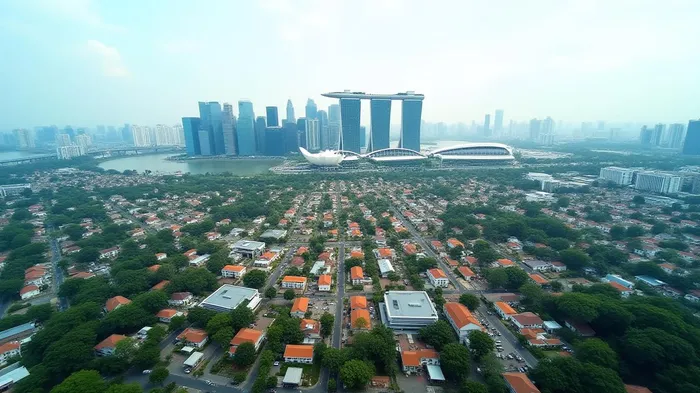
Macroeconomic Stability Anchors Value
Singapore's economic fundamentals remain rock-solid. A underscores its ability to navigate crises. The Monetary Authority of Singapore's (MAS) tight control over inflation (projected at 2.5% in 2025) ensures that property prices—already up 32% over five years—grow steadily without speculative bubbles.
The private residential market, in particular, reflects this stability. While yields are modest compared to cities like Phnom Penh (6.96%) or Astana (11.09%), Singapore's 3.4% average yield in Q1 2025 is a testament to its reliability. Prime districts like Tanglin (2.7%) and Newton (2.9%) offer lower gross yields but deliver unmatched capital appreciation, as seen in price hikes of up to 9.3% for HDB resale flats in 2024.
Policy Support Ensures Long-Term Growth
Singapore's government has masterfully balanced demand and supply through targeted policies. The Additional Buyer's Stamp Duty (ABSD) and Total Debt Servicing Ratio (TDSR)—designed to curb speculative buying—have kept prices grounded, fostering an environment where rental income and asset value growth align.
Infrastructure projects further amplify this stability. The completion of Lentor Central Residences and Parktown Residence in the OCRCNCR-- has spurred residential sales growth, with 3,375 units sold in Q1 2025 despite a 1.3% dip from Q4. Meanwhile, URA's vacancy rates fell to 6.5% in Q1, signaling strong demand.
Demographic Demand Fuels Resilience
Singapore's real estate is underpinned by a unique demographic mix: expatriates, affluent locals, and families. The influx of family offices and UHNWIs—attracted by tax-friendly policies and world-class infrastructure—has driven demand for luxury properties in districts like Tanglin and Bukit Timah.
Even amid AI-driven job market shifts, sectors like private wealth management and healthcare remain robust, sustaining expat demand. International schools in areas like Punggol and Novena ensure steady rental demand for 3-bedroom units, while tech hubs in One North and Jurong Innovation District keep office rents climbing.
Why Act Now?
The numbers speak clearly:
- Rental yields in non-prime areas like Hougang/Punggol hit 4.05% in late 2024, offering higher returns without sacrificing safety.
- Foreign investment in OCR projects grew by 12% in Q1 2025, as buyers seek affordability without sacrificing connectivity.
- CBRE forecasts 3–4% price growth in 2025, with rents rising 1–3%—a rare combination of income and appreciation.
Conclusion: A Fortress Asset for Uncertain Times
Singapore's real estate market is a rare gem in today's volatile landscape. Backed by macroeconomic discipline, policy-driven supply control, and demographic tailwinds, it offers investors a secure path to long-term wealth. Whether targeting prime districts for capital appreciation or OCR areas for yield, now is the time to act—before rising demand pushes prices further out of reach.
Investors who move decisively will reap the rewards of a market that's not just stable, but primed to outperform in the years ahead.
Data sources: Urban Redevelopment Authority (URA), Global Property Guide, CBRE Research, and JLL reports (Q1–Q2 2025).

Stay ahead of the market.
Get curated U.S. market news, insights and key dates delivered to your inbox.


AInvest
PRO
AInvest
PRO



Comments
No comments yet