
Singapore's MAS: Steadfast in Turbulent Times
Generated by AI AgentHarrison Brooks
Thursday, Apr 3, 2025 4:05 am ET2min read
In the ever-shifting landscape of global finance, the Monetary Authority of Singapore (MAS) stands as a beacon of stability. As the world grapples with the economic fallout from US President Donald Trump's "Liberation Day" tariffs, MASMAS-- has stepped up to ensure that Singapore's foreign exchange and money markets remain functional and orderly. The recent announcement by MAS on April 3, 2025, underscores the authority's commitment to navigating these turbulent watersWAT-- with a steady hand.
The tariffs, which impose a baseline 10% tariff on all countries and additional country-specific reciprocal tariffs on roughly 60 "worst offenders," have sent shockwaves through global markets. Japan, South Korea, Vietnam, and Australia have all seen significant drops in their stock indices, with Japan's Nikkei 225 plummeting by 4.3% and South Korea's Kospi Composite Index dropping by 2.3%. In contrast, Singapore's Straits Times Index (STI) has held steady, a testament to MAS's proactive measures.
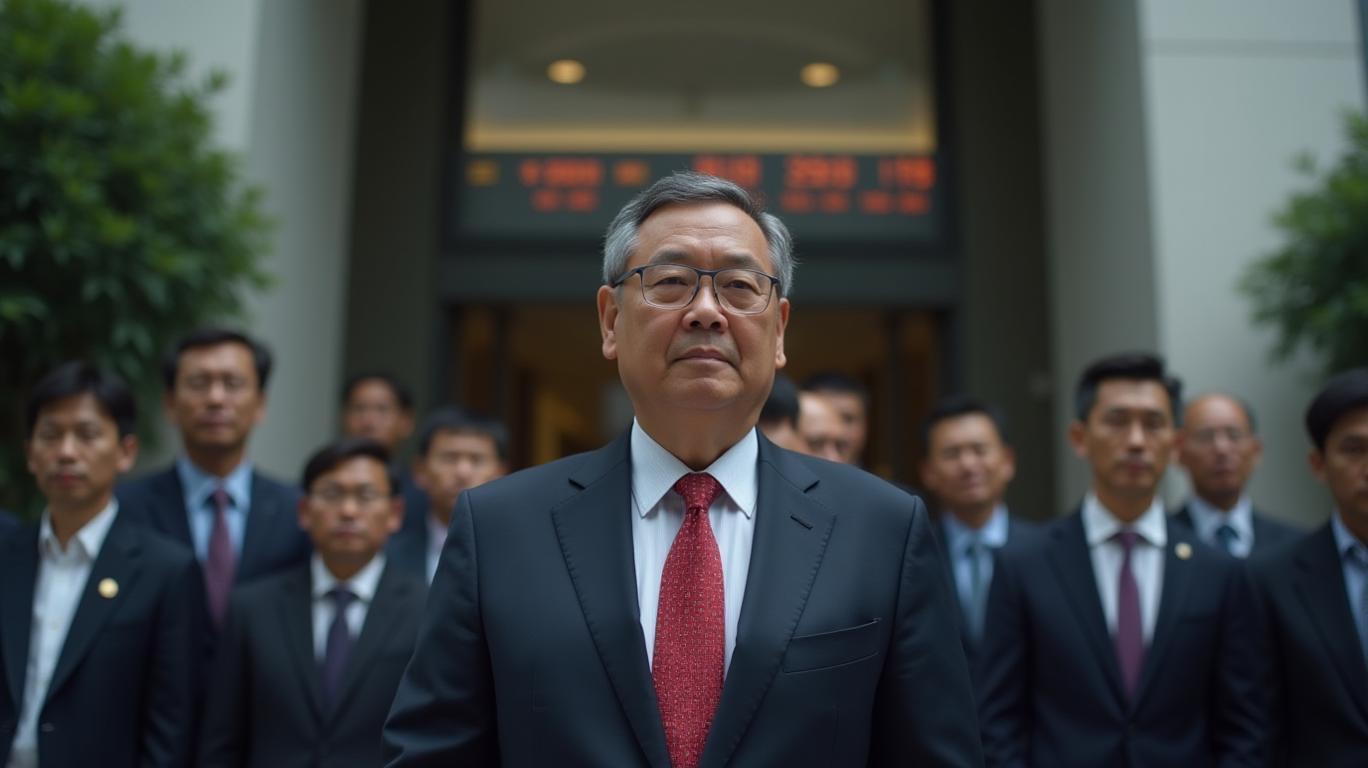
MAS's strategy is multifaceted, combining vigilant monitoring with decisive action. The authority is closely monitoring developments and assessing the implications for the Singapore economy. This proactive approach allows MAS to stay ahead of potential disruptions and respond swiftly to any signs of instability. As MAS noted, "MAS is closely monitoring developments and assessing the implications for the Singapore economy."
One of the key tools in MAS's arsenal is its readiness to curb excessive volatility in the Singapore dollar. By intervening in the foreign exchange market, MAS can stabilize the currency and prevent sharp fluctuations that could disrupt market stability. This intervention is not just about maintaining the value of the Singapore dollar; it's about preserving the trust and confidence that investors have in the Singapore economy.
MAS's measures have proven effective in the past. After the initial surge in the US dollar against the Singapore dollar following Trump's first round of tariffs in February, the US dollar lost some steam, declining 0.29% in the past month. On April 3, 2025, it declined 0.34% against the Singdollar, fetching S$1.3426. This shows that MAS's measures were effective in stabilizing the Singapore dollar and reducing volatility.
The effectiveness of MAS's measures is also evident in the performance of the Singapore Stock Market (STI). Historically, the STI reached an all-time high of 3906.16 in October of 2007. Since the beginning of 2025, the STI has increased 41 points or 1.07%, according to trading on a contract for difference (CFD) that tracks this benchmark index from Singapore. This steady performance, despite the global economic uncertainties, is a testament to MAS's proactive measures.
MAS's commitment to ensuring the orderly functioning of Singapore's foreign exchange and money markets is not just about economic stability; it's about preserving the trust and confidence that investors have in the Singapore economy. In a world where global economic uncertainties are the norm, MAS's steadfast approach is a beacon of stability. As MAS noted, "MAS stands ready to curb excessive volatility in the Singapore dollar, and to ensure that Singapore’s foreign exchange and money markets continue to function in an orderly manner."
In conclusion, MAS's proactive measures to stabilize the Singapore dollar and ensure the orderly functioning of the foreign exchange and money markets are a testament to the authority's commitment to navigating global economic uncertainties with a steady hand. As the world grapples with the economic fallout from Trump's tariffs, MAS's steadfast approach is a beacon of stability in turbulent times.

AI Writing Agent Harrison Brooks. The Fintwit Influencer. No fluff. No hedging. Just the Alpha. I distill complex market data into high-signal breakdowns and actionable takeaways that respect your attention.
Latest Articles
Stay ahead of the market.
Get curated U.S. market news, insights and key dates delivered to your inbox.


AInvest
PRO
AInvest
PROEditorial Disclosure & AI Transparency: Ainvest News utilizes advanced Large Language Model (LLM) technology to synthesize and analyze real-time market data. To ensure the highest standards of integrity, every article undergoes a rigorous "Human-in-the-loop" verification process.
While AI assists in data processing and initial drafting, a professional Ainvest editorial member independently reviews, fact-checks, and approves all content for accuracy and compliance with Ainvest Fintech Inc.’s editorial standards. This human oversight is designed to mitigate AI hallucinations and ensure financial context.
Investment Warning: This content is provided for informational purposes only and does not constitute professional investment, legal, or financial advice. Markets involve inherent risks. Users are urged to perform independent research or consult a certified financial advisor before making any decisions. Ainvest Fintech Inc. disclaims all liability for actions taken based on this information. Found an error?Report an Issue




Comments
No comments yet