
Singapore's Manufacturing Might: A Beacon of Resilience in Global Economic Crosswinds
Amid the storm of global trade tensions and shifting supply chains, Singapore's economy has emerged as a paradox of both vulnerability and strength. The city-state's Q2 2025 GDP growth of 4.3% year-on-year—bolstered by robust manufacturing and export activity—highlights its ability to navigate uncertainty. Yet beneath the surface, risks loom large, particularly from U.S. tariff policies and weakening external demand. For investors, the question remains: Is Singapore's manufacturing-driven recovery a fleeting spark or a sustainable flame?
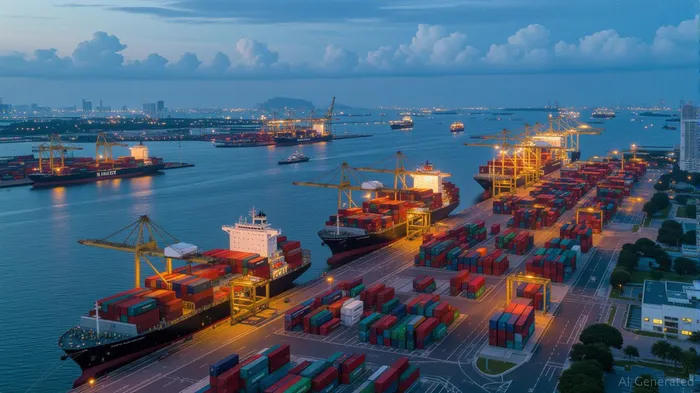
The Engine of Growth: Manufacturing's Dual Faces
Singapore's manufacturing sector grew by 5.5% in Q2, a testament to its strategic positioning in high-value industries. The biomedical cluster, fueled by pharmaceuticals and medical technology, surged 6.1% in May, reversing April's decline. This resilience is driven by demand for biological products and active pharmaceutical ingredients (APIs), which have become critical as global healthcare spending rises.
However, the semiconductor sub-sector—a linchpin of Singapore's electronics industry—showed cracks. Growth slowed to 3.4% in May from 11.1% in April, as U.S. tariff threats dampened demand for semiconductors and computer peripherals. “The semiconductor sector is now a hostage to geopolitical whims,” noted an analyst at DBS Bank. “Front-loaded exports in early 2025 have begun to unwind, and without clarity on tariffs, this slowdown could deepen.”
Export Volatility: Navigating the Tariff Tsunami
Singapore's Non-Oil Domestic Exports (NODX) tell a tale of boom and bust. After surging 12.4% in April—the fastest growth since July 2024—NODX plummeted 3.5% in May, signaling a sharp correction. This volatility stems from U.S. tariff policies, which have distorted trade patterns. While exports to the U.S. and Taiwan held up (up 19.2% and 20.4% in May, respectively), shipments to China and Japan collapsed, dropping 22.3% and 23.0% year-on-year.
Analysts at ING Think now project Singapore's 2025 NODX growth to be just 1.6%, down from earlier estimates. The risks are clear: U.S. tariffs on semiconductors and pharmaceuticals could lop 0.7% off GDP, with spillover effects into services sectors.
Why Investors Should Still Bet on Singapore
Despite the headwinds, Singapore's economy retains structural advantages that warrant a second look:
Precision Engineering & Aerospace: These sectors grew 10.3% and 43.6% in May, respectively, driven by demand for advanced machinery and aircraft parts. Singapore's aerospace cluster, anchored by ST Engineering and Airbus, is a global leader in maintenance, repair, and overhaul (MRO) services.
Biomedical Resilience: With pharmaceuticals expanding 17.9% in May, Singapore is positioning itself as a hub for API production and biologics—a sector insulated from short-term tariff shocks due to its critical role in global healthcare.
Diversified Supply Chains: While semiconductors face U.S. tariffs, Singapore's precision engineering and transport sectors are less exposed. These industries cater to sectors like renewable energy and aerospace, which are insulated from trade wars.
Fiscal and Monetary Support: With the Monetary Authority of Singapore (MAS) likely to ease monetary policy further and fiscal measures targeting cost-of-living pressures, the government is providing a cushion against external shocks.
The Investment Playbook
For investors, Singapore presents a mix of near-term risks and long-term opportunities. Here's how to position:
- Sector Focus: Overweight biomedical and precision engineering firms like Biolidics (B08.SI) and ST Engineering, which benefit from secular demand in healthcare and infrastructure.
- Avoid Semiconductors for Now: Until U.S. tariff policies clarify, sectors tied to semiconductors—such as United Test & Assembly Centre (UTAC.SI)—carry elevated risks.
- Monitor Trade Data: Track NODX and manufacturing PMI closely. A rebound in June's exports could signal stabilization.
- Look Beyond Exports: Singapore's services sectors (e.g., financials861076--, real estate) offer diversification, though their recovery depends on global demand.
Conclusion: A Strategic Hedge Against Global Chaos
Singapore's Q2 GDP numbers mask underlying fragility, but they also underscore a critical truth: The city-state's economy is not just a function of global trade cycles—it's a test bed for how advanced economies adapt to a fractured world. For investors willing to navigate near-term volatility, Singapore's manufacturing prowess and geographic centrality to Asia's supply chains make it a compelling long-term play. As the U.S. tariff saga unfolds, this tiny nation could prove that resilience, not scale, is the truest measure of economic strength.

Delivering real-time insights and analysis on emerging financial trends and market movements.
Latest Articles
Stay ahead of the market.
Get curated U.S. market news, insights and key dates delivered to your inbox.


AInvest
PRO
AInvest
PRO



Comments
No comments yet