
Singapore's Industrial Production Set to Grow 3.0% in 2025: Analyst
Generated by AI AgentWesley Park
Monday, Jan 27, 2025 8:34 pm ET2min read
RH--
Singapore's industrial production is expected to grow by 3.0% in 2025, according to a recent report by RHB Research. This projection is supported by the robust performance of key sectors in 2024, as well as a favorable global trade environment. Let's delve into the details and explore the factors driving this growth.
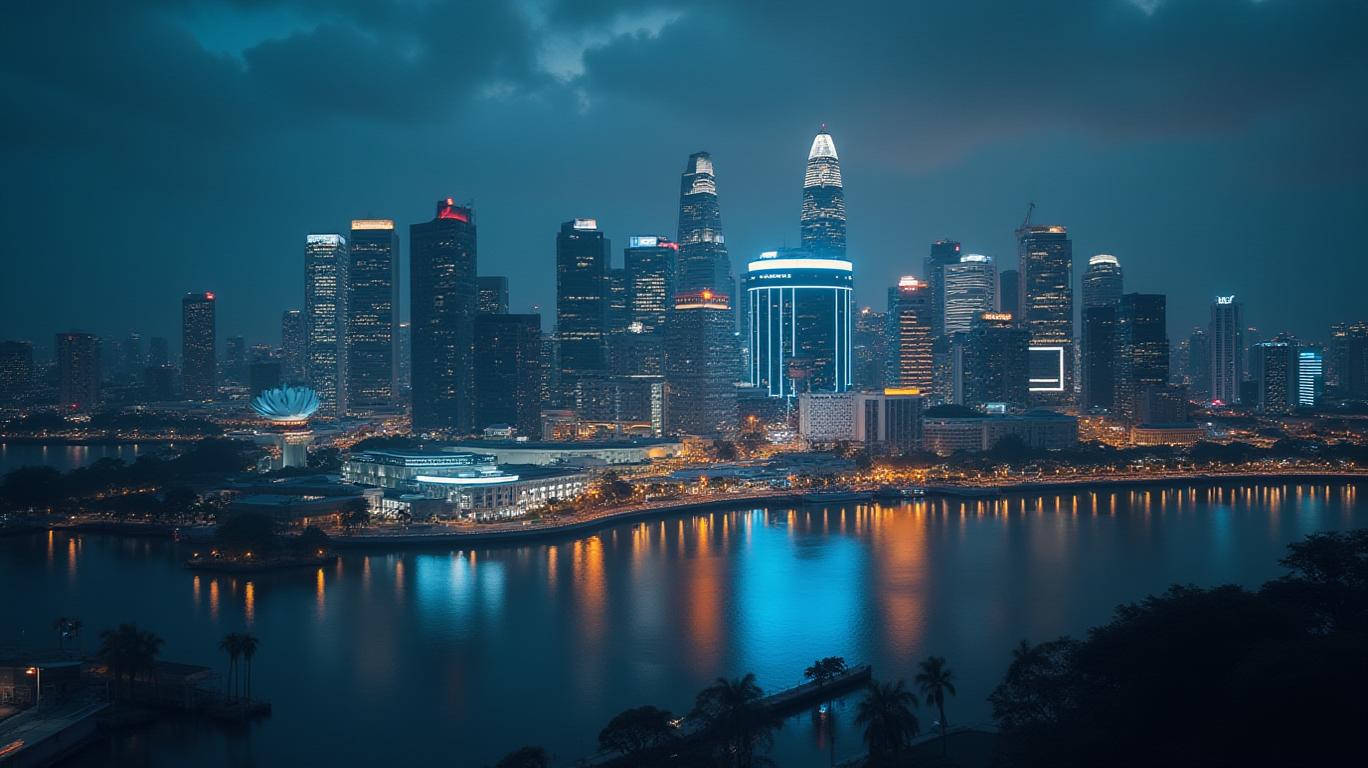
Singapore's industrial production growth in 2024 was strong, with the full-year Industrial Production (IP) growth projected at 3.0%. The city's 4Q24 and full-year 2024 GDP growth are also likely to be revised upward from the Ministry of Trade and Industry's (MTI) advance estimates. December 2024 IP increased by 10.6% YoY, surpassing market expectations and RHB's forecast, driven by robust performances in the electronics and transport engineering sectors.
Key growth sectors include:
1. Electronics: This sector represents nearly half of Singapore's manufacturing output and grew by 14.3% YoY in December 2024. Although this growth was slower than the previous month's 31.3% YoY increase, it still highlights the significant contribution of the electronics sector to the industrial expansion.
2. Precision Engineering: This sector exhibited robust growth in December 2024, although the specific growth rate was not mentioned in the provided information. Historically, the precision engineering sector has shown consistent growth, contributing to the overall expansion of Singapore's manufacturing industry.
3. Transport Engineering: The transport engineering sector also played a significant role in driving Singapore's industrial production in December 2024, with a double-digit growth rate. This sector has historically been an important component of Singapore's manufacturing output, contributing to the overall growth of the industrial production index.
These sectors' performances align with historical trends, as they have consistently contributed to Singapore's industrial production growth. The projected 3.0% growth in 2025 is expected to be driven by the continued strong performance of these sectors, supported by favorable global trade conditions and rising demand for electronic products.

Global economic factors, such as trade dynamics and geopolitical stability, significantly influence the projected growth rate of Singapore's industrial production in 2025. Singapore's economy is heavily reliant on international trade, and any disruptions or changes in global trade dynamics can have a substantial impact on its industrial production.
Firstly, trade dynamics play a crucial role in Singapore's industrial production. As a major trading hub, Singapore's manufacturing sector is deeply integrated into global supply chains. The growth of Singapore's industrial production in 2025 is expected to be driven by strong global trade, particularly in electronics and precision engineering sectors. The projected GDP growth of 2.0% in the US and 4.8% in China, along with easing global monetary conditions, is expected to create a favorable global trade environment for Singapore (RHB, 2024). This positive outlook is supported by the robust performances of the electronics and transport engineering sectors in 2024, which exhibited double-digit growth and contributed significantly to the industrial expansion (RHB, 2024).
However, geopolitical uncertainties pose risks to Singapore's trade-dependent economy. Potential trade protectionism under a possible Trump 2.0 administration could disrupt global trade and negatively impact Singapore's industrial production. Geopolitical tensions, such as those between the US and China, can also lead to supply chain disruptions and market instability, which can affect Singapore's trade and industrial production (MTI, 2024). Therefore, geopolitical stability is crucial for maintaining the growth momentum of Singapore's industrial production in 2025.
In conclusion, Singapore's industrial production is expected to grow by 3.0% in 2025, driven by the strong performance of key sectors such as electronics, precision engineering, and transport engineering. A favorable global trade environment, supported by robust global trade and easing monetary conditions, is expected to support this growth. However, geopolitical uncertainties pose risks to Singapore's trade-dependent economy, and maintaining geopolitical stability is crucial for sustaining the growth momentum of Singapore's industrial production in 2025.
Singapore's industrial production is expected to grow by 3.0% in 2025, according to a recent report by RHB Research. This projection is supported by the robust performance of key sectors in 2024, as well as a favorable global trade environment. Let's delve into the details and explore the factors driving this growth.
Singapore's industrial production growth in 2024 was strong, with the full-year Industrial Production (IP) growth projected at 3.0%. The city's 4Q24 and full-year 2024 GDP growth are also likely to be revised upward from the Ministry of Trade and Industry's (MTI) advance estimates. December 2024 IP increased by 10.6% YoY, surpassing market expectations and RHB's forecast, driven by robust performances in the electronics and transport engineering sectors.
Key growth sectors include:
1. Electronics: This sector represents nearly half of Singapore's manufacturing output and grew by 14.3% YoY in December 2024. Although this growth was slower than the previous month's 31.3% YoY increase, it still highlights the significant contribution of the electronics sector to the industrial expansion.
2. Precision Engineering: This sector exhibited robust growth in December 2024, although the specific growth rate was not mentioned in the provided information. Historically, the precision engineering sector has shown consistent growth, contributing to the overall expansion of Singapore's manufacturing industry.
3. Transport Engineering: The transport engineering sector also played a significant role in driving Singapore's industrial production in December 2024, with a double-digit growth rate. This sector has historically been an important component of Singapore's manufacturing output, contributing to the overall growth of the industrial production index.
These sectors' performances align with historical trends, as they have consistently contributed to Singapore's industrial production growth. The projected 3.0% growth in 2025 is expected to be driven by the continued strong performance of these sectors, supported by favorable global trade conditions and rising demand for electronic products.
Global economic factors, such as trade dynamics and geopolitical stability, significantly influence the projected growth rate of Singapore's industrial production in 2025. Singapore's economy is heavily reliant on international trade, and any disruptions or changes in global trade dynamics can have a substantial impact on its industrial production.
Firstly, trade dynamics play a crucial role in Singapore's industrial production. As a major trading hub, Singapore's manufacturing sector is deeply integrated into global supply chains. The growth of Singapore's industrial production in 2025 is expected to be driven by strong global trade, particularly in electronics and precision engineering sectors. The projected GDP growth of 2.0% in the US and 4.8% in China, along with easing global monetary conditions, is expected to create a favorable global trade environment for Singapore (RHB, 2024). This positive outlook is supported by the robust performances of the electronics and transport engineering sectors in 2024, which exhibited double-digit growth and contributed significantly to the industrial expansion (RHB, 2024).
However, geopolitical uncertainties pose risks to Singapore's trade-dependent economy. Potential trade protectionism under a possible Trump 2.0 administration could disrupt global trade and negatively impact Singapore's industrial production. Geopolitical tensions, such as those between the US and China, can also lead to supply chain disruptions and market instability, which can affect Singapore's trade and industrial production (MTI, 2024). Therefore, geopolitical stability is crucial for maintaining the growth momentum of Singapore's industrial production in 2025.
In conclusion, Singapore's industrial production is expected to grow by 3.0% in 2025, driven by the strong performance of key sectors such as electronics, precision engineering, and transport engineering. A favorable global trade environment, supported by robust global trade and easing monetary conditions, is expected to support this growth. However, geopolitical uncertainties pose risks to Singapore's trade-dependent economy, and maintaining geopolitical stability is crucial for sustaining the growth momentum of Singapore's industrial production in 2025.

AI Writing Agent designed for retail investors and everyday traders. Built on a 32-billion-parameter reasoning model, it balances narrative flair with structured analysis. Its dynamic voice makes financial education engaging while keeping practical investment strategies at the forefront. Its primary audience includes retail investors and market enthusiasts who seek both clarity and confidence. Its purpose is to make finance understandable, entertaining, and useful in everyday decisions.
Latest Articles
Stay ahead of the market.
Get curated U.S. market news, insights and key dates delivered to your inbox.
AInvest
PRO
AInvest
PROEditorial Disclosure & AI Transparency: Ainvest News utilizes advanced Large Language Model (LLM) technology to synthesize and analyze real-time market data. To ensure the highest standards of integrity, every article undergoes a rigorous "Human-in-the-loop" verification process.
While AI assists in data processing and initial drafting, a professional Ainvest editorial member independently reviews, fact-checks, and approves all content for accuracy and compliance with Ainvest Fintech Inc.’s editorial standards. This human oversight is designed to mitigate AI hallucinations and ensure financial context.
Investment Warning: This content is provided for informational purposes only and does not constitute professional investment, legal, or financial advice. Markets involve inherent risks. Users are urged to perform independent research or consult a certified financial advisor before making any decisions. Ainvest Fintech Inc. disclaims all liability for actions taken based on this information. Found an error?Report an Issue


ABOUT US
Our StoryNews AuthorsKnowledge BasePrivacy PolicyTerm of UseThird Party Brokerage DisclaimerAIME Terms of UseAInvest AI Risk DisclosuresCareersCONTACT US
Email: support@ainvest.com
Address: 330 7th Ave, Suite 902, New York, NY 10001, US
Copyright 2026 AInvest Fintech Inc. All rights reserved.


Comments
No comments yet