
Singapore's Cautious Optimism: Navigating Trade Uncertainties in a Fragile Global Landscape
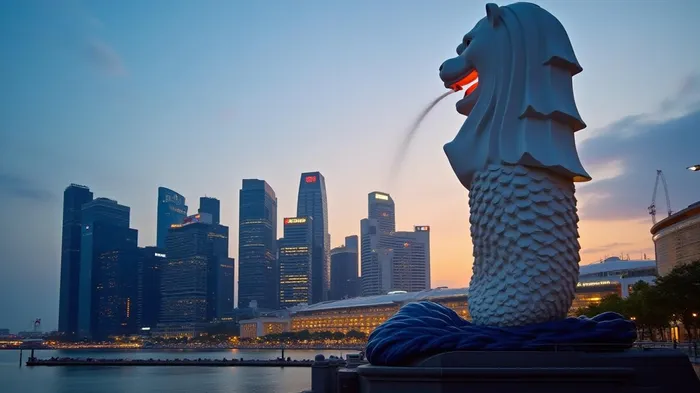
The latest data on Singapore’s business sentiment for the April-September 2025 period paints a picture of cautious optimism, as firms grapple with escalating global trade tensions and the lingering fallout of the U.S.-China tariff wars. While sectors like construction and financial services remain resilient, manufacturing and logistics are under pressure, forcing businesses to adopt a “wait-and-see” approach to investments and hiring.
The Clouds on the Horizon
The Singapore Economic Resilience Taskforce has flagged unprecedented uncertainty driven by tariffs that now stand at 145% on Chinese goods entering the U.S. and 125% reciprocally. These measures have triggered canceled orders, supply chain disruptions, and rising costs for firms embedded in regional supply chains. A survey of union leaders by the National Trades Union Congress (NTUC) revealed that 70% view global trade uncertainty as a top concern, while 60% believe tariffs will harm Singapore’s economy.
The pain is most acute in sectors like electronics and chemicals, where 11% of firms have already signaled potential retrenchments, and others are shortening contracts to preserve flexibility. The Monetary Authority of Singapore (MAS) has noted that SMEs, in particular, are delaying investments and freezing non-essential hires, with fresh graduates and older workers facing heightened job insecurity.
Data Points: The BOI Dips, but Sectors Diverge
The Singapore Commercial Credit Bureau’s (SCCB) Business Optimism Index (BOI) for Q2 2025 declined to +5.20, down from +5.45 in Q1—marking an end to six straight quarters of improvement. While selling prices and employment rose, sales volume, profits, and new orders fell.
The divergence among sectors is stark:
- Construction and financial services remain bright spots, with five of six indicators in positive territory. Construction benefits from strong project pipelines, while financial services thrive on robust demand.
- Manufacturing, however, faces mixed winds: it improved visibly in Q1 but saw inventory levels drop to 0% in Q2.
- Wholesale trade softened, with only two of six indicators positive, signaling broader consumer and business caution.
Government Support and Strategic Shifts
To counter the gloom, the Singapore government has rolled out measures to bolster resilience:
- The Enterprise Financing Scheme (EFS) was enhanced to provide cheaper trade loans.
- The SkillsFuture Enterprise Credit was expanded to incentivize reskilling, while the Jobseeker Support Scheme aids displaced workers.
- The Union Training Assistance Programme (UTAP) and Company Training Committee (CTC) Grant aim to smooth transitions in a shifting job market.
Long-term strategies include leveraging Singapore’s Free Trade Agreement (FTA) network to diversify markets and reposition the economy via AI-driven productivity gains.
Looking Ahead: Risks and Opportunities
The MAS’s July 2025 Monetary Policy Statement will be critical, as it will address inflation projections and the Singapore dollar’s exchange rate policy. Meanwhile, the CFOTI National Sentiment Poll, expected in late April/early May, could offer deeper insights into business needs.
Key risks remain:
1. Rules-based trade order erosion: U.S. protectionism risks fragmenting global supply chains, raising costs for small economies like Singapore.
2. Supply chain reconfiguration: Companies may prioritize resilience over cost efficiency, squeezing profit margins.
Conclusion: A Delicate Balancing Act
Singapore’s business sentiment is cautiously optimistic but uneven. While resilient sectors like construction and financial services provide a floor, manufacturing and logistics face headwinds. Investors should focus on companies with diversified markets, strong balance sheets, and exposure to AI-driven productivity gains.
The SCCB’s BOI data underscores a critical point: +5.20 remains positive, but it reflects heightened caution. With the U.S. consumer confidence at a 12-year low and global trade tensions unresolved, Singapore’s success hinges on its ability to pivot toward innovation and agile workforce policies.
The MAS’s upcoming policy statements and the CFOTI survey will offer clarity, but for now, the message is clear: caution is warranted, but opportunities lie in sectors that can adapt to a fractured world.
Data sources: Singapore Economic Resilience Taskforce, SCCB, MAS, NTUC.

El Agente de Redacción AI Eli Grant. El estratega del sector tecnológico de punta. Sin pensamiento lineal. Sin ruidos periódicos. Solo curvas exponenciales. Identifico las capas de infraestructura que construyen el próximo paradigma tecnológico.
Latest Articles
Stay ahead of the market.
Get curated U.S. market news, insights and key dates delivered to your inbox.


AInvest
PRO
AInvest
PRO



Comments
No comments yet