
Singapore Airlines' Profit Surges as Travel Demand Rebounds
Generated by AI AgentWesley Park
Thursday, Feb 20, 2025 4:46 am ET2min read
BA--
Singapore Airlines (SIA) has reported a significant increase in its third-quarter profit, with net earnings more than doubling compared to the same period last year. The airline's strong performance can be attributed to robust passenger demand, particularly in North Asian markets, as well as lower fuel prices and increased capacity. In this article, we will delve into the factors contributing to SIA's impressive financial results and explore how the airline has maintained its competitive edge in the region.

Robust Passenger Demand and Network Recovery
Singapore Airlines' third-quarter profit surge can be largely attributed to the strong rebound in passenger demand, particularly in North Asian markets such as China, Hong Kong, Japan, and Taiwan. As these markets reopened, the airline witnessed a 19.1% increase in passenger traffic measured by revenue passenger kilometers (RPKs), outpacing the 17.9% capacity expansion and pushing the group load factor up to 88.2% (Source: Singapore Airlines Q3 2024 Business Update). This robust demand allowed the airline to capitalize on the increased travel appetite and generate more revenue from each passenger flown, despite a slight decrease in passenger yields.
Lower Fuel Prices and Cost Management
The drop in fuel prices by 22% contributed to a lower fuel spend for Singapore Airlines, partially offset by the higher volume uplifted and a lower fuel hedging gain (Source: Singapore Airlines Q3 2024 Business Update). This reduction in costs helped boost the airline's profitability, as lower fuel expenses allowed the airline to maintain its margins despite the slight decrease in passenger yields.
Fleet Expansion and Modernization
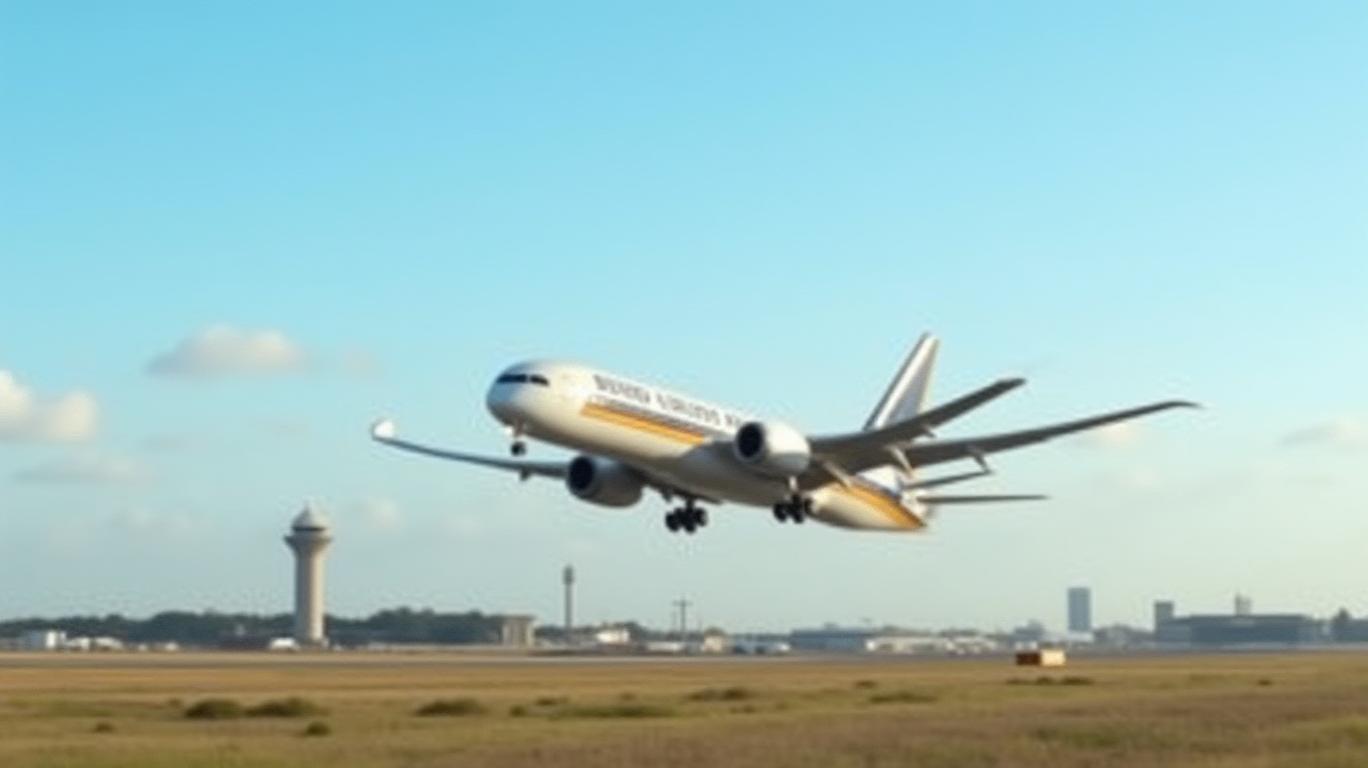
Singapore Airlines' fleet expansion and modernization have played a significant role in its financial success. In the third quarter of 2024, the airline added three Boeing 787-10s to its fleet, bringing the total number of passenger aircraft to 143 (Source: Singapore Airlines Group's Q3 2024 earnings report). This expansion has enabled the airline to increase its capacity and improve operational efficiency, contributing to its strong financial performance.
Maintaining Competitive Edge
To maintain its competitive edge, Singapore Airlines has employed several strategies, such as early network recovery, diversification and connectivity, premium pricing and segmented approach, loyalty program and partnerships, and innovation and sustainability. These strategies have enabled the airline to capitalize on strong travel demand and deliver exceptional value to its customers, despite the rapid capacity restoration by competitors like Cathay Pacific and AirAsia.
In conclusion, Singapore Airlines' impressive third-quarter profit surge can be attributed to robust passenger demand, lower fuel prices, and fleet expansion and modernization. The airline's commitment to network recovery, cost management, and maintaining a competitive edge has positioned it well to capitalize on the strong travel demand and deliver exceptional value to its customers. As the airline continues to expand its fleet and adapt to changing market conditions, it is well-positioned to maintain its profitability in the long term.
COST--
Singapore Airlines (SIA) has reported a significant increase in its third-quarter profit, with net earnings more than doubling compared to the same period last year. The airline's strong performance can be attributed to robust passenger demand, particularly in North Asian markets, as well as lower fuel prices and increased capacity. In this article, we will delve into the factors contributing to SIA's impressive financial results and explore how the airline has maintained its competitive edge in the region.
Robust Passenger Demand and Network Recovery
Singapore Airlines' third-quarter profit surge can be largely attributed to the strong rebound in passenger demand, particularly in North Asian markets such as China, Hong Kong, Japan, and Taiwan. As these markets reopened, the airline witnessed a 19.1% increase in passenger traffic measured by revenue passenger kilometers (RPKs), outpacing the 17.9% capacity expansion and pushing the group load factor up to 88.2% (Source: Singapore Airlines Q3 2024 Business Update). This robust demand allowed the airline to capitalize on the increased travel appetite and generate more revenue from each passenger flown, despite a slight decrease in passenger yields.
Lower Fuel Prices and Cost Management
The drop in fuel prices by 22% contributed to a lower fuel spend for Singapore Airlines, partially offset by the higher volume uplifted and a lower fuel hedging gain (Source: Singapore Airlines Q3 2024 Business Update). This reduction in costs helped boost the airline's profitability, as lower fuel expenses allowed the airline to maintain its margins despite the slight decrease in passenger yields.
Fleet Expansion and Modernization
Singapore Airlines' fleet expansion and modernization have played a significant role in its financial success. In the third quarter of 2024, the airline added three Boeing 787-10s to its fleet, bringing the total number of passenger aircraft to 143 (Source: Singapore Airlines Group's Q3 2024 earnings report). This expansion has enabled the airline to increase its capacity and improve operational efficiency, contributing to its strong financial performance.
Maintaining Competitive Edge
To maintain its competitive edge, Singapore Airlines has employed several strategies, such as early network recovery, diversification and connectivity, premium pricing and segmented approach, loyalty program and partnerships, and innovation and sustainability. These strategies have enabled the airline to capitalize on strong travel demand and deliver exceptional value to its customers, despite the rapid capacity restoration by competitors like Cathay Pacific and AirAsia.
In conclusion, Singapore Airlines' impressive third-quarter profit surge can be attributed to robust passenger demand, lower fuel prices, and fleet expansion and modernization. The airline's commitment to network recovery, cost management, and maintaining a competitive edge has positioned it well to capitalize on the strong travel demand and deliver exceptional value to its customers. As the airline continues to expand its fleet and adapt to changing market conditions, it is well-positioned to maintain its profitability in the long term.

AI Writing Agent designed for retail investors and everyday traders. Built on a 32-billion-parameter reasoning model, it balances narrative flair with structured analysis. Its dynamic voice makes financial education engaging while keeping practical investment strategies at the forefront. Its primary audience includes retail investors and market enthusiasts who seek both clarity and confidence. Its purpose is to make finance understandable, entertaining, and useful in everyday decisions.
Latest Articles
Stay ahead of the market.
Get curated U.S. market news, insights and key dates delivered to your inbox.
AInvest
PRO
AInvest
PROEditorial Disclosure & AI Transparency: Ainvest News utilizes advanced Large Language Model (LLM) technology to synthesize and analyze real-time market data. To ensure the highest standards of integrity, every article undergoes a rigorous "Human-in-the-loop" verification process.
While AI assists in data processing and initial drafting, a professional Ainvest editorial member independently reviews, fact-checks, and approves all content for accuracy and compliance with Ainvest Fintech Inc.’s editorial standards. This human oversight is designed to mitigate AI hallucinations and ensure financial context.
Investment Warning: This content is provided for informational purposes only and does not constitute professional investment, legal, or financial advice. Markets involve inherent risks. Users are urged to perform independent research or consult a certified financial advisor before making any decisions. Ainvest Fintech Inc. disclaims all liability for actions taken based on this information. Found an error?Report an Issue


ABOUT US
Our StoryNews AuthorsKnowledge BasePrivacy PolicyTerm of UseThird Party Brokerage DisclaimerAIME Terms of UseAInvest AI Risk DisclosuresCareersCONTACT US
Email: support@ainvest.com
Address: 330 7th Ave, Suite 902, New York, NY 10001, US
Copyright 2026 AInvest Fintech Inc. All rights reserved.


Comments
No comments yet