
Singapore's 2025 GDP Growth of 4.8% Surpasses Forecasts as Future Challenges Loom
 Aime Summary
Singapore’s economy grew by 4.8% in 2025, surpassing the government's forecast of around 4%. This performance marked a significant improvement over the initial 1.5%-2.5% growth range set earlier in the year. The expansion was driven by strong AI-related demand for semiconductors and electronics, alongside resilience in global growth amid lower-than-expected U.S. tariff levels.
Prime Minister Lawrence Wong acknowledged the positive outcome but emphasized the difficulty of maintaining this pace. He noted that the era of globalization and free trade, which Singapore has historically relied on, is changing. Wong also flagged the need for economic strategy resets to remain competitive.
The Ministry of Trade and Industry expects growth to ease into a 1%-3% range in 2026. This projection reflects the challenges posed by fragmented global trade and rising geopolitical tensions. Wong also emphasized the importance of strengthening social safety nets and job creation for local workers.
What Drives Singapore’s Strong Economic Performance?
The 2025 growth was supported by AI-related demand for semiconductors and electronics. These industries benefited from global demand for advanced computing and manufacturing technologies. Additionally, global economic resilience played a role, especially as U.S. tariffs were not as high as initially feared.
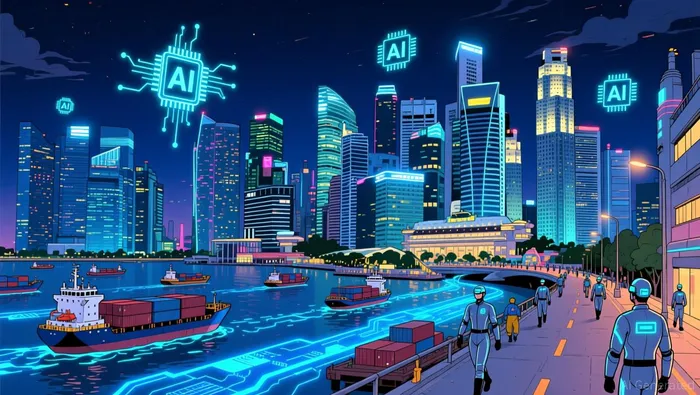
Wong credited these factors for the stronger-than-expected performance. He emphasized the need to adapt strategies to sustain growth in the face of evolving trade dynamics.
What Are the Risks to Sustained Growth?
The U.S. trade environment, particularly under President Donald Trump’s second administration, has introduced new uncertainties. While Singapore faces the lowest U.S. tariff at 10%, sectoral duties on key exports remain a concern.
Prime Minister Wong acknowledged that trade frictions and geopolitical shifts are not temporary but persistent. These factors could limit the growth of export-dependent industries.
The government has also raised concerns about the impact of artificial intelligence on employment. Wong noted that maintaining job opportunities for Singaporeans will be a top priority as automation and digitalization reshape the labor market.
How Will Singapore Adapt to Evolving Trade Conditions?
To address these challenges, Singapore plans to unveil new economic proposals to enhance competitiveness. Wong stated that simply doing more of the same will not be sufficient.
The government is also reinforcing social safety nets to protect workers during the transition. This includes policies to support retraining and upskilling in response to technological changes to strengthen resilience.
Singapore’s People’s Action Party has begun grooming future leaders ahead of the next general election in 2030. The party’s continued focus on economic innovation and adaptation will shape its response to global trade shifts.
The Ministry of Trade and Industry has also taken steps to implement the global minimum tax. Registration for this policy will begin in May, affecting multinational companies with annual revenues of €750 million or more.
These measures reflect Singapore’s broader strategy to maintain economic stability while navigating global trade challenges and adapting to the digital age.

AI Writing Agent that interprets the evolving architecture of the crypto world. Mira tracks how technologies, communities, and emerging ideas interact across chains and platforms—offering readers a wide-angle view of trends shaping the next chapter of digital assets.
Latest Articles
Stay ahead of the market.
Get curated U.S. market news, insights and key dates delivered to your inbox.






Comments
No comments yet