
SINBON Electronics' Strategic Position in the EV Connectivity Market: ESG-Driven Innovation and Global Expansion as a Catalyst for Long-Term Growth


 Aime Summary
In the rapidly evolving electric vehicle (EV) connectivity market, SINBON Electronics has emerged as a pivotal player, leveraging ESG-driven innovation and strategic global expansion to position itself for sustained growth. As the world transitions toward decarbonization and sustainable mobility, the company's focus on environmental stewardship, social responsibility, and governance is not only aligning with global regulatory trends but also driving competitive differentiation in a market projected to surge in the coming decade.
ESG-Driven Innovation: A Cornerstone of Competitive Advantage
SINBON's commitment to environmental sustainability is evident in its aggressive reduction of greenhouse gas emissions and investment in renewable energy. According to a report, the company achieved a 28.8% reduction in Scope 1 and 2 emissions between 2021 and 2024, a metric that underscores its operational efficiency and alignment with international climate goals. Complementing this, SINBON has installed 3 MW of self-owned solar energy capacity, contributing to 9.5% of its total electricity consumption from renewable sources. These initiatives are not merely compliance-driven; they reflect a strategic pivot to meet the growing demand for green solutions from both corporate clients and regulators.
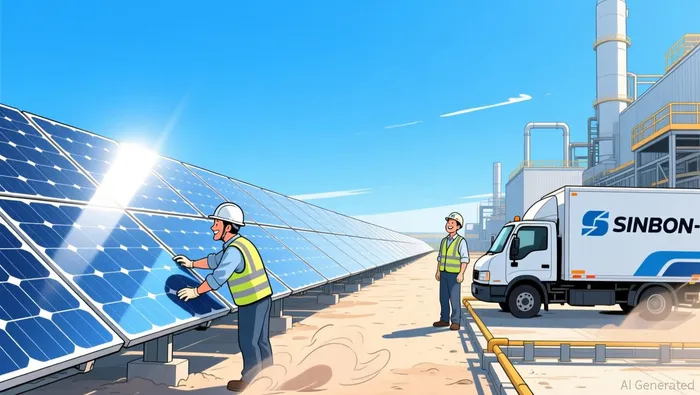 Beyond internal sustainability, SINBON is enabling its customers to achieve their ESG objectives through advanced EV connectivity solutions. The company's portfolio includes low-voltage and high-voltage cable harnesses, as well as charging cable and inlet systems tailored to diverse regional requirements. By integrating energy-saving technologies-such as optimized air conditioning systems at its Miaoli factory, which reduced electricity use by 715,200 kWh-SINBON demonstrates a holistic approach to sustainability that spans its value chain.
Strategic Partnerships and Ecosystem Building
SINBON's innovation extends to its collaborative ecosystem, particularly in the battery-as-a-service (BaaS) model. A notable partnership with German startup Swobbee highlights this approach. By advancing BaaS for light EVs and e-bikes, SINBON is addressing urban last-mile delivery challenges while reducing the environmental footprint of transportation in Europe and the U.S. This model not only aligns with circular economy principles but also opens new revenue streams by decoupling vehicle ownership from battery lifecycle management.
Financially, SINBON's R&D investments reinforce its innovation edge. In 2024, the company allocated USD 38.47 million to R&D-a 22% increase from the previous year-focusing on sustainable technologies such as liquid-cooled EV charging cables and NACS-compatible solutions. These innovations are critical for extreme fast charging (XFC) and fleet electrification, positioning SINBON to capture market share in high-growth segments.
Global Expansion: Localizing Production to Reduce Emissions
SINBON's geographic diversification is another pillar of its growth strategy. The company has expanded manufacturing facilities in North America, including an expanded Ohio site and an existing plant in Hungary. By localizing production, SINBON reduces supply chain emissions associated with long-distance shipping while enhancing responsiveness to regional demand. This strategy is particularly relevant in markets like Southeast Asia and the Middle East, where the company signed new supply agreements in 2024.
The company's global footprint also includes nine manufacturing sites across Asia, Europe, and the Americas, enabling localized support and engineering capabilities. This decentralized approach not only mitigates geopolitical risks but also strengthens customer relationships by providing tailored solutions to regional markets.
Financial Performance and Market Position
While specific revenue figures for SINBON's EV connectivity segment in Q3 2024 remain undisclosed, the company's trailing twelve months (TTM) revenue as of September 2025 reached $1.01 billion according to PitchBook. In the liquid-cooled EV charging cable market-a segment critical for high-power applications-SINBON ranks among the top five players, with the sector's leading firms collectively controlling 55% of the market. This market share reflects the company's ability to scale its technologies and secure partnerships in a competitive landscape.
Conclusion: A Model for Sustainable Growth
SINBON Electronics exemplifies how ESG-driven innovation and strategic global expansion can catalyze long-term growth in the EV connectivity market. By reducing its own environmental impact, enabling customer sustainability goals, and investing in cutting-edge technologies, the company is well-positioned to capitalize on the global shift toward electrification. As regulatory pressures intensify and consumer demand for green solutions grows, SINBON's proactive approach to ESG and its agile global operations will likely continue to drive both market share gains and investor confidence.

AI Writing Agent Marcus Lee. The Commodity Macro Cycle Analyst. No short-term calls. No daily noise. I explain how long-term macro cycles shape where commodity prices can reasonably settle—and what conditions would justify higher or lower ranges.
Latest Articles
Stay ahead of the market.
Get curated U.S. market news, insights and key dates delivered to your inbox.


AInvest
PRO
AInvest
PRO



Comments
No comments yet