
Simply Good Foods: Navigating the Protein Boom with Strategic Grit
The global protein market is undergoing a seismic shift as consumers increasingly prioritize health, sustainability, and ethical consumption. Simply Good FoodsSMPL-- (SMPL), a leader in high-protein, low-sugar snacking, stands at the intersection of this generational trend. Its Q2 2025 results underscore both the promise of its positioning and the challenges of executing in a volatile environment. For investors, SMPLSMPL-- presents a compelling opportunity to capitalize on a structural boom—if management can navigate margin pressures and leverage its brand diversification effectively.
Q2 2025: Growth Amid Growing Pains
SMPL's fiscal third quarter (Q2 calendar) results reflect its dual-edged strategy: aggressive top-line expansion through acquisitions and innovation, paired with the operational costs of integration. Net sales rose 13.8% to $381 million, driven by the OWYN acquisition, which contributed 10% of growth, and strong organic sales from Quest. Retail takeaway for Quest and OWYN surged 11% and 24%, respectively, while Atkins declined 13%, highlighting the brand's ongoing struggles.
Yet, this growth came at a cost. Gross margins compressed 350 basis points to 36.4%, primarily due to inflationary pressures and OWYN's lower margins. Adjusted EBITDA grew only 2.8% to $73.9 million, underscoring the trade-off between scaling quickly and maintaining profitability. The company's outlook for fiscal 2025—8.5% to 9.5% sales growth and 4% to 5% EBITDA growth—acknowledges these headwinds, particularly a 2-percentage-point drag from last year's 53-week period.
Margin Pressures: A Temporary Hurdle or Structural Issue?
Inflation and tariffs have been relentless foes. SMPL attributes a projected 200-basis-point margin decline to these factors, but its response—pricing strategies and productivity gains—suggests confidence in mitigation. The integration of OWYN, while boosting sales, has added operational complexity, with G&A expenses rising $9.7 million in Q2.
Critically, the company's debt-to-Adjusted EBITDA ratio of 0.5x as of May 2025 signals financial discipline. Repayments of $150 million year-to-date have reduced leverage, providing a buffer for reinvestment. The challenge remains balancing short-term margin pressures with long-term brand-building.
Product Diversification: The Engine of Sustainable Growth
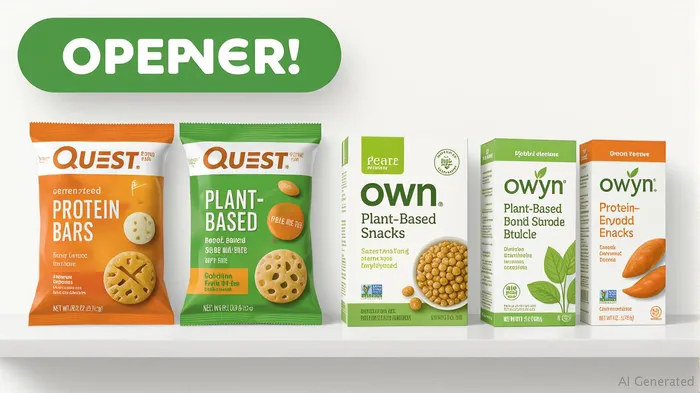
SMPL's strategy hinges on its dual pillars: Quest, the high-protein leader, and OWYN, the plant-based disruptor. Quest's 12% year-to-date retail growth and its 70% contribution to sales highlight its role as a cash cow. OWYN's 44% retail takeaway surge positions it as the growth catalyst in the booming plant-based protein segment.
Atkins' decline, however, raises questions about the brand's relevance in an era favoring sustainability and transparency. Management's focus on Quest and OWYN—allocating marketing spend and R&D to these brands—suggests a strategic pivot away from Atkins' legacy. This refocus is prudent; consumers are demanding products that align with sustainability and health trends, and SMPL is doubling down on its strengths.
The Bigger Picture: SMPL's Place in the Protein Revolution
The global protein market is expected to grow at a 6.5% CAGR through 2030, fueled by urbanization, health awareness, and the rise of plant-based diets. SMPL is uniquely positioned to capture this demand:
- Quest dominates the high-protein snacking space, appealing to fitness-focused millennials and Gen Z.
- OWYN targets eco-conscious consumers with its plant-based, minimally processed offerings.
- Both brands benefit from the “snackification” of diets, where convenient, nutrient-dense options are preferred.
Competitors like Beyond MeatBYND-- (BYND) and Danone (BN) face similar inflationary and margin challenges, but SMPL's focus on snacking—a higher-margin category—gives it an edge. Its geographic concentration in North America (98% of sales) also simplifies scaling.
Investment Thesis: Buy the Dip, Mind the Risks
SMPL's stock has underperformed the market over the past year, pressured by margin concerns and Atkins' decline. Yet, its Q2 results and strategic clarity suggest it's a buy for investors with a 3- to 5-year horizon. Key catalysts:
1. OWYN's Momentum: If its plant-based sales continue to grow at 40%+ rates, it could offset margin pressures.
2. Debt Reduction: The 0.5x leverage ratio leaves room to deleverage further or reinvest in innovation.
3. Atkins Turnaround: While unlikely, any stabilization here would boost margins.
Risks include further margin erosion if inflation spikes, supply chain disruptions, or a slowdown in snacking demand. Investors should consider SMPL as a “beta play” on the protein boom, with a focus on its ability to execute its brand strategy. Historically, SMPL has shown a 60% win rate in the three days following earnings releases, though medium-term performance (10–30 days) has been less consistent, with win rates around 53%. This underscores the need to avoid short-term trading and focus on the structural growth story.
Final Take
Simply Good Foods is a company at a crossroads: its top-line growth is undeniable, but its profitability hinges on managing costs and accelerating OWYN's trajectory. For investors willing to look past near-term volatility, SMPL offers a leveraged position in a secular trend. As the world moves toward healthier, more sustainable diets, SMPL's brands are poised to be among the beneficiaries—if management can keep its foot on the gas.

Delivering real-time insights and analysis on emerging financial trends and market movements.
Latest Articles
Stay ahead of the market.
Get curated U.S. market news, insights and key dates delivered to your inbox.


AInvest
PRO
AInvest
PRO



Comments
No comments yet