
Simply Good Foods' Impairment and Guidance Cut Create a High-Risk, Event-Driven Trade on Q3 Recovery


The stock's sharp decline was a direct, tactical response to a comprehensive earnings miss and a severe guidance cut. The catalyst hit hard and fast, with shares opening down 27.5% to $10.45 on Thursday morning. This wasn't a minor stumble; it was a full-scale shock to the system.
The negative components were layered and severe. First, the core revenue figure was a clear miss. For the quarter ended February 28, the company reported revenue of $326.0 million, falling short of the $346.6 million consensus estimate and marking a 9.4% year-over-year decline. The weakness was concentrated in key brands, with Atkins sales plunging 26.6% and OWYN down 16.8%, while Quest growth was negligible at just 0.3%.
The second, more damaging blow was the massive cut to the full-year outlook. Management slashed its adjusted EBITDA guidance for fiscal 2026 to a range of $217 million to $225 million. This represents a decline of 19% to 22% year-over-year from prior expectations. To put that in context, the midpoint of the new range is about $100 million below the analyst consensus for the full year. This isn't just a minor adjustment; it's a fundamental reassessment of the company's profitability trajectory.
The third, and perhaps most alarming, element was the sheer scale of the impairment charge. As part of the review, the company recognized a $249.0 million non-cash, impairment charge related to the Atkins and OWYN brand intangible assets. This single item contributed directly to a net loss of $159.7 million for the quarter, a dramatic reversal from the $36.7 million net income posted a year ago.
Together, these three elements created a clear and immediate risk/reward setup. The market is pricing in a severe near-term downturn, with the stock down over a quarter from its previous close. The tactical question now is whether this sell-off has overcorrected, pricing in a permanent impairment to the business model that may be more temporary. The massive guidance cut and the impairment charge signal deep operational challenges, but they also set a very low bar for any subsequent recovery.
The Mechanics of the Miss: Brand Erosion and Cost Pressures
The earnings shock was not a random stumble but the culmination of specific, interconnected pressures. The results reveal a company battling both deep brand erosion and rising cost headwinds, with the two forces amplifying each other.
The brand-specific declines are severe and widespread. In the quarter, Atkins revenue fell 26.6% and OWYN dropped 16.8%. This isn't isolated weakness; it's a pattern. Year-to-date, the challenges have persisted, with Atkins down 21.6% and OWYN down 10.2% in consumption. The company attributes some of the OWYN decline to lapping a heavy promotional period, but the broader trend points to a loss of market share and consumer momentum across two key pillars of its portfolio. Quest, the lone bright spot, grew a mere 0.3% in the quarter, failing to offset the drag from the others.
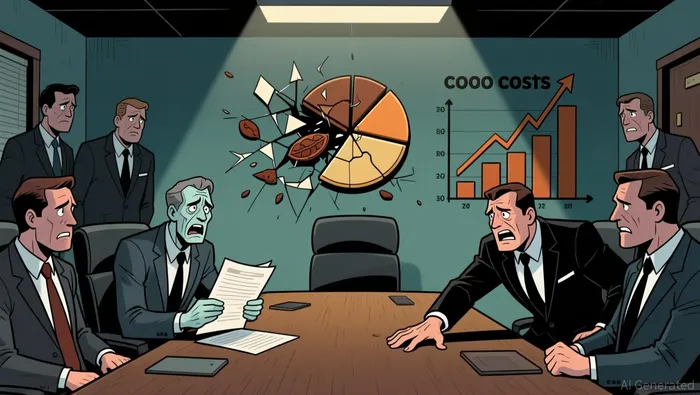
This brand weakness is directly pressuring the income statement. The company reported a gross margin decline of 460 basis points to 31.6% for the quarter. Management explicitly cites inflationary costs, particularly cocoa, and tariffs as the primary drivers. The full-year outlook confirms this is a structural pressure, with the company expecting gross margins to decline between 300 and 350 basis points year-over-year. This contraction is a direct hit to profitability, making it harder to generate cash even if sales were stable.
The two pressures are linked. As brands lose share and sales, the company faces a double whammy: lower revenue from the brands themselves, and a need to spend more on marketing and promotions to try to reverse the trend, which further pressures margins. The company noted that selling and marketing expenses decreased 19.7% in the quarter, largely due to planned declines for Atkins. This suggests a painful trade-off-cutting investment in struggling brands may be helping margins in the short term, but it risks accelerating their decline.
The bottom line is a vicious cycle. Brand erosion leads to lower sales and a need for more aggressive (and costly) marketing to regain ground, while simultaneously rising input costs squeeze the profit on every unit sold. This explains the massive impairment charge and the severe guidance cut. The market is punishing the stock not just for a bad quarter, but for a business model where the core brands are weakening and the cost of doing business is rising.
Analyst Reactions and the Q3 Guidance Gap
The market's immediate reaction to the earnings shock was a clear sell-off, but the post-mortem from Wall Street is more divided. The consensus price target of $27, according to the evidence, sits well above the current trading level, suggesting some analysts see value in the decline. Yet the split in ratings is telling. On one side, Jefferies upgraded the stock, likely betting on the low valuation and potential for a turnaround. On the other, UBS downgraded it, focusing on the severe operational challenges. This mixed signal reflects the core tension: the stock is cheap, but the path to recovery is fraught with uncertainty.
The critical near-term test for any recovery thesis is the third-quarter revenue guidance. The company's own forecast of $329 million to $338 million has a midpoint of $333.5 million. That figure is a stark $46.3 million below the analyst consensus of $379.8 million. This isn't a minor miss; it's a gap of over 12%. For the stock to stabilize or rally, Simply Good FoodsSMPL-- must not only meet but likely beat this already-downwardly revised target. Any further guidance cuts would be a direct signal that the brand erosion and cost pressures are worsening, not improving.
The key risk that could undermine this recovery is the persistence of input cost pressures, specifically cocoa tariffs and reformulations. As the evidence notes, cocoa prices have surged to record highs, driven by weather and disease in West Africa. This isn't a temporary spike; it's a structural cost increase that management has already cited as a gross margin pressure. The industry is responding with reformulations, as seen with candy brands changing packaging to avoid the "milk chocolate" label after swapping cocoa butter for cheaper fats. For Simply Good Foods, which relies on chocolate-based products, this means a potential double hit: higher ingredient costs and the risk of consumer backlash if product quality or perception shifts. These pressures could easily prevent the margin recovery needed to support any top-line improvement, making the Q3 guidance gap even harder to close.
Tactical Takeaway: Is This a Temporary Mispricing?
The market's verdict is clear: the sell-off has been severe, pricing in a multi-year turnaround. Shares are trading at $10.45, a staggering 72.7% discount to its 52-week high of $38.15. This gap suggests investors are writing off the company's core brands and its ability to navigate cost pressures. The tactical question is whether this is an excessive overreaction, creating a mispricing that could be exploited by those willing to bet on a near-term stabilization.
The aggressive share repurchase program offers a potential floor. The company has authorized a significant buyback, and the massive impairment charge has likely reduced the share count and book value. This provides a tangible support mechanism that doesn't require operational perfection. However, this floor does nothing to address the underlying revenue decline. The repurchases are a capital allocation decision, not a business model fix. The stock's discount remains a function of the fundamental crisis in the Atkins and OWYN brands.
The immediate risk/reward hinges entirely on the next catalyst: the third-quarter guidance and the company's ability to stabilize those core brands. The Q3 revenue forecast of $329 million to $338 million is a brutal $46.3 million below consensus. For the stock to find a bottom, Simply Good Foods must not only meet this target but likely beat it. Any further guidance cuts would confirm the brand erosion and cost pressures are worsening, likely triggering another wave of selling.
The setup is a classic event-driven bet. The stock is priced for failure, but the company has taken fundamental actions-like the impairment and the strategic focus on GLP-1 users for Atkins-to try and turn things around. The tactical play is to watch for evidence that the Q3 guidance gap is narrowing, driven by stabilization in Atkins and OWYN consumption. Until then, the discount is a justified reflection of severe operational challenges. The mispricing may be real, but the path to recovery is narrow and fraught with execution risk.

The Newsroom represents the intersection of human expertise and machine intelligence. Composed of seasoned editors with decades of combined experience in global markets, we utilize AI as a powerful research assistant to enhance our coverage. We maintain a "Human-in-the-loop" policy: no article is published without professional human verification, ensuring that every insight is accurate, nuanced, and actionable for our readers.
Latest Articles
Stay ahead of the market.
Get curated U.S. market news, insights and key dates delivered to your inbox.


AInvest
PRO
AInvest
PRO



Comments
No comments yet