
Simplify Your Investments with These 3 'Sleep Well At Night' Picks
ByAinvest
Thursday, Jul 17, 2025 7:00 am ET3min read
AAPL--
Warren Buffett, the legendary "Oracle of Omaha," has built one of the greatest fortunes in history through disciplined investing and patient capital allocation. His wealth-building philosophy centers on purchasing quality assets at reasonable prices and holding them long-term. Rather than chasing market trends or complex strategies, Buffett advocates for simple, time-tested approaches that anyone can implement. His recommendations focus on buying assets that generate consistent returns while avoiding speculation and maintaining a long-term perspective.
One of Buffett's core principles is to buy S&P 500 Index Funds for long-term growth. He consistently recommends index funds as the best investment vehicle for average investors. In his 2013 letter to Berkshire Hathaway shareholders, Buffett provided specific guidance: "Put 10% of the cash in short-term government bonds and 90% in a very low-cost S&P 500 index fund." This recommendation reflects his belief that broad market exposure through low-cost funds delivers superior returns compared to active management [1].
Buffett’s emphasis on "very low-cost" funds is crucial. High fees compound negatively over time, eroding returns that would otherwise benefit the investor. Buffett has instructed the trustee of his estate to invest 90% of his wife’s inheritance in an S&P 500 index fund, demonstrating his conviction in this strategy [1].
Another key aspect of Buffett's philosophy is buying wonderful companies at fair prices. He evolved from seeking bargain stocks to focusing on quality businesses. His famous maxim states: "It’s far better to buy a wonderful company at a fair price than a fair company at a wonderful price." This principle reflects a fundamental shift in his approach, influenced by Charlie Munger’s emphasis on business quality over pure price considerations [1].
Wonderful companies possess several key characteristics: consistent earnings growth, high returns on equity, manageable debt levels, and durable competitive advantages. These competitive advantages, which Buffett calls "economic moats," protect companies from competitors and allow them to maintain pricing power over time. Examples include Coca-Cola and Apple, which Buffett expanded his circle of competence to include [1].
Buffett’s contrarian approach to market timing is captured in his famous principle: "Be fearful when others are greedy, and be greedy when others are fearful." This philosophy was prominently displayed during the 2008 financial crisis when he penned an op-ed for The New York Times titled "Buy American. I Am," encouraging investors to purchase stocks during the market downturn [1].
Buffett sees these periods as opportunities to acquire quality companies at discounted prices. His approach assumes that temporary market pessimism often creates pricing inefficiencies that reward patient investors. During the 2008 financial crisis, Buffett invested strategically in companies like Goldman Sachs and Bank of America, providing capital through special equity deals when these institutions faced significant stress [1].
The key to this strategy is distinguishing between temporary market volatility and fundamental business deterioration. Buffett focuses on companies with strong competitive positions and solid balance sheets that can weather economic storms. He maintains significant cash reserves at Berkshire Hathaway specifically to capitalize on such opportunities when they arise [1].
Buffett often states, "The best investment you can make is in yourself." This philosophy reflects his belief that knowledge and skills compound over time, similar to financial investments, but with even greater potential returns. Buffett's legendary reading habit exemplifies this principle. He spends most of his day reading financial reports, newspapers, and books, constantly expanding his knowledge base. This continuous learning has enabled him to make informed investment decisions across various industries and economic cycles [1].
Investing within your circle of competence is another principle Buffett emphasizes. He suggests that risk comes from not knowing what you’re doing. Successful investors focus on areas where they have knowledge, experience, or natural aptitude. This focused approach typically produces better results than spreading efforts across unfamiliar business areas [1].
Buffett’s wealth-building strategy emphasizes simplicity, patience, and discipline over complexity and speculation. His approach centers on buying quality assets at reasonable prices and holding them for extended periods, allowing compound growth to work its magic. Low-cost index funds provide the best path to long-term wealth creation for most investors. At the same time, those willing to research individual companies should focus on businesses they understand and have strong competitive positions.
According to Buffett, the foundation of successful investing is continuous learning and maintaining emotional discipline during market volatility. These timeless principles have created enormous wealth for Buffett and can guide any investor toward financial success.
References:
[1] https://www.newtraderu.com/2025/07/10/5-things-to-buy-to-be-wealthier-according-to-warren-buffett/
BAC--
GS--
KO--
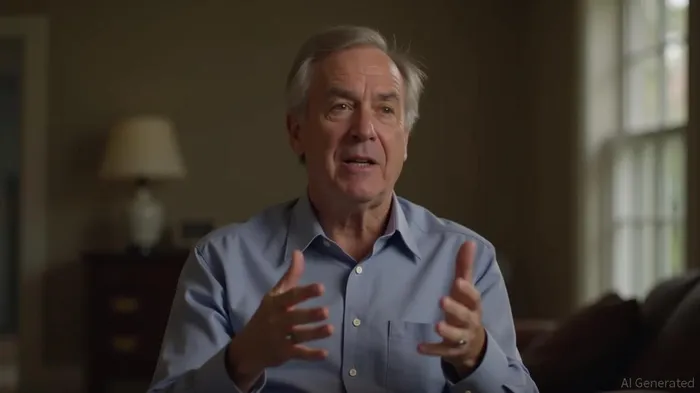
Investing expert Alistair Berg suggests that achieving long-term investing success doesn't have to be overly complex, citing Warren Buffett's philosophy of simplicity. Berg recommends three "sleep well at night" picks for investors, but the specific picks are not mentioned in the article. The article was co-produced with Kody Kester.
Investing expert Alistair Berg suggests that achieving long-term investing success doesn't have to be overly complex, citing Warren Buffett's philosophy of simplicity. Berg recommends three "sleep well at night" picks for investors, but the specific picks are not mentioned in the article. The article was co-produced with Kody Kester.Warren Buffett, the legendary "Oracle of Omaha," has built one of the greatest fortunes in history through disciplined investing and patient capital allocation. His wealth-building philosophy centers on purchasing quality assets at reasonable prices and holding them long-term. Rather than chasing market trends or complex strategies, Buffett advocates for simple, time-tested approaches that anyone can implement. His recommendations focus on buying assets that generate consistent returns while avoiding speculation and maintaining a long-term perspective.
One of Buffett's core principles is to buy S&P 500 Index Funds for long-term growth. He consistently recommends index funds as the best investment vehicle for average investors. In his 2013 letter to Berkshire Hathaway shareholders, Buffett provided specific guidance: "Put 10% of the cash in short-term government bonds and 90% in a very low-cost S&P 500 index fund." This recommendation reflects his belief that broad market exposure through low-cost funds delivers superior returns compared to active management [1].
Buffett’s emphasis on "very low-cost" funds is crucial. High fees compound negatively over time, eroding returns that would otherwise benefit the investor. Buffett has instructed the trustee of his estate to invest 90% of his wife’s inheritance in an S&P 500 index fund, demonstrating his conviction in this strategy [1].
Another key aspect of Buffett's philosophy is buying wonderful companies at fair prices. He evolved from seeking bargain stocks to focusing on quality businesses. His famous maxim states: "It’s far better to buy a wonderful company at a fair price than a fair company at a wonderful price." This principle reflects a fundamental shift in his approach, influenced by Charlie Munger’s emphasis on business quality over pure price considerations [1].
Wonderful companies possess several key characteristics: consistent earnings growth, high returns on equity, manageable debt levels, and durable competitive advantages. These competitive advantages, which Buffett calls "economic moats," protect companies from competitors and allow them to maintain pricing power over time. Examples include Coca-Cola and Apple, which Buffett expanded his circle of competence to include [1].
Buffett’s contrarian approach to market timing is captured in his famous principle: "Be fearful when others are greedy, and be greedy when others are fearful." This philosophy was prominently displayed during the 2008 financial crisis when he penned an op-ed for The New York Times titled "Buy American. I Am," encouraging investors to purchase stocks during the market downturn [1].
Buffett sees these periods as opportunities to acquire quality companies at discounted prices. His approach assumes that temporary market pessimism often creates pricing inefficiencies that reward patient investors. During the 2008 financial crisis, Buffett invested strategically in companies like Goldman Sachs and Bank of America, providing capital through special equity deals when these institutions faced significant stress [1].
The key to this strategy is distinguishing between temporary market volatility and fundamental business deterioration. Buffett focuses on companies with strong competitive positions and solid balance sheets that can weather economic storms. He maintains significant cash reserves at Berkshire Hathaway specifically to capitalize on such opportunities when they arise [1].
Buffett often states, "The best investment you can make is in yourself." This philosophy reflects his belief that knowledge and skills compound over time, similar to financial investments, but with even greater potential returns. Buffett's legendary reading habit exemplifies this principle. He spends most of his day reading financial reports, newspapers, and books, constantly expanding his knowledge base. This continuous learning has enabled him to make informed investment decisions across various industries and economic cycles [1].
Investing within your circle of competence is another principle Buffett emphasizes. He suggests that risk comes from not knowing what you’re doing. Successful investors focus on areas where they have knowledge, experience, or natural aptitude. This focused approach typically produces better results than spreading efforts across unfamiliar business areas [1].
Buffett’s wealth-building strategy emphasizes simplicity, patience, and discipline over complexity and speculation. His approach centers on buying quality assets at reasonable prices and holding them for extended periods, allowing compound growth to work its magic. Low-cost index funds provide the best path to long-term wealth creation for most investors. At the same time, those willing to research individual companies should focus on businesses they understand and have strong competitive positions.
According to Buffett, the foundation of successful investing is continuous learning and maintaining emotional discipline during market volatility. These timeless principles have created enormous wealth for Buffett and can guide any investor toward financial success.
References:
[1] https://www.newtraderu.com/2025/07/10/5-things-to-buy-to-be-wealthier-according-to-warren-buffett/
Stay ahead of the market.
Get curated U.S. market news, insights and key dates delivered to your inbox.


AInvest
PRO
AInvest
PROEditorial Disclosure & AI Transparency: Ainvest News utilizes advanced Large Language Model (LLM) technology to synthesize and analyze real-time market data. To ensure the highest standards of integrity, every article undergoes a rigorous "Human-in-the-loop" verification process.
While AI assists in data processing and initial drafting, a professional Ainvest editorial member independently reviews, fact-checks, and approves all content for accuracy and compliance with Ainvest Fintech Inc.’s editorial standards. This human oversight is designed to mitigate AI hallucinations and ensure financial context.
Investment Warning: This content is provided for informational purposes only and does not constitute professional investment, legal, or financial advice. Markets involve inherent risks. Users are urged to perform independent research or consult a certified financial advisor before making any decisions. Ainvest Fintech Inc. disclaims all liability for actions taken based on this information. Found an error?Report an Issue


ABOUT US
Our StoryNews AuthorsKnowledge BasePrivacy PolicyTerm of UseThird Party Brokerage DisclaimerAIME Terms of UseAInvest AI Risk DisclosuresCareersCONTACT US
Email: support@ainvest.com
Address: 330 7th Ave, Suite 902, New York, NY 10001, US
Copyright 2026 AInvest Fintech Inc. All rights reserved.


Comments
No comments yet