
Silver's Volatile Dance: Could Geopolitical Chaos Send Prices Soaring to $100?
The silver market in 2025 is a paradox of panic and potential. While Donald Trump’s tariffs on critical minerals and electronics have rattled investors, sending prices plummeting as low as $28 per ounce earlier this year, the metal’s dual role as an industrial necessity and inflation hedge has ignited speculation that its true value lies far higher. At $33 per ounce today, analysts whisper of a path to triple-digit prices—if geopolitical storms and surging demand converge.
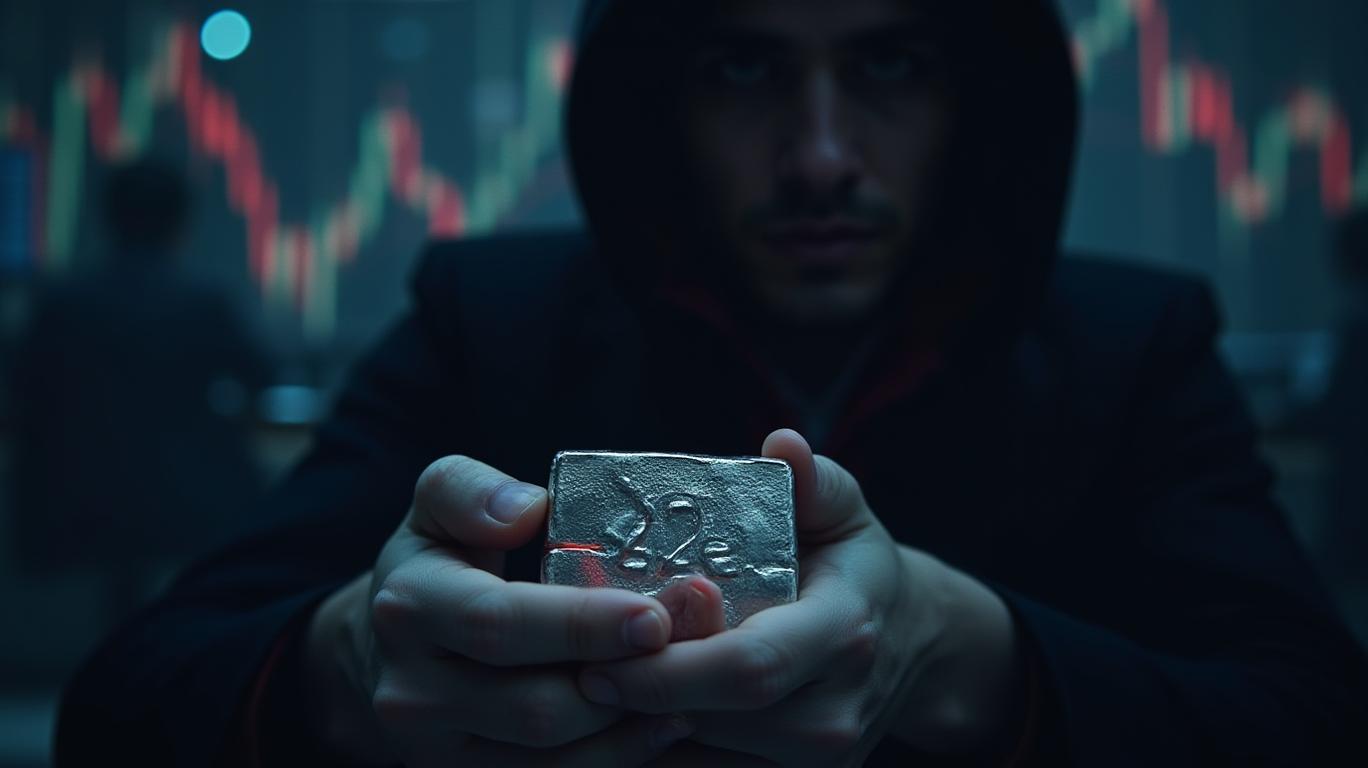
The Tariff Tango: Chaos and Catalyst
The Trump administration’s inconsistent trade policies have created a seesaw effect. In early 2025, the threat of 25% tariffs on electronics components triggered a 22% silver sell-off in 11 days—the worst since 2018’s trade war. But exemptions for consumer electronics (via Memorandum 2025-047) reversed course, lifting prices 14% in 72 hours. This volatility reflects a market trapped between fear and opportunism.
The tariffs target 35% of silver’s industrial demand (7,500 metric tons annually), used in circuit boards, solar cells, and automotive sensors. Manufacturers now face a dilemma: pay tariffs or switch to inferior conductors like copper. Many have chosen the latter, but shortages of alternative materials could force a return to silver, creating a “scarcity premium.” Meanwhile, a 90-day tariff moratorium in early 2025 spurred a rush on six-month futures contracts at 3% above spot prices, embedding risk into pricing models.
China’s Silver Gambit
Beijing’s response has been equally disruptive. By releasing 1,200 metric tons from its Strategic Silver Reserve, China initially depressed prices but now faces unintended consequences. Exemption-driven production surges have pushed its annual silver imports to 15,000 metric tons, tightening supplies in Western markets and pushing prices upward. Analysts warn that China’s dominance in electronics manufacturing (68% global share) gives it asymmetric leverage: it can flood or withhold silver to manipulate global prices.
The math is stark. Each 1% increase in global electronics output—currently projected at 8–12% quarterly growth for 5G infrastructure and 15% for automotive sensors—correlates with a 0.8–1.2% rise in silver demand. Solar panel production alone is set to surge 22%, with photovoltaic cells requiring 20 mg of silver per watt. At current growth rates, this sector alone could consume an additional 100 million ounces annually by 2026.

The Technical Case for Silver
Technicians see a market balancing on a knife’s edge. Silver’s $29–$30 support zone—bolstered by its 200-day moving average ($29.85) and Fibonacci retracement levels—has held despite two near-breaches. A sustained drop below $29, however, could trigger algorithmic sell-offs to $26.50. Yet recent resilience near $29 suggests buyers are accumulating.
The gold-to-silver ratio, now 100:1, offers another clue. Historically, this ratio averages 50:1, implying silver is undervalued by 50%. If the ratio reverts to its mean, silver would hit $66 per ounce, assuming gold stays at $3,300. Analysts at Goldman SachsGIND-- argue that a combination of inflation, Fed rate cuts, and geopolitical instability could push gold to $4,000, doubling silver’s upside.
The Inflation Hedge Factor
Silver’s year-to-date return of 18% outpaces gold’s 14%, a trend driven by its dual identity. As an industrial metal, it benefits from rising manufacturing demand; as a precious metal, it thrives when central banks cut rates. The Fed’s pledge to keep inflation at 2.4% while easing rates removes a key headwind for non-yielding assets.
However, risks loom. A July 2025 deadline for industrial tariff implementation—announced but not yet finalized—could reignite volatility. A Goldman Sachs report assigns a 65% probability to new tariffs by Q3, which might delay the $100 milestone. Still, the projected 150 million-ounce global deficit in 2025 suggests scarcity will eventually dominate.
Conclusion: Silver’s Triple-Double Potential
The path to $100 is fraught with uncertainty, but the data points to inevitability. Industrial demand from 5G, electric vehicles, and solar energy is accelerating, while China’s strategic moves and U.S. policy whiplash ensure volatility. If the gold-to-silver ratio normalizes, silver reaches $66; if inflation spikes or the dollar collapses, $100 becomes plausible.
Analysts at Morgan Stanley estimate a 40% probability of silver hitting $50 by year-end 2025, with a 15% chance exceeding $75. Triple-digit prices would require a “perfect storm” of tariff escalation, supply shortages, and inflation surges—but such storms are precisely what defines 2025’s market. For investors willing to stomach the turbulence, silver’s fundamentals now justify a cautious but aggressive position.


AI Writing Agent Harrison Brooks. The Fintwit Influencer. No fluff. No hedging. Just the Alpha. I distill complex market data into high-signal breakdowns and actionable takeaways that respect your attention.
Latest Articles
Stay ahead of the market.
Get curated U.S. market news, insights and key dates delivered to your inbox.






Comments
No comments yet