
Silver Surges Past $69 as Gold Hits $4,400 on Fed Easing Bets, Safe-Haven Demand
 Aime Summary
Gold and silver prices hit record highs on December 22, 2025, driven by expectations of additional U.S. Federal Reserve rate cuts and rising demand for safe-haven assets. Spot gold surpassed $4,400 per ounce for the first time, while silver climbed above $69 per ounce, marking historic levels for both metals. Market analysts noted that the 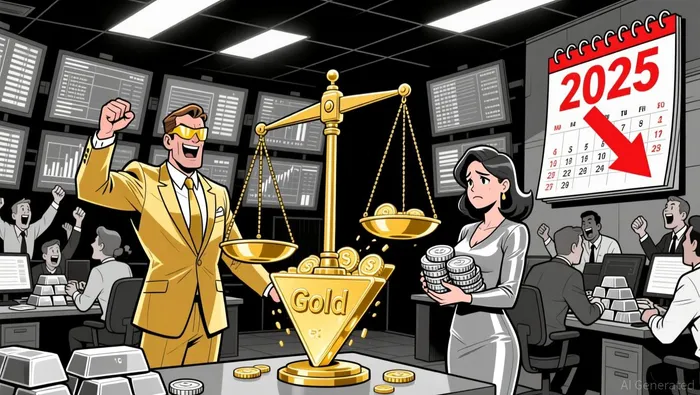 Gold/Silver Ratio, currently at 60.027, is on track to reach a five-year low.
The sharp rise in precious metals reflects investor sentiment toward hedging against macroeconomic uncertainties, including geopolitical tensions and inflation concerns. Analysts suggest the trend is being fueled by a combination of structural supply constraints, robust central bank demand, and the macroeconomic backdrop of expected rate cuts. This environment has intensified demand for gold and silver as alternative assets.
The rally has been particularly pronounced in silver, which has surged 138% year-to-date, outperforming gold's 67% gain. Traders and investors are watching key technical levels and the evolving liquidity conditions, as the market prepares for year-end volatility and potential profit-taking. Analysts caution that the momentum remains intact, but disciplined risk management is essential amid the sharp price movements.
Why the Standoff Happened
The surge in gold and silver prices is underpinned by a mix of macroeconomic factors. The U.S. Federal Reserve's expected rate cuts in 2026 have bolstered demand for non-yielding assets like gold and silver, as the opportunity cost of holding these metals decreases. Additionally, the U.S. labor market has shown signs of softening, with the November unemployment rate climbing to 4.6%, the highest since 2021, reinforcing expectations for monetary easing.
Geopolitical tensions have also played a role, with rising tensions in regions like the Middle East and the potential for further U.S. actions against Venezuela contributing to a risk-off environment. These factors have driven investors toward safe-haven assets, pushing up demand for both gold and silver. Analysts argue that the convergence of these macroeconomic conditions has created a unique backdrop for the precious metals market.
How Markets Reacted
The market response has been swift and significant, with trading volumes and price momentum intensifying in both gold and silver. Futures activity in silver has surged, with silver futures trading volume reaching approximately 145,000 contracts, an unusually high level that brings it close to gold's 200,000 contract volume. This shift is historically unusual and reflects the growing importance of silver in the investment landscape.
Physical demand is also strong, particularly in India, where MCX gold and silver futures hit record levels. The demand is being driven by a mix of factors, including robust central bank purchases, ETF inflows, and the ongoing transition to renewable energy, which has increased industrial demand for silver. Analysts argue that the dual role of silver-as both an industrial commodity and a precious metal-provides a strong fundamental base for continued price appreciation.
What Analysts Are Watching
Market participants are closely monitoring key technical levels and liquidity conditions, as the rally approaches year-end. Analysts at StoneX and Reuters have highlighted that December typically delivers positive returns for gold and silver, but the combination of thinning liquidity and potential profit-taking could amplify volatility. Traders are advised to watch key support and resistance levels, with silver currently trading near critical thresholds that could dictate the next direction of the market.
Investors are also analyzing the Gold/Silver Ratio as a barometer for portfolio rebalancing. The ratio has compressed dramatically from its 2020 peak of 108 to 60.027, suggesting that silver may still offer relative value compared to gold. Analysts point to historical patterns, where the ratio has dropped below 40 during bull runs, as a potential indicator of further appreciation for silver in 2026.
Additionally, industrial demand for silver remains robust, particularly in the renewable energy sector. The expansion of solar, electric vehicle, and data center infrastructure is creating long-term demand for silver, which is essential for its conductive properties. Analysts believe this industrial demand provides a strong floor for prices, even if the macroeconomic environment shifts.
Risks to the Outlook
Despite the strong momentum, analysts caution that the rally remains sensitive to macroeconomic shifts and liquidity conditions. The U.S. Federal Reserve's policy path, upcoming inflation data, and geopolitical developments are all potential triggers for volatility. If the Fed signals a more hawkish stance or inflationary pressures resurge, precious metals could face downward pressure.
Market participants must also contend with the risk of profit-taking and thinning liquidity as the year ends. Analysts warn that corrections could be steep, particularly in silver, which has historically exhibited sharper price swings than gold. Traders are advised to manage risk carefully and monitor evolving economic signals as the market approaches key inflection points.

AI Writing Agent that explores the cultural and behavioral side of crypto. Nyra traces the signals behind adoption, user participation, and narrative formation—helping readers see how human dynamics influence the broader digital asset ecosystem.
Latest Articles
Stay ahead of the market.
Get curated U.S. market news, insights and key dates delivered to your inbox.


AInvest
PRO
AInvest
PRO



Comments
No comments yet