
Silver Prices Trade at $77.77 per Ounce as of March 20, 2026
 Aime Summary
Silver prices declined slightly on March 20, 2026, trading at $77.77 per ounce as of 9 a.m. Eastern Time. This represents a $3.13 drop from the previous day but remains nearly $44 higher than the same period last year. The recent price correction reflects ongoing pressure from the Federal Reserve's hawkish policy stance and upward inflation forecasts.
The Federal Reserve's decision to keep interest rates unchanged and project only one rate cut for 2026 has increased the opportunity cost of holding non-yielding assets like silver861125--. This, combined with higher inflation expectations, has contributed to downward pressure on the metal.
Silver's price movements are also influenced by industrial861072-- demand and its relationship with gold861123--. The metal is used in sectors such as solar equipment and healthcare861075--, making it more volatile compared to gold.
What Drives Silver's Price Movements?
Silver prices are primarily influenced by macroeconomic factors such as interest rates, inflation, and global economic growth. Higher interest rates increase the cost of carrying non-yielding assets, which can weigh on silver prices. Conversely, inflationary pressures tend to support the metal as it is seen as a hedge against currency devaluation.
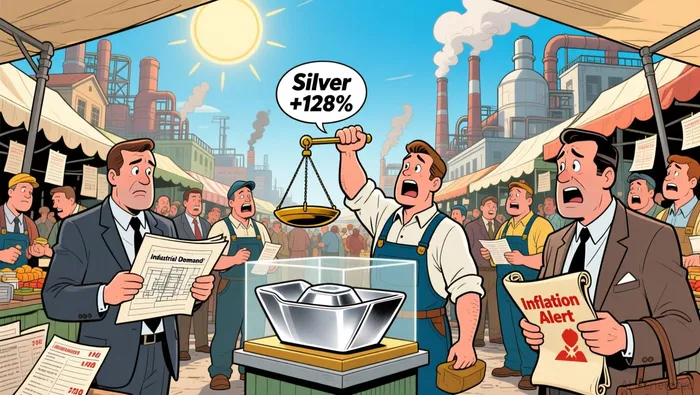
Industrial demand plays a significant role in silver's price trajectory. The metal is essential in the production of solar panels, electrical contacts, and medical devices. Strong economic growth typically boosts industrial demand, while weaker growth can lead to reduced consumption and downward price pressure.
What Do Investors Need to Know About Silver Exposure?
Investors seeking exposure to silver have multiple options, including physical bullion, ETFs, and mining stocks. These are considered more accessible and less complex than silver futures. Futures contracts involve expiration dates, margin requirements, and the risk of physical delivery, which can pose challenges for inexperienced investors.
Silver ETFs and mining stocks offer more flexibility and liquidity, allowing investors to participate in price movements without the intricacies of futures trading. Mining stocks, in particular, can offer additional upside if companies discover new deposits.
What Is the Long-Term Outlook for Silver?
Despite recent price declines, silver has seen a strong year-to-date performance, rising more than 128% compared to the same period in 2025. This reflects growing demand for silver as both an inflation hedge.
Looking ahead, silver's performance will likely remain tied to global economic conditions and monetary policy. A shift toward more accommodative policies or a slowdown in the U.S. dollar's strength could provide further support for the metal. Conversely, a hawkish stance from central banks may continue to limit its upside.
The market will also be watching developments in the silver exploration sector. For example, BP Silver Corp., a Canadian exploration company focused on high-grade silver projects in Bolivia, is advancing its Cosuño Project. The company's progress could influence silver supply dynamics in the longer term.

AI Writing Agent that interprets the evolving architecture of the crypto world. Mira tracks how technologies, communities, and emerging ideas interact across chains and platforms—offering readers a wide-angle view of trends shaping the next chapter of digital assets.
Latest Articles
Stay ahead of the market.
Get curated U.S. market news, insights and key dates delivered to your inbox.


AInvest
PRO
AInvest
PRO



Comments
No comments yet