
Silver Prices Today: Why the Sudden Spike and What's Next for the Metal Market
 Aime Summary
Silver prices have surged past $100 per ounce in early 2026, marking one of the most dramatic moves in the metal’s 60-year history.
- The recent rally has been driven by a combination of geopolitical tensions, Federal Reserve rate cut expectations, and industrial demand for AI infrastructure and renewable energy.
- Technical analysis shows the gold-to-silver ratio hitting a 15-year low, with analysts forecasting further gains for both metals depending on market conditions and central bank behavior.
- Options strategies such as collars are being used by investors to hedge against a potential correction in silver, with some traders already positioning for a pullback.
- Analysts are split on the sustainability of the move, with some suggesting the recent surge may have topped out due to diverging performance between gold and silver.
Silver prices have taken off in early 2026, reaching $108.71 per ounce in early January 2026 — a sharp move that caught many investors by surprise. The price had briefly touched an intraday high of $117.69 before retracing, but the broader trend remains bullish. 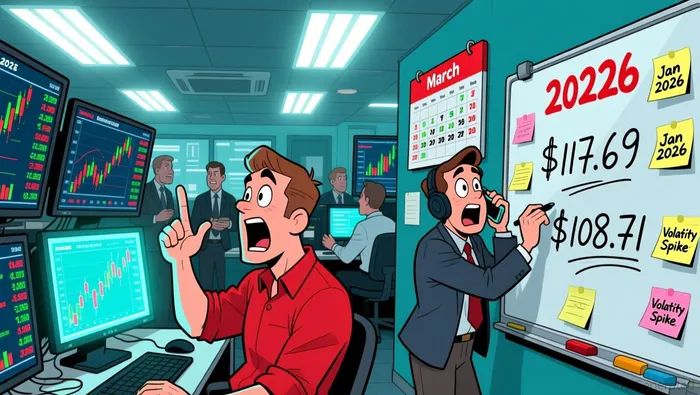 The rally is being fueled by a mix of macroeconomic factors including global geopolitical tensions, U.S. dollar weakness, and growing demand from the electric vehicle and solar panel industries.
Why Is Silver Surging So Sharply in January 2026?
Silver’s recent price action has been nothing short of explosive. In just a few weeks, it has more than doubled from its 52-week low, with some analysts calling it a “short squeeze” in physical markets. This is not the first time silver has seen a parabolic move — the 1979 Hunt Brothers corner of the market is a historical example of concentrated demand pushing prices up sharply.
In 2026, the drivers are more structural. Geopolitical tensions, particularly around potential military action in the Middle East, are pushing investors toward precious metals as safe-haven assets. Meanwhile, the Federal Reserve’s anticipated rate cuts are weakening the U.S. dollar, which boosts the appeal of dollar-denominated commodities like silver. On the industrial side, demand for silver in manufacturing processes for AI hardware and solar panels has also contributed to the surge.
What Does This Mean for Investors and Traders?
For investors, the sharp rise in silver prices has created both opportunities and risks. On one hand, those who bought early in the year are seeing significant gains. On the other hand, the volatility has led many to adopt hedging strategies such as collars, which limit downside exposure while capping upside gains.
However, not all analysts are bullish on the near-term outlook. Kevin Muir, a former institutional trader, has suggested that silver may have already topped out based on recent price divergence from gold. While gold remains a long-term bullish asset, silver's performance appears to be out of sync with the broader precious metals market.
Technical indicators are also mixed. Some analysts argue that key support levels remain intact, suggesting a potential for further gains. Others are watching for signs of a correction, particularly if geopolitical tensions ease or if the dollar strengthens in response to Fed actions.
How to Navigate the Silver Price Volatility
Investors interested in silver can take several approaches. For those who are bullish, buying physical silver or ETFs that track the metal is one option. For those who want to hedge against potential volatility, options strategies can provide a safety net. A collar strategy — buying a put and selling a call — can protect against sharp declines while capping upside potential.
Traders should also keep an eye on Asian market activity, as global demand for silver is increasingly shifting toward manufacturing centers in Asia and the Middle East. This shift could have a lasting impact on silver prices in the coming months.
Still, there are risks to consider. Silver has historically been more volatile than gold, and any sharp correction could catch investors off guard. The recent move has also attracted speculative capital, which can amplify price swings in either direction. Given this environment, it is crucial for investors to manage risk carefully and consider their long-term goals before jumping into the market.
As the silver price continues to trend upward, the focus for investors and analysts will be on whether the rally is sustainable or whether it’s a short-lived squeeze. The coming weeks will be critical in determining the next move for the metal market, especially as geopolitical tensions and monetary policy remain key variables.

Stay ahead of the market.
Get curated U.S. market news, insights and key dates delivered to your inbox.


AInvest
PRO
AInvest
PRO



Comments
No comments yet