
Silver Prices Soar Amid Supply Constraints and Geopolitical Tensions
 Aime Summary
- , driven by supply constraints, rising industrial demand, and macroeconomic factors like expected U.S. interest rate cuts.
- Silver's gains are supported by its role as a safe-haven asset amid geopolitical tensions and its critical use in industries like solar energy and electric vehicles.
- , attributed to year-end profit-taking and tax-loss harvesting, according to of KKM Financial.
, reaching record levels amid global demand outpacing supply. The U.S. government has designated silver as a critical mineral, and China's new export restrictions are expected to tighten global supply, potentially pushing prices even higher. This policy shift reflects a broader trend of strategic resource nationalism, impacting global supply chains for metals essential to modern industries. Analysts suggest that these factors, combined with structural supply deficits, could support further price increases in 2026.
What Drives Silver Prices to Record Highs in 2025?
Silver’s meteoric rise in 2025 has been fueled by a combination of factors, including a weaker U.S. dollar, geopolitical tensions, and supply-demand imbalances. The price spike was also amplified by speculative trading and the designation of silver as a critical U.S. mineral. Low inventories, combined with rising industrial demand for electronics, solar panels, and electric vehicles, have pushed silver into a record-breaking rally.
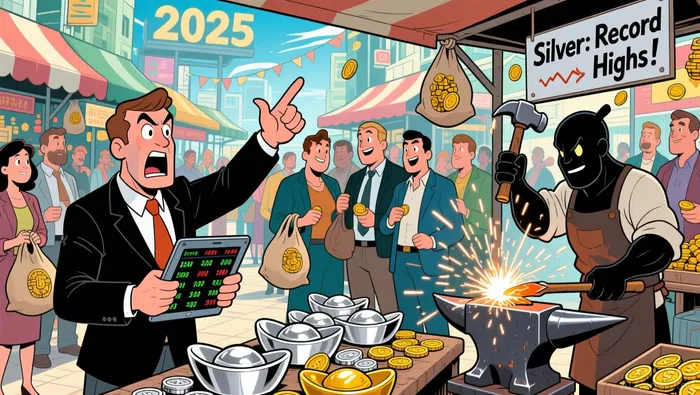
The metal has also benefited from its dual role as both an investment and an industrial asset. Central bank purchases, inflows into exchange-traded funds (ETFs), and U.S. Federal Reserve rate cuts have all contributed to the bullish momentum. of IG Australia has warned of a potential "generational bubble" forming in silver due to its structural supply-demand imbalance and investor frenzy.
What Happens Next for Silver Prices and Investors in 2026?
While silver has faced a sharp pullback after hitting $80 an ounce, the underlying fundamentals remain strong. Analysts like of High Ridge Futures believe that supply constraints and industrial demand will continue to support the metal. Elon Musk has expressed concerns over China's export restrictions, which could disrupt manufacturing sectors reliant on silver for electronics and renewable energy applications.
China's new export rules, effective January 1, 2026, require government licenses for silver exports, which could reduce global supply and increase price volatility. This policy aligns with broader resource nationalism trends, particularly in metals critical to the energy transition. U.S. efforts to boost domestic production face hurdles due to China’s dominance in refining and processing. Investors should watch for developments in alternative materials, recycling technologies, and geopolitical diversification strategies.
Silver’s future is also tied to macroeconomic trends, including U.S. interest rates and global inflation expectations. With the U.S. economy still grappling with debt concerns and geopolitical risks, precious metals like silver and gold are likely to remain in demand as a hedge against currency debasement and uncertainty.
Is Silver a Better Investment Than Gold in 2026?
, . Analysts like note that historically, silver often lags in bull markets before experiencing significant gains. The narrowing gold-silver ratio, , indicates a shift in investor preference toward the more affordable and versatile precious metal.
Silver’s outperformance can be attributed to its dual role as both an investment and an industrial commodity. Its price volatility, compared to gold, stems from its lower liquidity and greater exposure to supply disruptions. For investors, silver’s lower entry point makes it an accessible option for those looking to diversify their portfolios with precious metals. However, the increased industrial demand and regulatory shifts in 2026 may lead to higher price swings, making it a more speculative bet than gold.
Regardless of the choice between silver and gold, investors should consider their individual risk tolerance, investment horizon, and macroeconomic outlook before committing to a position in precious metals.

Stay ahead of the market.
Get curated U.S. market news, insights and key dates delivered to your inbox.






Comments
No comments yet