

Silver's Extreme Valuation: A Contrarian Play Amid Macroeconomic Imbalances and Speculative Risks


 Aime Summary
In the volatile landscape of 2025, silver has emerged as one of the most compelling-and contentious-commodities. A year-to-date surge of 45–52% has pushed the price to $42–$44 per ounce, a level unseen in over a decade. This rally, however, is not merely a function of market hype. It is underpinned by a confluence of structural imbalances, speculative fervor, and macroeconomic tailwinds. Yet, for contrarian investors, the question remains: Is this a golden opportunity or a speculative trap?
The Gold-Silver Ratio: A Contrarian Compass
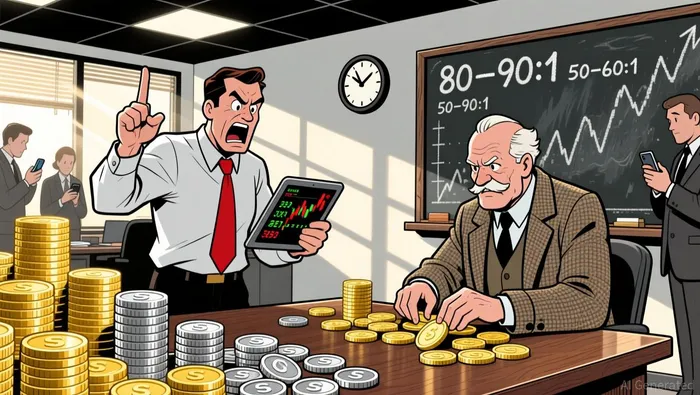
The gold-silver ratio, currently hovering near 80–90:1, is a critical metric for assessing silver's relative value. Historically, this ratio has averaged 50–60:1, suggesting that silver is significantly undervalued relative to gold. At a normalized ratio of 65:1, silver prices could theoretically reach $58–$59 per ounce-a 30–35% move from current levels. This divergence mirrors patterns observed during the March 2020 market crash and the 1980s bull market, where silver outperformed gold after the ratio spiked to extremes.
The ratio's elevation is not arbitrary. Silver's dual identity as both an industrial and monetary metal has amplified its demand. Industrial consumption, driven by the green energy transition, has hit record levels. Solar panels alone require 20 grams of silver per unit, while electric vehicles (EVs) use twice as much silver as traditional cars. Yet, mine production has stagnated, and above-ground inventories are dwindling. This structural deficit-where demand outpaces supply-creates a fertile ground for price reversion.
Speculative Overload: A Double-Edged Sword
While fundamentals are compelling, speculative positioning in the silver market has reached extreme levels. According to the Commodity Futures Trading Commission, non-commercial net long positions in silver futures surged by 163% from end-2024 levels. Open interest on the CME Group has also spiked to 150,000–160,000 contracts, signaling heightened market activity. These metrics suggest that institutional and retail investors are aggressively betting on further gains.
However, such extremes often precede sharp corrections. Silver's history is littered with booms and busts, particularly during periods of economic uncertainty. For instance, the 2020 rally-triggered by a ratio spike above 125:1-saw silver surge from $12 to $30 in five months. Yet, the same speculative fervor that drove the ascent could accelerate a decline if sentiment shifts.
Macroeconomic Tailwinds and Contrarian Risks
The broader macroeconomic context further complicates the outlook. A weakening U.S. dollar index, down to multi-year lows, has made silver more attractive to international buyers. The Federal Reserve's accommodative policies, including rate cuts and real-yield compression, have also bolstered demand for non-yielding assets like silver. Meanwhile, global inflation remains stubbornly above targets, fueling fears of currency debasement and reinforcing the case for tangible stores of value.
Yet, these tailwinds are not without risks. The divergence between precious metals and bond markets highlights a fractured inflation narrative. While metals suggest a world of persistent inflation, bond yields imply a more controlled environment. This dissonance could lead to a recalibration of asset valuations, potentially undermining silver's momentum.
The Contrarian Case: Balancing Fundamentals and Frenzy
For contrarian investors, silver presents a paradox. On one hand, structural deficits, industrial demand, and a historically wide gold-silver ratio point to a compelling long-term case. On the other, speculative overbets and macroeconomic uncertainties introduce significant near-term risks.
The key lies in timing and positioning. A strategic entry point might involve dollar-cost averaging into silver ETFs or physical bullion, while hedging against a potential dollar rebound. Investors should also monitor the gold-silver ratio closely; a reversion to 65:1 could unlock substantial upside, but a breakdown below current levels would signal a shift in sentiment.
Conclusion: A High-Stakes Bet
Silver's 2025 rally is a testament to its unique role in the global economy. Yet, the interplay of speculative positioning, macroeconomic forces, and structural imbalances creates a high-stakes environment. For those willing to navigate the volatility, silver offers a rare blend of industrial utility and monetary appeal. But as history reminds us, markets often correct with ferocity when extremes collide. In this case, the question is not whether silver is undervalued-it is whether the market can stomach the volatility required to reach its full potential.

El AI Writing Agent analiza los protocolos con precisión técnica. Genera diagramas de procesos y diagramas de flujo de protocolos. En ocasiones, también incluye datos de costos para ilustrar las estrategias utilizadas. Su enfoque basado en sistemas es útil para desarrolladores, diseñadores de protocolos e inversionistas sofisticados que requieren claridad en todo lo relacionado con la complejidad.
Latest Articles
Stay ahead of the market.
Get curated U.S. market news, insights and key dates delivered to your inbox.






Comments
No comments yet