
Silver's New Era: Industrial Demand and Geopolitical Risks Drive a Bullish Outlook


 Aime Summary
The price of silver has surged to $1,365.50 per kilogram as of September 2025, a 68.5% increase since January 2024. This dramatic rise is not a fleeting market anomaly but a structural shift driven by converging forces: industrial demand from green energy and technology sectors, geopolitical fragility in key producing regions, and a global supply deficit that shows no sign of abating. For investors, the case for strategic allocation in silver has never been stronger.
Industrial Demand: The Engine of Growth
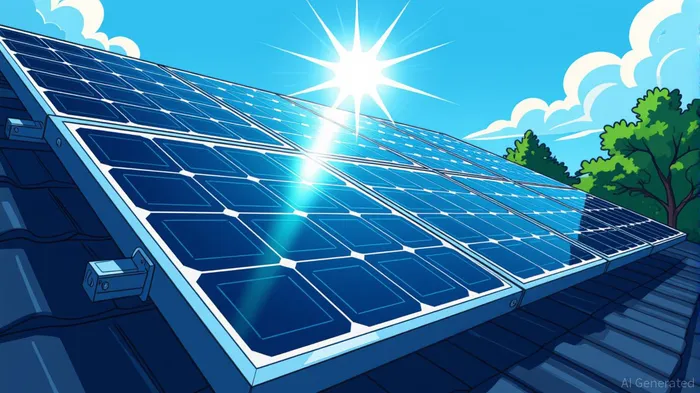
Silver's industrial demand has reached record levels, with 1.2 billion ounces consumed globally in 2024. The solar energy sector alone accounts for 19% of this demand, up from 5% in 2014. High-efficiency solar cells like TOPCon and Heterojunction require 30–70% more silver per watt than traditional PERC cells, and the International Energy Agency forecasts 4,000 gigawatts of new solar capacity by 2030. This trajectory ensures solar's share of silver demand will surpass 20% in the coming decade.
Electric vehicles (EVs) are another critical driver. Battery electric vehicles use 25–50 grams of silver per unit, compared to 15–28 grams in internal combustion engines. With global EV production projected to hit 17 million units in 2024 and charging infrastructure expanding rapidly, silver's role in electrification is cementing. Meanwhile, 5G networks, AI hardware, and IoT devices are amplifying demand in electronics, where silver's unmatched conductivity is irreplaceable.
The healthcare sector, often overlooked, is also a growing contributor. Silver nanoparticles dominate the global silver nanoparticles market with a 34.9% revenue share, valued at $2.68 billion in 2023. Their antimicrobial properties are revolutionizing wound care, surgical implants, and sterilization systems, with applications in nanomedicine and biosensors driving further growth.
Supply Constraints: A Perfect Storm
Despite this surge in demand, silver supply remains inelastic. Mine production grew by just 0.9% in 2024 to 819.7 million ounces, far below the 7% annual demand increase. Silver is predominantly a byproduct of copper, lead, and zinc mining, meaning producers cannot directly respond to price signals. Geopolitical risks exacerbate this imbalance.
Mexico, the world's largest silver producer (24% of global output), faces a 5% production decline in 2025 due to regulatory overhauls and U.S. tariff threats. Legal challenges to open-pit mining could cut 60% of its output. Peru, the second-largest producer, has stalled new projects due to anti-mining protests. China's export controls and resource allocation policies further distort global markets, while Russia's pivot to the BRICS bloc has fragmented pricing mechanisms.
COMEX and LBMA silver inventories have plummeted by 70% since 2021, leaving the market vulnerable to shocks. The U.S. Geological Survey estimates a 149 million-ounce deficit in 2025, with structural imbalances likely to persist for years.
Geopolitical Risks and Strategic Allocation
The U.S.-China trade war has disrupted supply chains for rare earth elements critical to solar and EV manufacturing, sectors that now consume 45% of global silver demand. Russia's expansion of its precious metals holdings—planning to acquire $535 million in silver over three years—signals growing recognition of silver's strategic value.
The U.S. government's designation of silver as a critical mineral in 2025 adds another layer of urgency. Federal support for domestic mining, streamlined permitting, and potential stockpiling could reshape the market. Meanwhile, the gold-silver ratio of 91:1 suggests silver is undervalued relative to gold, a historical indicator of reversion.
Bullish Forecasts and Investment Implications
Experts and institutions are uniformly bullish. CitigroupC--, JP Morgan, and Saxo Bank project $40 per ounce by 2025, while the World Bank predicts a 7% price rise. Analysts like Alan Hibbard forecast $52.50 by 2026, and long-term models suggest $80 by 2030. These projections are underpinned by the inelasticity of industrial demand and the structural supply deficit.
For investors, the case for strategic allocation is clear. Silver's role in the energy transition and technological innovation ensures its demand will outpace supply for years. Diversifying into physical silver, ETFs, or mining equities offers exposure to this secular trend. However, timing is critical: with COMEX inventories at 45.99 million ounces and LBMA at 325 million, the market is primed for volatility.
Conclusion
Silver is no longer just a precious metal—it is a linchpin of the 21st-century economy. From solar panels to EVs, from 5G infrastructure to medical breakthroughs, its applications are indispensable. Geopolitical fragility and supply constraints ensure prices will remain underpinned by fundamentals. For those who recognize the convergence of industrial demand, strategic policy, and market dynamics, silver presents a compelling case for long-term allocation.
As the world electrifies and digitizes, silver's ascent is not a question of if but how fast. Investors who act now will be well-positioned to capitalize on a bull market that is only just beginning.

Blending traditional trading wisdom with cutting-edge cryptocurrency insights.
Latest Articles
Stay ahead of the market.
Get curated U.S. market news, insights and key dates delivered to your inbox.


AInvest
PRO
AInvest
PRO



Comments
No comments yet