
Silver's Bull Market Ignites as Gold's Rally Falters: Technical Breakouts and Industrial Demand Drive Metals Divergence
 Aime Summary
The precious metals sector is undergoing a seismic shift. While gold consolidates near historic highs, silver has emerged as the standout performer in 2025, driven by technical breakouts, surging industrial demand, and shifting macroeconomic dynamics. This divergence presents a compelling opportunity for investors to capitalize on silver's ascendant momentum while navigating gold's softening trajectory. Let's dissect the technical and fundamental drivers behind this metals split.
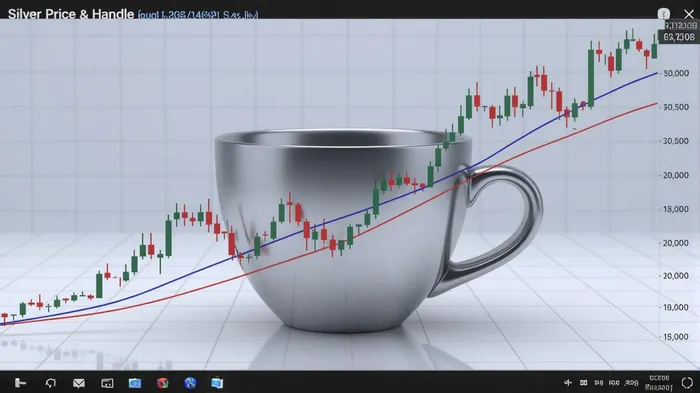
Technical Divergence: Silver's Breakout vs. Gold's Consolidation
Silver's technical setup is screaming bullish. The metal has completed a 45-year cup-and-handle pattern, a rare formation signaling a potential surge toward $50–$65 per ounce. Recent price action confirms this:
- Breakout above $35: Silver pierced this key resistance in July, closing above $36.50 and targeting $41–$42 in the near term.
- Oversold extremes: Silver's RSI hit 24.8, a level that historically precedes explosive rebounds.
- Ascending triangle pattern: A measured move from this breakout suggests $40.50 as an intermediate target, with $50 on the horizon by early 2026.
In stark contrast, gold is stuck in a consolidation phase.
- Ascending triangle pattern: Gold remains range-bound between $3,200 and $3,500, with resistance at the $3,500 psychological barrier.
- Overextended technicals: Gold's distance from its 36-month moving average mirrors overbought conditions seen in 2008 and 2011—preludes to corrections.
- Gold-silver ratio compression: The ratio has fallen to 130:1 from 150:1 earlier this year, reflecting silver's relative strength.
Macro Fundamentals: Industrial Demand Fuels Silver's Surge
Silver's outperformance isn't just technical—it's rooted in real-world demand. Three factors are accelerating its bull run:
Solar and EV Revolution:
Silver's role in photovoltaic panels and electric vehicle batteries is insatiable. The World Silver Survey 2025 projects industrial demand to grow 8% this year, with solar alone accounting for 250 million ounces by 2030.Fed Rate Cut Expectations:
Markets now price in 50–75 basis points of rate cuts by year-end, reducing the opportunity cost of holding non-yielding assets like silver. This contrasts with gold, which has partially priced in this easing.Central Bank Dynamics:
While central banks added 244 tonnes of gold in Q1, silver's industrial demand is less susceptible to geopolitical noise. Poland's recent 100-tonne gold purchase highlights institutional preference for gold's safety—yet silver's industrial ties ensure it benefits from global economic recovery.
Why Gold's Rally is Losing Momentum
Gold's stagnation isn't a coincidence. Three factors are undermining its momentum:
Safe-Haven Saturation:
Gold's all-time high of $3,400 in late 2023 has created a ceiling. Investors are rotating into silver for leverage to economic recovery, while gold's “fear premium” faces diminishing returns as geopolitical risks normalize.Dollar Strength:
The U.S. dollar's resilience, driven by relative economic stability, pressures gold—a dollar-denominated asset. Silver's industrial demand buffers it against this dynamic.ETF Outflows:
Gold ETFs like GLD have seen net outflows since March, while silver ETFs (e.g., SLV) attract inflows. This divergence signals investor preference for silver's growth profile.
Investment Strategy: Seizing Silver's Momentum
For investors, silver's technical and fundamental backdrop presents a high-reward opportunity:
Entry Points:
- Buy on dips to $34–$35: This zone has held as support twice in 2025.
- Target $41–$42: The first major resistance area, with potential for a 10% gain from current levels.
Long-Term Targets:
- $50 by early 2026: Historical analogs (e.g., 1972's silver boom) suggest this level is achievable if technicals hold.
Risk Factors:
- Gold's correction: A sharp decline in gold could spillover to silver. Monitor gold's $3,200 support.
- Industrial demand slowdown: A global recession would hit silver harder than gold.
- Volatility: Silver's price swings are 2–3x gold's—use stop-losses at $33.
Conclusion: Silver's Time to Shine
The technical and fundamental evidence is clear: silver is leading the next phase of the precious metals rally. Its industrial supercycle, oversold extremes, and divergence from gold's consolidation make it a top pick for 2025 and beyond. Investors should prioritize silver exposure—via ETFs, mining stocks (e.g., SILJ), or physical bullion—while maintaining a watchful eye on gold's technicals and macroeconomic crosswinds.
The metals' divergence isn't just a chart phenomenon—it's the dawn of a new industrial revolution. Silver's time is now.

Delivering real-time insights and analysis on emerging financial trends and market movements.
Latest Articles
Stay ahead of the market.
Get curated U.S. market news, insights and key dates delivered to your inbox.


AInvest
PRO
AInvest
PRO



Comments
No comments yet