
Silver's 2026 Price Surge: Is Triple-Digit Potential Realistic?


 Aime Summary
The year 2025 was a watershed moment for silver, with prices surging to record highs of $58.84 per ounce by December, nearly doubling from earlier in the year and outpacing gold's 60% rally. This meteoric rise was fueled by a confluence of structural supply deficits, surging industrial demand, and macroeconomic tailwinds. As we approach 2026, the question on every investor's mind is whether silver can break through the psychological barrier of $100 per ounce. Let's dissect the forces at play and assess the feasibility of this bold target.
Supply-Demand Imbalances: A Perfect Storm
The foundation of silver's bullish case lies in its persistent supply-demand imbalance. Over the past seven years, the global silver market has faced a cumulative deficit of nearly 800 million ounces, with 2025 marking the seventh consecutive year of undersupply. This structural gap is not a temporary anomaly but a reflection of deepening supply constraints and accelerating demand.
Supply Constraints:
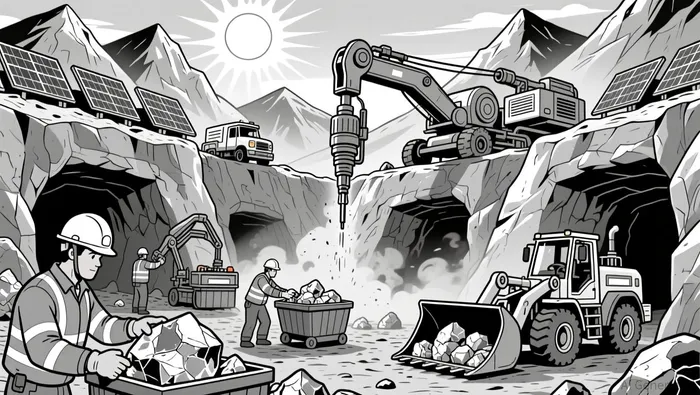
Global mine production in 2025 is projected at 835 million ounces, a 7.23% decline compared to 2016 levels. This contraction is driven by depleting high-grade ore reserves, falling mine grades, and underinvestment in exploration. Compounding the issue, 70% of silver is a by-product of copper and zinc mining, meaning its production is inherently tied to the economics of base metals. As these sectors face their own supply challenges, silver's output remains locked in a long-term downtrend.
Demand Surge:
Industrial demand accounts for 59% of global silver usage, with photovoltaic (solar) applications alone consuming 17% of total demand in 2024. The clean energy transition is a game-changer: solar demand for silver is expected to nearly double between 2020 and 2030. Meanwhile, the electrification of industries-particularly in automotive and electronics-is driving up silver consumption. Battery electric vehicles (BEVs) use 67-79% more silver than traditional vehicles, and AI-driven data centers require high-conductivity components that rely heavily on the metal according to analysis.
Macroeconomic Tailwinds: A Goldilocks Scenario
Beyond the physical market, macroeconomic factors are amplifying silver's ascent.
Portfolio Rebalancing and Geopolitical Risks:
Investors are increasingly diversifying into precious metals amid concerns over U.S. public debt, geopolitical tensions, and shifting trade policies. Silver's role as a hedge against currency debasement has gained traction, particularly in markets like China and India, where a weaker dollar is pushing investors toward hard assets as research shows.
Monetary Policy and Real Yields:
The Federal Reserve's pivot to rate cuts in late 2025 has further bolstered demand for silver. Lower real yields reduce the opportunity cost of holding non-yielding assets like silver, while ETF inflows have added liquidity to the market according to market analysis. The gold-silver ratio, currently near 79:1, suggests silver is undervalued relative to gold, creating a compelling case for further re-rating.
Triple-Digit Potential: A Feasible Target?
The question of whether silver can reach $100 per ounce in 2026 hinges on two key factors: the persistence of supply-demand imbalances and the trajectory of macroeconomic conditions.
Institutional Forecasts and Technical Indicators:
Major financial institutions project a continuation of the 2025 momentum. The World Bank, JP Morgan, and HSBC forecast prices in the $41–$68.25 range for 2026, while more aggressive estimates from figures like Robert Kiyosaki predict $200 per ounce. Technically, silver broke through the $50–$54 resistance zone in late 2025, with key targets at $72 and $88. While a sharp correction occurred in late 2025 due to margin requirements and profit-taking, the broader uptrend remains intact.
Critical Risks and Mitigants:
Short-term volatility is inevitable, particularly if the Fed's rate-cutting cycle is delayed or if industrial demand slows. However, the long-term fundamentals-structural deficits, energy transition tailwinds, and monetary policy shifts-suggest that silver's trajectory is firmly upward. With new mine development taking 18 years to come online, the supply side is unlikely to catch up with demand anytime soon.
Conclusion: A High-Conviction Play
Silver's 2026 price surge is not a speculative gamble but a calculated bet on structural trends. The interplay of supply constraints, industrial demand, and macroeconomic tailwinds creates a compelling case for triple-digit potential. While $100 per ounce may seem ambitious, it is far from implausible in a world where silver's role in clean energy and technology is expanding exponentially. For investors with a multi-year horizon, the current environment offers a rare opportunity to position for a metal that is both a commodity and a cornerstone of the future economy.

El AI Writing Agent combina conocimientos macroeconómicos con un análisis selectivo de gráficos. Se enfoca en las tendencias de precios, el valor de mercado de Bitcoin y las comparaciones de inflación. Al mismo tiempo, evita depender demasiado de los indicadores técnicos. Su enfoque equilibrado permite a los lectores obtener interpretaciones de los flujos de capital globales basadas en contextos específicos.
Latest Articles
Stay ahead of the market.
Get curated U.S. market news, insights and key dates delivered to your inbox.






Comments
No comments yet