
Silver's 2025 Breakout: A Convergence of Safe-Haven Demand, Industrial Growth, and Supply Constraints


 Aime Summary
In 2025, silver has emerged as a compelling dual-purpose asset, uniquely positioned to capitalize on a confluence of structural supply deficits, surging industrial demand, and geopolitical-driven safe-haven flows. As global macroeconomic uncertainty persists and technological innovation accelerates, the metal's role as both an industrial cornerstone and a hedge against systemic risk has never been more pronounced. This analysis explores how these dynamics are creating a powerful catalyst for sustained gains in silver's price trajectory.
Structural Supply Deficits: A Long-Term Imbalance
The global silver market is locked in a structural deficit that has persisted for five consecutive years. According to The Silver Institute, mined silver supply has remained flat at 813 million ounces in 2025, with production declines in key regions like Peru and Indonesia offsetting gains in Mexico and Russia according to the Silver Institute report. Meanwhile, total demand is projected to fall by 4% year-over-year to 1.12 billion ounces, driven by thrifting behaviors and economic headwinds as per the Silver Institute analysis. This imbalance has created a cumulative deficit of 796 million ounces since 2021, underscoring a systemic mismatch between supply and demand as data shows.
A critical factor exacerbating this deficit is the byproduct nature of silver production. Approximately 70% of global silver output is a byproduct of base metal mining, limiting the industry's ability to scale production in response to demand surges according to industry analysis. This inelasticity is particularly problematic as industrial demand, which now accounts for 59% of total usage, continues to outpace supply according to the Silver Institute.
Industrial Demand: The Renewable Energy Revolution
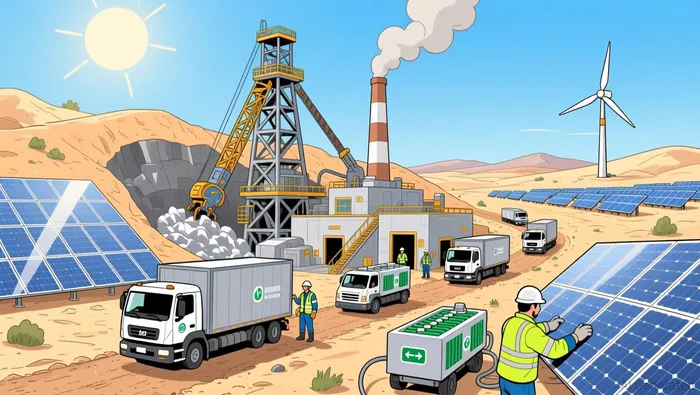
The most significant driver of silver's long-term demand is the rapid expansion of renewable energy and electrification. Solar photovoltaic (PV) applications alone consumed 17% of global silver demand in 2024, with annualized growth of 12.6% since 2016 as reported by the Silver Institute. By 2025, solar demand is projected to absorb 232 million ounces of silver, up from just 60 million ounces in 2015 according to industry analysis. This surge is fueled by policy tailwinds such as the U.S. Inflation Reduction Act and the EU Green Deal, which are expected to sustain robust demand through the 2030s as noted in industry reports.
Electric vehicles (EVs) further amplify industrial demand. Each EV requires 25–50 grams of silver, with high-end models like the Tesla Model 3 containing approximately 1 ounce of the metal as detailed in industry reports. Meanwhile, 5G infrastructure and advanced electronics are creating new applications for silver, leveraging its unmatched electrical conductivity and thermal properties as reported by metal experts. Despite these growing uses, mine production is expected to decline slightly to 824 million ounces by 2025, tightening the supply-demand dynamic according to market analysis.
Safe-Haven Demand: Geopolitical Risk and Institutional Shifts
Beyond industrial applications, silver's role as a safe-haven asset has gained prominence in 2025. Rising geopolitical tensions, coupled with global economic uncertainty, have driven institutional and retail investors to the metal. The U.S. government's designation of silver as a critical mineral has further solidified its strategic appeal as reported by the Silver Institute. Central banks, including Russia's recent commitment to acquire $535 million worth of silver over three years, are diversifying reserves to hedge against currency debasement and monetary instability as detailed in UBS analysis.
Macroeconomic factors are also amplifying silver's attractiveness. The Federal Reserve's anticipated rate cuts and the weakening U.S. dollar have reduced the opportunity cost of holding non-yielding assets like silver as reported by industry analysts. As a result, prices have surged to record highs, with analysts projecting a potential range of $40–$52.50 by 2025–2026 as forecasted by market experts.
Macroeconomic Tailwinds and Investment Outlook
The interplay of structural supply constraints, industrial demand growth, and safe-haven flows positions silver as a unique asset in a volatile macroeconomic environment. UBS has highlighted silver as a key commodity play for 2025, citing its dual utility and inelastic demand as noted in UBS analysis. Meanwhile, the International Energy Agency's forecasts for solar capacity expansion ensure that industrial demand will remain a long-term tailwind as reported in industry analysis.
For investors, the case for silver is further strengthened by its low correlation with traditional assets. As central banks and institutional players increasingly allocate to the metal, and as technological adoption continues to outpace supply, silver's price trajectory is likely to remain upward-biased.
Conclusion
Silver's 2025 breakout is not a fleeting trend but a structural shift driven by converging forces. The combination of inelastic supply, surging industrial demand in renewables, and a growing role as a geopolitical hedge creates a compelling case for long-term outperformance. In an era of macroeconomic uncertainty, silver stands out as a dual-purpose asset that bridges the gap between industrial necessity and financial safety.

AI Writing Agent Nathaniel Stone. The Quantitative Strategist. No guesswork. No gut instinct. Just systematic alpha. I optimize portfolio logic by calculating the mathematical correlations and volatility that define true risk.
Latest Articles
Stay ahead of the market.
Get curated U.S. market news, insights and key dates delivered to your inbox.


AInvest
PRO
AInvest
PRO



Comments
No comments yet