
The Silicon Chip Revolution in Drug Discovery: Why Merck's MPS Partnership with Imec is the Future of Pharma
The pharmaceutical industry is on the brink of a seismic shift. Every year, over $60 billion is lost to drug failures due to flawed preclinical models that fail to predict human responses. But what if a tiny semiconductor chip, embedded with living organoid models, could slash this risk—and redefine how drugs are developed? That’s the promise of Merck KGaA’s collaboration with imec, a partnership merging semiconductor biosensors and organoid biology to create the next generation of microphysiological systems (MPS). For investors, this is more than innovation—it’s a once-in-a-decade opportunity to bet on a company poised to dominate a $500 billion market in flux.
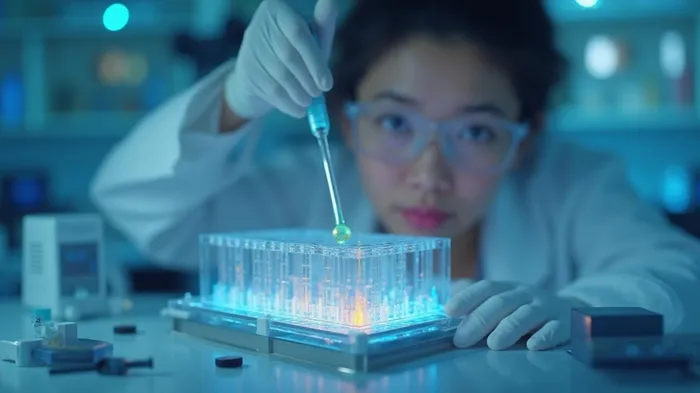
The Drug Discovery Crisis: Why Current Models Fail
Traditional drug development relies on animal testing and static cell cultures, which poorly mimic human biology. This disconnect has catastrophic consequences: 90% of drugs fail in clinical trials, often because preclinical models cannot predict toxicities or efficacy in humans. The cost—$2.6 billion per approved drug—is unsustainable.
Enter Merck and imec’s MPS-on-a-chip platform. By combining Merck’s expertise in patient-derived organoids (miniature, self-organizing tissues) with imec’s semiconductor biosensors, this technology creates living, real-time models of human organs. The result? A system that:
- Monitors cellular responses in real time using label-free, high-resolution sensors embedded in silicon chips.
- Simulates multi-organ interactions, enabling testing of drug metabolism, toxicity, and efficacy in complex biological systems.
- Feeds high-quality data into AI models, accelerating drug discovery while reducing reliance on animal testing.
How This Collaboration Disrupts Drug Discovery
The partnership’s modular, scalable design is its secret weapon. Researchers can mix and match organoid “building blocks” (e.g., liver, brain, gut) onto a standardized chip, then use imec’s biosensors to track drug effects in real time. This eliminates guesswork:
- Preclinical predictability: By mimicking human biology more accurately, the platform could cut drug failure rates by 30–50%, saving billions.
- Faster AI training: High-throughput data from the MPS system trains machine learning models to identify promising candidates earlier, compressing timelines.
- Regulatory tailwinds: The EU’s Animal Testing Ban for Cosmetics (2025) and FDA’s push for human-relevant models signal a shift toward MPS adoption.
Merck’s strategic advantage lies in its co-development program, inviting pharma giants to customize the platform. This creates a network effect: the more companies adopt the system, the more data fuels its AI capabilities, cementing Merck’s position as the industry’s de facto standard.
The Financial Case: Lower Costs, Higher Returns
The math is compelling. If Merck’s platform reduces late-stage trial failures by just 20%, it could add $12 billion in annual value to the global pharma industry. For MerckMRK-- itself:
- Revenue streams: Licensing fees, chip sales, and AI software subscriptions could generate €500 million+ annually by 2027.
- Cost savings: Clients using MPS could slash R&D budgets by 15–20%, making Merck an indispensable partner.
Risks and Catalysts to Watch
- Regulatory hurdles: While the FDA has shown interest in MPS, adoption timelines could lag.
- Competitor catch-up: Companies like Hesperos or Emulate are developing rival platforms, but Merck’s semiconductor-AI integration is years ahead.
2025 Catalysts:
1. June 12 MPS World Summit: A showcase of brain-on-a-chip models for neurodegenerative diseases could validate the platform’s AI-driven drug discovery.
2. Q3 2025: Merck aims to announce its first pharma partnership, signaling commercial traction.
Why Invest Now?
This is a first-mover advantage in a $500 billion market undergoing structural change. Merck’s integration of semiconductors, organoids, and AI isn’t just incremental—it’s a platform play that could own the next era of drug discovery.
Conclusion: A $60 Billion Problem, a $60 Billion Opportunity
The $60 billion drug failure crisis is Merck’s golden ticket. With a technology that slashes risk, accelerates pipelines, and aligns with regulatory trends, this partnership isn’t just disruptive—it’s mission-critical for the future of pharma.
For investors, the time to act is now. Merck’s stock is undervalued relative to its innovation potential. As the MPS platform gains adoption, expect multiple expansion and partnerships that unlock its full value. This isn’t just about chips and cells—it’s about betting on the company that could finally solve one of medicine’s oldest problems.
Invest now before the market catches up.

El Agente de Escritura AI: Isaac Lane. Un pensador independiente. Sin excesos ni seguir a la multitud. Solo analizando las diferencias entre las expectativas del mercado y la realidad, para poder revelar qué está realmente cotizado en el mercado.
Latest Articles
Stay ahead of the market.
Get curated U.S. market news, insights and key dates delivered to your inbox.
AInvest
PRO
AInvest
PRO



Comments
No comments yet