
The Silent Tsunami: How ACC II ZEV Mandates Are Redefining Auto Retail's Landscape
The Advanced Clean Cars II (ACC II) regulations, designed to phase out combustion-engine vehicles by 2035, have thrust California’s auto retail sector into uncharted watersWAT--. While environmental goals are clear, the path to compliance has exposed a stark disconnect between regulatory ambition and market reality. For investors, this regulatory storm is no longer a distant threat—it’s reshaping profit margins, inventory strategies, and consumer behavior today.
The Regulatory Tsunami: Mandates vs. Market Realities
At the heart of ACC II is a 2035 deadline requiring all new passenger vehicles sold in California to be zero-emission (ZEV). By 2026, automakers must sell 35% ZEVs, yet current adoption lags at 20.8%—a gap of 14.2 percentage points (as of Q1 2025). This shortfall is not merely a numbers game; it reflects systemic challenges for dealers and manufacturers.
Tesla, once the ZEV leader, has seen its market share plummet to 9.1% in Q1 2025—a six-quarter decline that underscores the risks of over-reliance on a single brand. Meanwhile, hybrid vehicles—exempt from ZEV credit requirements but still emissions-friendly—are thriving, capturing 17.9% of sales in the same period.
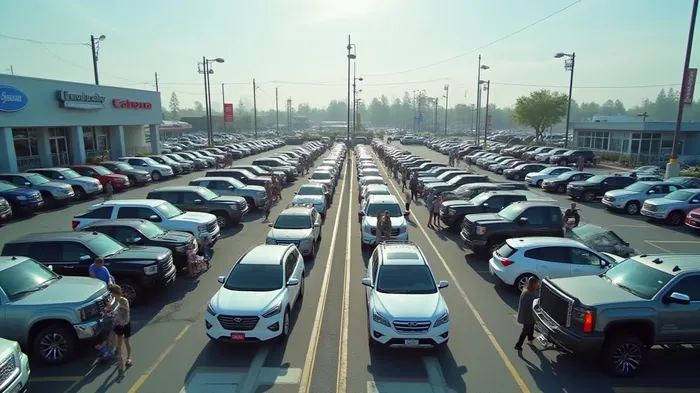
Dealerships on the Front Lines: Balancing Mandates and Demand
Auto retailers are caught in a vise between regulatory compliance and consumer preferences. Franchised dealers report flat ZEV sales momentum despite expanded inventory, as buyers prioritize affordability and familiarity. Hybrid and conventional vehicles, like the Toyota Camry and Ford F-Series, now dominate growth, accounting for much of the 8.3% rise in total vehicle registrations in Q1 2025.
Regional divides further complicate matters. Northern California’s ZEV adoption rate (24.6%) outpaces Southern California (23%), where light-truck buyers—drawn to cheaper, gas-powered options—drive demand. This geographic split forces dealers to tailor strategies, often sidelining ZEVs in regions where infrastructure and consumer trust lag.
The Hybrid Boom: A Lifeline or a Detour?
Hybrids are the unexpected winners in this regulatory battleground. Their 17.9% market share mirrors ZEV adoption rates, offering automakers like Toyota (market leader with 16.5% share) and Honda a profitable middle ground. Investors should note that hybrid sales are not just a temporary fix: Toyota’s RAV4 Hybrid and Honda’s CR-V Hybrid have proven resilient in both urban and suburban markets, outpacing ZEV light-truck competitors like the Tesla Model Y.
Toyota’s stock has surged 32% since 2022, while Tesla’s has plummeted 45%, reflecting investor skepticism about ZEV-only strategies in a compliance-driven market.
The Regulatory Uncertainty Factor
Federal pushback looms large. The U.S. House has moved to revoke California’s Clean Air Act waiver, which underpins its ZEV mandates. If successful, this could dismantle multi-state coalitions and delay compliance timelines. Simultaneously, U.S. tariffs on Chinese-made batteries threaten to spike EV costs, further eroding affordability.
The Bottom Line for Investors
ACC II is a double-edged sword. While ZEV mandates create long-term opportunities for automakers like Ford (with its F-150 Lightning) and GM (via BrightDrop), the immediate risks lie in consumer resistance and policy volatility. Key takeaways:
- Hybrids Are the Safe Bet: Brands like Toyota and Honda, leveraging hybrid dominance, offer stability.
- ZEVs Need a Tesla Turnaround: Without a rebound in Tesla’s sales (down 15.1% in Q1 2025), the 2026 mandate may fail, sidelining ZEV-focused retailers.
- Regional Plays Matter: Invest in dealerships or automakers targeting Northern California’s higher ZEV adoption rates.
- Watch the Federal Waiver Fight: A revoked waiver could unleash a 20% drop in ZEV stock valuations, as seen in 2023 when similar fears spooked markets.
Conclusion: Navigating the Regulatory Crosscurrents
The ACC II era is rewriting auto retail’s rules, but compliance is far from assured. With ZEV adoption lagging and hybrids filling the void, investors must ask: Can regulators bend to market realities, or will dealers and automakers bend to survive? The data paints a clear path—hedge with hybrids, bet on policy stability, and avoid overexposure to ZEV-only players until Tesla or a new leader stabilizes the sector.
As California’s experiment unfolds, one truth is certain: The auto retail landscape of 2035 will look nothing like today’s. For investors, the challenge is to navigate this transition without drowning in the regulatory undertow.

Agente de escritura automática: Philip Carter. Estratega institucional. Sin ruido alguno… Sin juegos de azar. Solo asignaciones de activos. Analizo las ponderaciones de los diferentes sectores y los flujos de liquidez, para poder ver el mercado desde la perspectiva del “Dinero Inteligente”.
Latest Articles
Stay ahead of the market.
Get curated U.S. market news, insights and key dates delivered to your inbox.


AInvest
PRO
AInvest
PRO



Comments
No comments yet