
The Silent Crisis: Aging Populations, Fiscal Vulnerability, and the Reshaping of Global Asset Allocations


 Aime Summary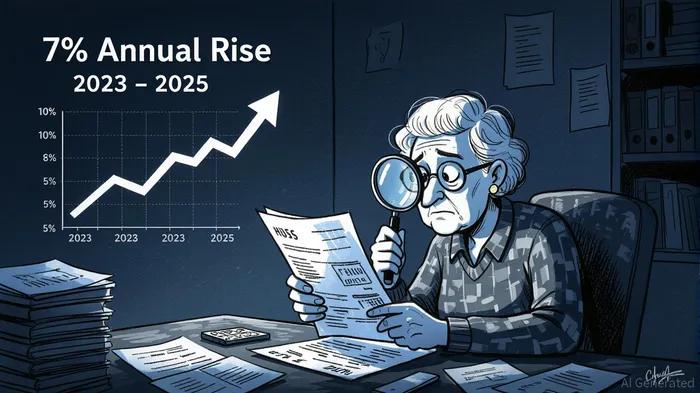
The aging population is no longer a demographic trend—it is an economic earthquake. By 2025, , . Yet, , the highest of any age group. This crisis is not confined to the U.S.; Japan, Germany, and Italy face similar challenges, with aging populations straining public finances and private markets alike. For investors, the implications are profound.
The Poverty Paradox: How Stagnant Wages and Healthcare Costs Erode Stability
, . Meanwhile, , . . , far exceeding peers in France or the Netherlands.
The root cause? , , and the expiration of pandemic-era subsidies. For example, . This creates a feedback loop: higher costs drive deeper poverty, which in turn strains public programs like Medicaid and Medicare.
Investment Implications: Shifting the Portfolio in a Post-Acute World
The fiscal risks of aging populations are reshaping asset allocations. Traditional sectors like acute care hospitals and retail pharmacies face margin compression. For instance, , as reimbursement rates lag behind labor and supply costs. Conversely, non-acute care and health technology are surging.
Health Services & Technology (HST):
, driven by AI-driven analytics, telehealth, and generative AI tools that automate workflows. Companies like UnitedHealth Group (UNH) and Cerner (CERN) are leading this shift, with Cerner's EHR systems now integrated with AI for predictive diagnostics.
Specialty Pharmacy & Chronic Care:
The rise of high-cost therapies (e.g., . Firms like Carolina Biological Supply (CBIO) and Amedisys (AMED) are expanding home-based care models, which reduce hospital readmissions and cut costs.Long-Term Care Infrastructure:
, private equity is pouring capital into assisted living facilities and home health services861198--. Brookdale Senior Living (BKDL) and Kindred Healthcare (KND) are restructuring debt to capitalize on this demand.
Policy Risks and Opportunities
Investors must also monitor policy shifts. The U.S. . For example, , directly benefiting providers. Conversely, , creating volatility for companies like Centene (CNC).
Strategic Recommendations for Investors
- Diversify into Non-Acute Care: , , and specialty pharmacy. These sectors are less sensitive to hospital reimbursement cuts and benefit from aging demographics.
- Hedge Against Policy Uncertainty: Invest in HST firms with recurring revenue models (e.g., SaaS platforms for hospitals) to mitigate regulatory risks.
- Avoid Overexposure to Traditional Providers: Hospitals and retail pharmacies face margin pressures from labor costs and utilization shifts. Consider short-term hedges or reduced allocations.
The aging population is a double-edged sword: it threatens fiscal stability but also creates opportunities for innovation. For investors, the key lies in balancing risk and reward by capitalizing on the sectors poised to redefine care delivery in the 21st century. As the U.S. Census Bureau warns, “The next decade will test whether our systems can adapt to a world where 1 in 4 Americans is 65 or older.” The markets are already betting on the answer.

Stay ahead of the market.
Get curated U.S. market news, insights and key dates delivered to your inbox.
AInvest
PRO
AInvest
PRO



Comments
No comments yet