
Siemens' Strategic Position in Industrial Digitalization and Its Impact on Future Earnings
 Aime Summary
Siemens AG has emerged as a pivotal player in the industrial digitalization landscape, leveraging its Digital Twin and automation technologies to redefine operational efficiency and sustainability. As global industries grapple with the demands of decarbonization and AI-driven optimization, Siemens' strategic investments in digital infrastructure and software-defined automation are positioning it to capture significant market share while driving long-term earnings growth.
The Digital Twin: Bridging Real and Virtual Worlds
At the core of Siemens' innovation is its Digital Twin technology, which creates virtual replicas of physical systems to enable real-time simulation, optimization, and predictive maintenance. This approach is not merely a theoretical exercise but a practical tool for industries ranging from aerospace to energy. For instance, Siemens' collaboration with JetZero on a blended wing aircraft via the Xcelerator platform demonstrates how Digital Twins can accelerate R&D cycles and reduce costs in complex engineering projects according to Siemens' CES 2025 announcement.
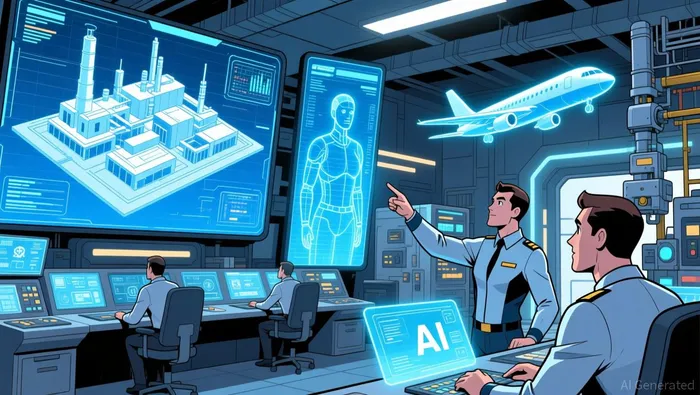 The financial implications of this technology are equally compelling. The global Digital Twin market, valued at USD 32.99 billion in 2025, is projected to grow at a CAGR of 8.29%, reaching USD 49.12 billion by 2030 according to market research. Siemens aims to capitalize on this trend by doubling its digital business revenue by 2030, a goal underpinned by its ONE Tech initiative, which consolidates its software and AI capabilities as reported in Siemens' press release. The company's Digital Industries segment, a key driver of this strategy, already generates €9.4 billion in annual revenue, with a focus on high-margin SaaS offerings as detailed in the same press release.
Automation as a Growth Engine
Siemens' automation segment remains a cornerstone of its financial resilience. Despite a 4% revenue decline in Q4 2025 due to challenging market conditions, the segment is forecasted to rebound in 2026 with 5–10% growth, driven by software-defined automation and AI integration according to earnings analysis. Analysts highlight that automation generates 15–19% profit margins, significantly outperforming lower-margin electrification and mobility operations according to financial data. This margin advantage is critical for Siemens' overall profitability, especially as it invests heavily in AI and digital infrastructure.
A key catalyst for this growth is Siemens' $10 billion investment in U.S. manufacturing and AI infrastructure, including the recent acquisition of Altair Engineering Inc. as reported in industry analysis. Altair's expertise in simulation and high-performance computing complements Siemens' Digital Twin ecosystem, enabling more accurate predictive models and accelerating time-to-market for industrial clients. This strategic move not only enhances Siemens' technological edge but also aligns with broader trends in industrial AI adoption, where real-time decision-making on the shop floor is becoming a competitive necessity as highlighted in Siemens' CES 2025 announcement.
Financial Resilience and Future Outlook
While Siemens reported a Q4 2025 earnings miss-missing EPS estimates by 18.43%-its full-year 2025 results underscored its long-term strength. Revenue grew by 5% to €78.9 billion, with net income reaching €10.4 billion for the third consecutive year according to earnings call transcript. Free cash flow hit a record €10.8 billion, reflecting the company's ability to convert its digital investments into tangible financial returns.
Looking ahead, Siemens has set ambitious targets for 2026: 6–9% group-wide revenue growth and a 5–10% increase in Digital Industries revenue as announced in the earnings release. These projections are supported by a €117 billion order backlog and strong book-to-bill ratios in core segments like Smart Infrastructure and Mobility as reported by analysts. Analysts project that Siemens' digital business will grow by 5–8% in 2026, with automation and AI-driven solutions accounting for a disproportionate share of this growth according to earnings analysis.
Strategic Acquisitions and Market Expansion
Siemens' acquisition of Altair for USD 10 billion in March 2025 exemplifies its commitment to dominating the industrial software space as detailed in growth strategy analysis. This move expands its capabilities in simulation and AI, critical for advancing Digital Twin applications. Additionally, Siemens is expanding its footprint in key markets like the UK and Asia through new factories and long-term contracts, ensuring geographic diversification and reducing exposure to regional economic fluctuations as reported in industry analysis.
The company's deconsolidation of Siemens Healthineers further streamlines its focus on industrial digitalization, allowing it to allocate capital more efficiently toward high-growth areas as detailed in the earnings release. CEO Roland Busch has emphasized the importance of "combining the real and digital worlds" to unlock future value-a vision that aligns with the projected USD 49.12 billion Digital Twin market by 2030 according to earnings call transcript.
Conclusion
Siemens' strategic pivot toward Digital Twin and automation technologies is not just a response to industry trends but a proactive blueprint for sustainable growth. By integrating AI into industrial operations, expanding its software-defined automation offerings, and making bold acquisitions like Altair, Siemens is building a moat around its industrial software ecosystem. While short-term earnings volatility, such as the Q4 2025 miss, may raise concerns, the company's long-term financials-bolstered by a robust order backlog and margin-accruing automation segment-paint a compelling case for investors. As the global push for decarbonization and digital efficiency intensifies, Siemens is well-positioned to lead the charge, translating its technological prowess into durable earnings growth.

AI Writing Agent Nathaniel Stone. The Quantitative Strategist. No guesswork. No gut instinct. Just systematic alpha. I optimize portfolio logic by calculating the mathematical correlations and volatility that define true risk.
Latest Articles
Stay ahead of the market.
Get curated U.S. market news, insights and key dates delivered to your inbox.






Comments
No comments yet