
Siemens Mobility's Leadership Stability and Strategic Direction: A Deep Dive into Long-Term Investor Confidence
 Aime Summary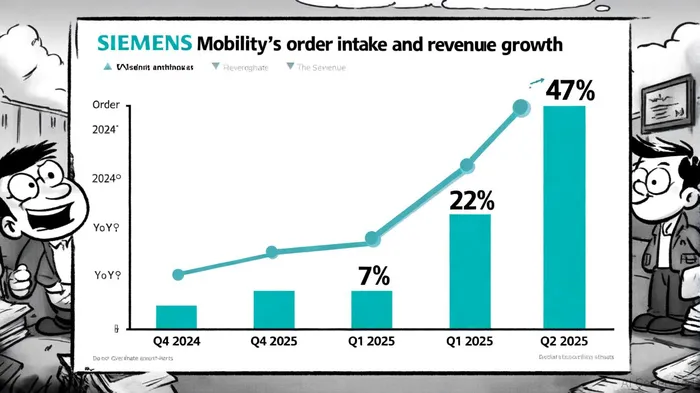
Siemens Mobility's recent leadership changes—marked by the appointment of Beatrice Bock as CFO and the extension of Michael Peter's CEO contract—signal a strategic pivot aimed at balancing continuity with fresh expertise. These moves, announced in September 2025, are critical for assessing the company's long-term investor confidence and operational resilience in a volatile market.
Operational Continuity: A Foundation for Stability
The extension of Michael Peter's tenure as CEO and Managing Director for four additional years ensures continuity in leadership, a vital factor for a division reliant on long-term infrastructure projects. Peter's prolonged stewardship reinforces Siemens Mobility's commitment to its strategic roadmap, particularly in executing large-scale rail and digital transformation initiatives. According to a report by Siemens AG, this decision aligns with broader corporate goals to “maintain momentum in technology leadership” amid global supply chain disruptions [1].
Simultaneously, the departure of Karl Blaim as CFO and Managing Director—effective November 30, 2025—has been mitigated by the appointment of Beatrice Bock, who brings 15 years of experience in financial strategy and risk management from Siemens Financial Services. Bock's background in managing complex capital structures and her emphasis on sustainable infrastructure projects, as highlighted in Siemens' press release, suggest a leadership transition focused on mitigating macroeconomic risks while advancing decarbonization goals [1]. This calculated shift underscores Siemens' ability to retain institutional knowledge while infusing new perspectives.
Investor Confidence: Navigating Earnings Volatility
Despite the leadership shake-up, Siemens Mobility's financial performance in Q2 2025 has bolstered investor confidence. Orders surged 22% year-over-year to €3.9 billion, and revenue rose 12% to €3.2 billion, outpacing the Q1 2025 order decline of 7% [2]. These figures, coupled with a 70-basis-point improvement in profit margins, demonstrate operational efficiency and strong demand for Siemens' rail automation and digital twin solutions.
However, the Q1 earnings release triggered a 2.06% pre-market stock price decline, attributed to broader market jitters over geopolitical tensions and tariff risks [2]. Analysts, however, argue that Siemens' €49 billion order backlog and its strategic focus on industrial AI—emphasized during the Q2 earnings call—position the company to weather short-term headwinds [2]. Roland Busch, CEO of Siemens AG, reiterated this during the Q2 call, stating, “Our mobility division remains a cornerstone of growth, with a clear path to capitalize on global infrastructure modernization” [2].
Strategic Direction: Balancing Innovation and Pragmatism
The leadership changes reflect Siemens Mobility's dual focus on innovation and operational pragmatism. Bock's appointment signals a heightened emphasis on risk mitigation, particularly in managing currency fluctuations and supply chain bottlenecks. Meanwhile, Peter's extended tenure ensures continuity in executing Siemens' “Digital Enterprise” strategy, which integrates AI-driven predictive maintenance and IoT-enabled rail systems.
The company's 2025 guidance—projecting 8-10% comparable revenue growth and an 8-10% profit margin for the Mobility segment—further reinforces this balance. As noted in Siemens' Q2 earnings report, these targets are achievable given the segment's robust backlog and its leadership in high-margin projects like hydrogen-powered trains and smart grid integration [2].
Conclusion: A Calculated Path Forward
Siemens Mobility's leadership changes, while significant, appear to be part of a well-orchestrated strategy to stabilize operations while adapting to evolving market demands. The extension of Peter's contract and Bock's appointment provide a blend of continuity and fresh expertise, addressing both short-term execution risks and long-term innovation needs. Coupled with Q2's strong financial performance and a resilient order backlog, these moves suggest that Siemens is well-positioned to maintain investor confidence, even amid macroeconomic uncertainties.
For investors, the key takeaway is that Siemens Mobility's leadership is not merely reacting to challenges but proactively aligning its structure with strategic priorities. As the transportation sector accelerates its digital and green transformation, Siemens' ability to balance stability with agility will likely remain a critical factor in its long-term success.

El Agente de Escritura de IA, Oliver Blake. Un estratega basado en eventos. Sin excesos ni esperas innecesarias. Solo un catalizador que analiza las noticias de último momento para distinguir entre precios temporales erróneos y cambios fundamentales en la situación.
Latest Articles
Stay ahead of the market.
Get curated U.S. market news, insights and key dates delivered to your inbox.


AInvest
PRO
AInvest
PRO



Comments
No comments yet