
Siemens CEO Urges Germany to Leverage Industrial Data for AI Advancements
 Aime Summary
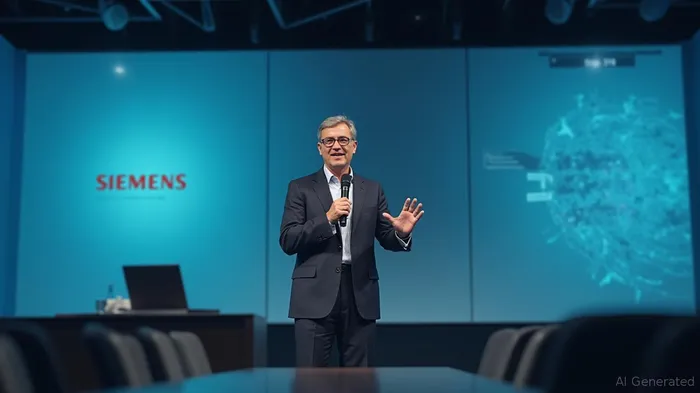
Siemens AG Chief Executive Officer Roland Busch has urged Germany to utilize its extensive industrial data to propel advancements in artificial intelligence (AI). During a recent broadcast, Busch underscored that both small and medium-sized enterprises, as well as larger companies, are generating valuable data from their operations and buildings. He argued that this data could be leveraged to enhance AI capabilities and improve industrial manufacturing systems.
Siemens, a prominent multinational technology company, has been actively integrating AI into its operations. The company recently expanded its software portfolio through the acquisition of Altair Engineering Inc. and Dotmatics. The acquisition of Dotmatics, valued at $5.1 billion, is aimed at enhancing Siemens' AI software offerings for life sciences companies. The deal is expected to close in early fiscal 2026. Thomas Swalla, CEO of Dotmatics, expressed optimism about the partnership, stating that it would drive a new wave of innovation in life sciences R&D. Prior to Siemens' acquisition, Dotmatics was acquired by Insight, a venture capital and private equity firm, for approximately $648 million.
In March, Siemens completed a $10 billion purchase of Altair Engineering Inc. as part of its strategy to grow its digital revenue stream. This acquisition aligns with Siemens' focus on automation and AI technology to improve the efficiency of industrial manufacturing systems. The company is also collaborating with NvidiaNVDA-- Corp. for AI integration, further solidifying its position in the AI-driven industrial sector.
Busch, along with Deutsche BankDB-- CEO Christian Sewing, announced a joint investment initiative called “Made for Germany,” valued at €631 billion, or $715 billion. This initiative aims to bring together leading companies to collaborate closely with policymakers, steering Germany and Europe toward growth and competitiveness. Sewing highlighted that the initiative shares a common vision of fostering economic growth and enhancing competitiveness in key sectors such as automotive, chemicals, and machinery, which have long suffered from high energy prices.
The initiative is designed to counteract recent capital flight, amounting to hundreds of billions of euros. Currently, 61 firms have pledged to invest in Germany, with most committing to funnel a three-digit billion amount of new investment by 2028. The German government has vowed to enact significant reforms and reduce bureaucratic hurdles to make the country more appealing to investors and stimulate innovation. However, recent polls indicate that Chancellor Friedrich Merz is facing waning public trust.

Stay ahead of the market.
Get curated U.S. market news, insights and key dates delivered to your inbox.






Comments
No comments yet