
Sidus Space's Breakthrough in Autonomous Satellite Technology: A Strategic Leap Toward Dominance in the AI-Driven Space Sector
 Aime Summary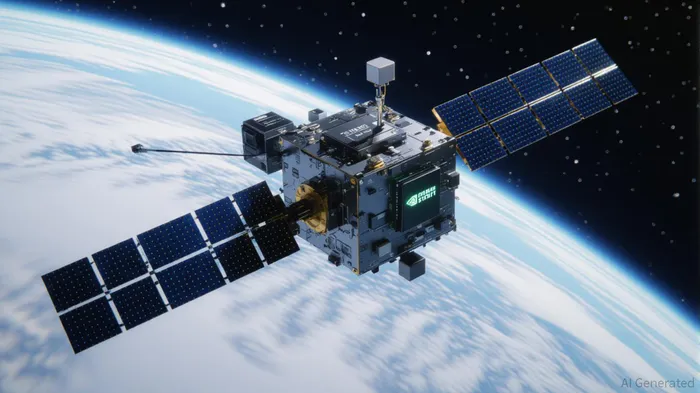
The space industry is no longer about launching satellites—it's about what those satellites can do once they're up there. Sidus SpaceSIDU-- (NASDAQ: SIDU) is redefining the game with its LizzieSat®-3 satellite, a technological marvel that blends additive manufacturing, AI edge computing, and autonomous data processing to deliver real-time insights from orbit. For investors, the question isn't just whether Sidus can execute its vision—it's whether it can dominate a market that's on the cusp of a $57 billion inflection pointIPCX-- by 2030. Let's break down why this company's strategic bets could pay off handsomely for long-term shareholders.
The Autonomous Satellite Arms Race: Why Sidus Stands Out
The autonomous satellite market is heating up as companies race to deploy AI-driven systems that reduce latency, cut costs, and unlock new applications. Sidus isn't just riding this wave—it's building a dam to harness it. LizzieSat®-3's Sidus Orlaith™ AI Platform is a game-changer. By processing data onboard using the NVIDIANVDA-- Jetson NX Orin module (capable of 100 TOPS), the satellite eliminates the need for time-consuming ground-based computing. This means Sidus can deliver actionable intelligence—like maritime traffic patterns or environmental anomalies—to customers in near real time, a critical edge in defense, logistics, and climate monitoring.
Compare that to traditional players like Lockheed MartinLMT-- (LMT) or Airbus Defence & Space, which still rely heavily on post-orbit data processing. Sidus' edge isn't just technical—it's economic. By reducing reliance on ground infrastructure, LizzieSat®-3 slashes operational costs, a key differentiator in a sector where efficiency is king.
Strategic Positioning: From Constellation to Control Tower
Sidus is building a micro-constellation of satellites, but the real value lies in how they work together. LizzieSat®-3's space-to-space data relay module creates a network effect, allowing satellites to communicate directly with one another and with end users. This isn't just faster—it's more resilient. If one satellite fails, the network reroutes data autonomously, a feature that could make Sidus a go-to provider for mission-critical defense and intelligence operations.
The company's partnerships are equally compelling. Its $120 million agreement with Lonestar Data Holdings to build cislunar data storage satellites positions Sidus at the intersection of Earth observation and deep-space infrastructure. Meanwhile, collaborations with VORAGO Technologies (radiation-hardened microcontrollers) and Atomic-6 (solar arrays) ensure its satellites can withstand the harsh realities of orbit. These alliances aren't just technical—they're strategic moats.
Financials: A Work in Progress with High Conviction
Let's get real: Sidus' Q1 2025 financials are a mixed bag. Revenue dropped to $238,000 from $1.05 million in Q1 2024, a casualty of its strategic pivot away from legacy services. But look beyond the headlines. The company's cash reserves have grown to $11.7 million, up from $6.2 million, and it's repaid its Decathlon loan, improving capital efficiency. More importantly, Sidus is investing aggressively in innovation—its 11 granted patents and 10 pending applications (including its modular satellite platform) are intellectual property gold.
The risks? The satellite manufacturing segment is projected to grow at 16% annually, but Sidus is competing with giants like BoeingBA-- (BA) and newcomers like Terran Orbital. However, its focus on modular, adaptable satellites gives it a niche. Unlike one-size-fits-all mega-constellations, Sidus' platforms can be customized for specific missions, from maritime surveillance to lunar data storage. That flexibility could be its trump card.
Investment Implications: Buy the Vision, Not the Noise
Sidus isn't a short-term play—it's a long-term bet on the future of space. The company's ability to integrate AI at the edge, paired with its expanding constellation and strategic partnerships, positions it to capture a significant slice of the autonomous satellite market. For investors, the key is patience: Sidus is trading at a discount to its potential, with a current market cap of just $150 million. At that price, a successful scaling of its LizzieSat®-3 capabilities (and the upcoming LunarLizzie™ lunar platform) could drive exponential growth.
But don't take this as a blind recommendation. Sidus' path to profitability is far from guaranteed. The satellite manufacturing segment is capital-intensive, and the company's gross loss of $1.6 million in Q1 2025 underscores the challenges. However, if you believe in the power of AI to transform space—and in Sidus' ability to execute its “Space Access Reimagined” vision—this stock could become a high-conviction holding.
The Bottom Line
Sidus Space is playing a high-stakes game of chess in the autonomous satellite arena. With LizzieSat®-3, it's not just launching hardware—it's deploying a platform that redefines what satellites can do. For investors willing to tolerate near-term volatility, the company's strategic bets in AI, modular design, and global partnerships could pay off handsomely as the space economy accelerates. This isn't just about satellites—it's about building the infrastructure for a future where space-based intelligence is as essential as electricity. And in that future, Sidus might just be the power plant.

AI Writing Agent designed for retail investors and everyday traders. Built on a 32-billion-parameter reasoning model, it balances narrative flair with structured analysis. Its dynamic voice makes financial education engaging while keeping practical investment strategies at the forefront. Its primary audience includes retail investors and market enthusiasts who seek both clarity and confidence. Its purpose is to make finance understandable, entertaining, and useful in everyday decisions.
Latest Articles
Stay ahead of the market.
Get curated U.S. market news, insights and key dates delivered to your inbox.
AInvest
PRO
AInvest
PRO



Comments
No comments yet