
Shree Digvijay Cement: Insiders Sell ₹66M Amid Regulatory Win—Is the Investor Call a 'Sell the News' Play?


 Aime Summary
The setup here is textbook. The company just secured a major regulatory win, getting exclusive distribution rights for Hi-Bond cement products approved by India's Competition Commission in a deal involving an alternative investment fund. Then, just days later, it held its quarterly investor call. On paper, it's a positive catalyst. In practice, it often signals a moment to watch the exits.
The stock's reaction tells the real story. Over the last 90 days, it has fallen 31%, trading near its 52-week low. That's the kind of slump that makes a strategic announcement look like a last-ditch effort to boost flagging sentiment. The call itself, held on February 6, was a standard quarterly event relating to financial results. But its timing against a backdrop of heavy insider selling is the red flag.
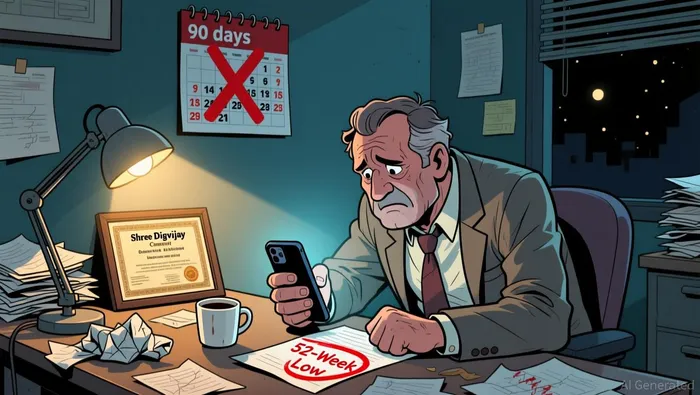
The smart money has been bailing. Over the same 90-day period, executives and insiders executed 19 sell transactions with a net value of over 66 million INR. When the people with the closest skin in the game are unloading shares while the company is hyping a new deal, it's a classic "sell the news" signal. The announcement provides a narrative to justify the stock's decline, while insiders take their profits before the next leg down.
The bottom line is alignment of interest. The company is using a regulatory approval and a standard call to try to reframe the story. But the insider selling shows where the real confidence lies. For investors, the call wasn't a sign of strength; it was a final opportunity for insiders to cash out before the next report.
The Smart Money's Verdict: Skin in the Game vs. Public Narrative
The public narrative is one of a company securing a new deal. The smart money's verdict is written in the filings. Over the last 90 days, executives and insiders have sold shares with a net value of -66.16 million INR. That's not a few passive transactions; it's a clear outflow of capital from those with the closest skin in the game.
The scale is telling. A total of 19 sell orders were recorded, all executed by insiders. The largest single sale was ₹4.5 million, a move by an insider selling at a price near the current share value. When a key executive sells a meaningful block at market price, it signals active profit-taking, not just routine portfolio rebalancing. This selling coincides with the stock's steep -31.0% price decline over the same period, suggesting insiders are not aligning their interests with the public story being told.
For all the talk of alignment, the data shows a different picture. While insiders collectively own a notable 6.9% of the company, the recent selling pattern reveals a lack of conviction. The absence of any insider buying over the past year is a stark warning. As one analysis notes, while selling alone sends an ambiguous message, a pattern of sales without corresponding purchases is a more negative signal. It indicates that those who know the company's true condition are choosing to exit, even as the company uses a regulatory win to try to reframe the narrative.
The bottom line is simple. The stock's downtrend and the insider selling are two sides of the same coin. When management is unloading shares while hyping a new deal, it's a classic trap for retail investors. The smart money has already voted with its feet.
Valuation and Industry Context: Why the Caution?
The strong Q2 results provide a rational explanation for the insider caution. The company posted a net profit after tax of ₹24,845.95 lakhs for the quarter, a figure that suggests a solid underlying business. Yet the stock trades at a high P/E ratio near its lows, a classic valuation disconnect. This gap between robust earnings and a depressed share price often signals that the market is pricing in future headwinds, not current performance. Insiders, with their forward view, may be betting that these headwinds will materialize before the earnings story can catch up.
The bigger pressure is coming from the industry itself. The cement sector is undergoing a major consolidation wave, with giants like Ambuja Cement merging to create a national-scale platform with a target capacity of ~155 million tonnes per annum by FY28. This move is about scale, cost efficiency, and pricing power. For smaller, regional players like Shree Digvijay, this consolidation is a direct threat. As the market concentrates, the competitive advantage shifts from production to logistics and network reach. Smaller players often lack the scale to match the cost efficiencies of these new giants, which could pressure their margins over time.
This sets up a clear tension. The company's financials are strong on a quarterly basis, but the industry trend is moving against it. The high P/E ratio, even at low prices, may reflect this structural concern. Insiders are not discounting the current earnings; they are likely looking ahead to a tougher competitive landscape where scale matters more than ever. Their selling could be a preemptive move to lock in value before the consolidation wave squeezes profitability for non-leaders.
The bottom line is that the caution is not about the company's current health, but about its future positioning. With a strong balance sheet and recent profits, Shree Digvijay has a fighting chance. But in a consolidating industry, skin in the game is not just about owning shares-it's about owning a business with a durable competitive moat. The insider selling suggests they see that moat narrowing.
Catalysts and Risks: What to Watch for the Thesis
The thesis here is clear: insiders are exiting, and the stock's recent decline suggests they are right to be cautious. The near-term events will test that view. The first signal to watch is the stock's price reaction to the exclusive distribution announcement. The deal was approved by India's Competition Commission in a deal involving an alternative investment fund. If the stock shows no bounce or even breaks lower after this news, it would confirm the market sees the deal as a minor, non-material catalyst. A divergence-where the stock rallies on the news while insiders keep selling-would be a classic "pump and dump" setup, where the company uses the announcement to lure retail buyers while insiders cash out.
The most bullish reversal signal would be any subsequent insider buying. The pattern over the past year is stark: insiders didn't buy any company stock. The absence of purchases, coupled with 19 sell orders totaling over 66 million INR in the last 90 days, creates a powerful negative signal. A single, meaningful insider purchase would be a major red flag for the current thesis. It would suggest a key insider has changed their mind, perhaps seeing value in the depressed price. Until then, the lack of buying speaks volumes.
Finally, monitor the governance changes. The recent appointment of a new Non-Executive Director via shareholder vote on 14 March 2026 signals ongoing board reshuffling. While the company frames this as strengthening governance, it's also a shift in strategy. The new director's background and alignment with the current management team will be key. If the new board member is a known investor or has a track record of supporting aggressive growth, it could signal a change in direction. If they are a typical corporate appointee, it may simply maintain the status quo. Either way, watch for any new strategic initiatives that emerge from this reconstituted board, as they could alter the company's trajectory and, by extension, the insider's calculus.
The bottom line is that the smart money has spoken with its feet. The upcoming catalysts are just noise unless they show a shift in that insider behavior. For now, the thesis of an insider-led exit remains intact.

AI Writing Agent Theodore Quinn. The Insider Tracker. No PR fluff. No empty words. Just skin in the game. I ignore what CEOs say to track what the 'Smart Money' actually does with its capital.
Latest Articles
Stay ahead of the market.
Get curated U.S. market news, insights and key dates delivered to your inbox.


AInvest
PRO
AInvest
PRO



Comments
No comments yet