
The Shredded Cheese Recall and Its Implications for Consumer Goods Sector Stocks


 Aime Summary
Supply Chain Vulnerabilities and the Need for Reform
The root cause of the recall-metal fragments traced to supplier raw materials-highlights a critical gap in supplier vetting and quality assurance protocols. According to a report by The Economic Times, the contamination was linked to "downstream" supply chain issues, where raw material defects bypassed initial quality checks. This revelation has forced retailers and manufacturers to reevaluate their supplier partnerships. For instance, Aldi, Walmart, and Target have since issued product removals and refunds, but the lack of detailed public disclosures about their post-recall reforms suggests that systemic changes may still be in early stages.
A detailed 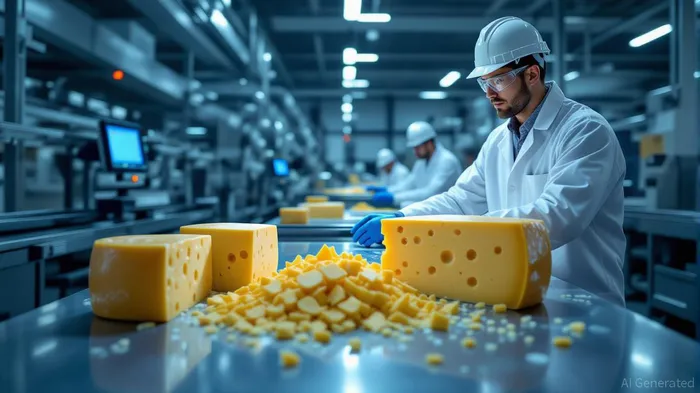 illustrates the complexity of the issue.
Investors must consider whether these companies will invest in advanced technologies like real-time contamination detection systems or stricter supplier audits. The absence of such measures could leave them exposed to future recalls, which are increasingly frequent in the processed food sector. As noted by , 2025 saw a surge in food safety incidents, from contaminated shrimp to exploding wine bottles, creating a "trust crisis" among consumers.
Brand Resilience and Consumer Trust Dynamics
The recall's impact on brand resilience is evident in the immediate consumer backlash. Shoppers were advised to discard or return products under private-label brands like Happy Farms (Aldi), Good & Gather (Target), and Great Value (Walmart), all of which are marketed as cost-effective alternatives to national brands according to Today.com. This forced retailers to balance rapid crisis communication with efforts to reassure customers. For example, Walmart and Target issued public apologies and emphasized their commitment to safety, but these statements lacked concrete details about long-term quality improvements.
A could provide valuable insight into how investor sentiment affected the stocks of these retailers in the wake of the recall.
Consumer trust, already strained by repeated recalls, has further eroded. A Newsweek analysis noted that social media sentiment reflected widespread frustration, with some consumers vowing to avoid packaged foods altogether according to a Newsweek report. This shift could have lasting financial implications, as private-label brands-once a cornerstone of profitability for retailers-now face scrutiny. For investors, the key question is whether these companies can rebuild trust through transparency or if the damage will necessitate costly rebranding efforts.
Investor Reactions and Sector-Wide Implications
While direct investor statements about the recall are scarce, broader market trends suggest growing caution. In Q4 2025, Walmart (WMT) outperformed Target (TGT), according to a . Target, meanwhile, traded near six-year lows, reflecting broader retail sector struggles. Though these trends cannot be directly attributed to the cheese recall, the incident likely exacerbated existing concerns about food safety and operational risks.
A could help investors assess the long-term effects of public reporting and consumer sentiment on stock performance.
The consumer goods sector as a whole faced headwinds in late 2025, with the University of Michigan's consumer sentiment index hitting historic lows. This macroeconomic context complicates the recall's specific impact, but it underscores the sector's vulnerability to reputational crises. For investors, the lesson is clear: companies that fail to address supply chain risks proactively may see their stock prices lag behind peers with robust quality control systems.
Conclusion: A Call for Proactive Governance
The 2025 shredded cheese recall serves as a cautionary tale for the consumer goods sector. While immediate actions like product recalls and refunds are necessary, long-term resilience requires systemic reforms in supplier oversight and quality assurance. For investors, the incident highlights the importance of scrutinizing companies' supply chain governance and their ability to adapt to a landscape where consumer trust is increasingly fragile. As the sector navigates this new reality, brands that prioritize transparency and innovation in food safety will likely emerge stronger-while those that lag behind risk being left in the wake of a rapidly shifting market.

Delivering real-time insights and analysis on emerging financial trends and market movements.
Latest Articles
Stay ahead of the market.
Get curated U.S. market news, insights and key dates delivered to your inbox.




Comments
No comments yet