
Showdown in Washington: Speaker Johnson Takes On Musk Over Trump-Backed Tax Reforms
In recent political discourse, U.S. House Speaker Mike Johnson has openly challenged Elon Musk's position regarding the tax legislation backed by former President Trump. Johnson labeled Musk's views as "dead wrong," underscoring a tense divide on the proposed financial reforms.
Elon Musk, celebrated entrepreneur and former head of the Department of Government Efficiency, recently expressed his discontent with the trillion-dollar tax and spending plan currently under Republican discussion. Musk fears that such legislation could undermine efforts to improve government efficiency, plans that he advocated during his tenure. Despite Musk's historical support of Trump, he doesn't always align with every policy endorsed by his administration.
Musk's recent departure from the Department of Government Efficiency was announced via social media. This marks a significant shift, with President Trump noting that Musk's last official day was on May 30th, symbolizing Musk's return to his corporate roles.
The fallout between Musk and the Trump administration has been notable, transforming from collaborative allies into confrontational opponents. Initially, Musk's reforms aimed at reducing government waste and enhancing operational efficiency were seen positively. However, these changes encountered substantial resistance from entrenched interests within major U.S. departments like the State Department and Defense, illustrating the complexity of implementing such reforms.
Musk faced mounting pressures, not just politically but in the business sphere. Tesla's market dynamics suffered due to political volatility, with stock prices reflecting the turbulence sparked by Musk's political engagements. Divisions within Tesla's board further amplified these strains, pushing Musk to refocus solely on his entrepreneurial ambitions.
From a broader perspective, ideological disparities deepened the rift between Musk and the Trump government. While Trump's protectionist measures aimed at bolstering local industries, Musk's enterprises benefited from globalization. These policy collisions significantly disrupted Tesla's international operations, impacting industry cost structures negatively.
Most recently, Musk escalated his critique against Trump-supported legislation, which advocates for substantial tax reductions alongside increased military spending. He cautioned that such bills would exacerbate the budget deficit, contradicting the very essence of governmental fiscal efficiency he once championed.
The tension between Musk and Johnson highlights the intricate balance of interests at play in American politics. As political and commercial dynamics continue to evolve, figures like Musk face critical choices between their roles in shaping policy and steering corporate trajectories. Meanwhile, Johnson's remarks echo the institutional pushback Musk encountered, presenting a complex narrative of power and influence in the nation's capital. 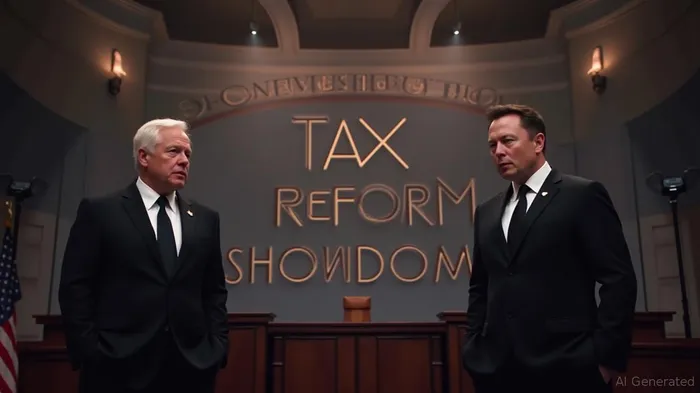

Stay ahead of the market.
Get curated U.S. market news, insights and key dates delivered to your inbox.


AInvest
PRO
AInvest
PRO



Comments
No comments yet