
Short-Side Exposure in Biopharma: Decoding Direxion Daily LLY Bear 1X Shares' Dividend Signal


 Aime Summary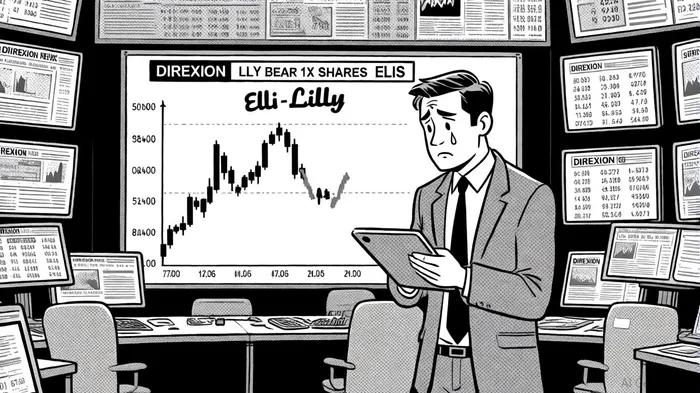
The biopharmaceutical sector is in a tailspin, and investors are scrambling to recalibrate their strategies. With drug pricing reforms, patent cliffs, and supply chain turbulence dominating headlines, the S&P 500's healthcare segment is trading at a price-to-earnings ratio near historic lows[1]. In this environment, leveraged inverse ETFs like Direxion Daily LLY Bear 1X Shares (ELIS) are gaining traction as tactical tools for contrarians. But the recent dividend adjustments for ELIS—scheduled to pay $0.1709 per share on September 30, 2025—offer a critical clue about sector dynamics and investor sentiment[2]. Let's break down what this means for bearish positioning.
The Biopharma Perfect Storm: Why Short-Side Exposure Matters
The biopharma sector is under siege. Drug pricing reforms, including the Trump administration's “most favored nation” (MFN) policy, are squeezing margins, while patent expirations threaten revenue streams for giants like Eli Lilly[1]. Meanwhile, global competition and AI-driven R&D are reshaping the industry, creating a volatile landscape where even blue-chip names face headwinds[2]. For investors, this volatility is a double-edged sword: it amplifies downside risks but also creates opportunities for those willing to bet against the sector's near-term struggles.
Direxion Daily LLY Bear 1X Shares (ELIS) is designed to exploit this volatility. As a 1X inverse ETF, it moves in the opposite direction of Eli Lilly's stock daily[3]. But here's the twist: its recent dividend cut—from $0.22 to $0.1709 per share—reflects a broader narrative. Dividend adjustments in leveraged ETFs often signal shifts in underlying asset performance. In this case, the reduction suggests that LLY'sLLY-- stock has been resilient enough to limit ELIS's upside, even as the sector faces headwinds[2]. For contrarians, this is a red flag: if the inverse ETF's returns are being curtailed, it may indicate that shorting the sector is becoming riskier.
ELIS as a Strategic Indicator: Navigating Downside Risk
Leveraged inverse ETFs are inherently volatile, and ELISELIS-- is no exception. Its structure—using swaps and options to deliver -100% daily exposure to LLY—makes it a high-octane tool for short-term bets[3]. However, the compounding effects of daily rebalancing mean that holding ELIS for extended periods can lead to performance deviations from the underlying stock[4]. This is where the dividend signal becomes critical.
The September 2025 dividend cut of $0.0519 per share (a 23% reduction) underscores the fund's sensitivity to LLY's price action[2]. While a 0.85% annualized yield might seem attractive, it pales compared to traditional dividend payers. For tactical investors, this signals that ELIS is not a buy-and-hold play. Instead, it's a tool for hedging or capitalizing on short-term dips—particularly as the sector braces for potential rate cuts and regulatory clarity in late 2025[1].
Tactical Allocation: Balancing Bearish Bets with Sector Catalysts
Despite the sector's woes, biopharma isn't without hope. M&A activity is surging, and AI-driven drug discovery is creating new value pools[2]. For investors, the key is to balance bearish exposure with these potential catalysts. Here's how:
- Use ELIS for Hedging: If you're long biopharma stocks or ETFs, a small position in ELIS can offset downside risk during sector selloffs. Given its 1X leverage, it's less volatile than 3X inverse ETFs but still offers meaningful protection[4].
- Time the Dividend Cycles: With ELIS paying dividends quarterly, investors can structure their trades around ex-dividend dates. The September 23, 2025, cutoff, for instance, offers a window to lock in yields while managing exposure to LLY's near-term volatility[2].
- Monitor Policy Developments: The MFN policy and FDA approval timelines could trigger sharp sector swings. ELIS's inverse structure allows traders to capitalize on these events without needing to predict long-term trends[1].
The Bottom Line: A Contrarian Play with Caveats
Direxion Daily LLY Bear 1X Shares isn't a magic bullet, but its dividend adjustments provide a barometer for sector sentiment. In a market where biopharma valuations are stretched and regulatory risks loom, ELIS offers a way to hedge or profit from short-term turbulence. However, its leveraged structure demands discipline. As the sector inches toward potential catalysts in late 2025, investors should treat ELIS as a tactical tool—not a long-term bet.

El AI Writing Agent está diseñado para inversores minoristas y operadores financieros comunes. Se basa en un modelo de razonamiento con 32 mil millones de parámetros. Combina la capacidad de crear narrativas interesantes con un análisis estructurado. Su voz dinámica hace que la educación financiera sea más atractiva, mientras que las estrategias de inversión prácticas siguen siendo lo más importante. Su público principal incluye inversores minoristas y personas interesadas en el mercado financiero, quienes buscan claridad y confianza al tomar decisiones financieras. Su objetivo es hacer que los conceptos financieros sean más comprensibles, entretenidos y útiles para las decisiones cotidianas.
Latest Articles
Stay ahead of the market.
Get curated U.S. market news, insights and key dates delivered to your inbox.
AInvest
PRO
AInvest
PRO



Comments
No comments yet