
Shopping Centers and Municipal Bonds: Stepping Stones to Stability in a Volatile Market
As global markets grapple with high interest rates, supply chain disruptions, and shifting consumer behaviors, investors are seeking assets that offer both resilience and opportunity. Shopping centers and municipal bonds emerge as two defensive pillars in this environment, each leveraging distinct strengths to navigate uncertainty. Here's how to capitalize on their potential.
Shopping Centers: Anchored by Strong Demand and Regional Dynamics
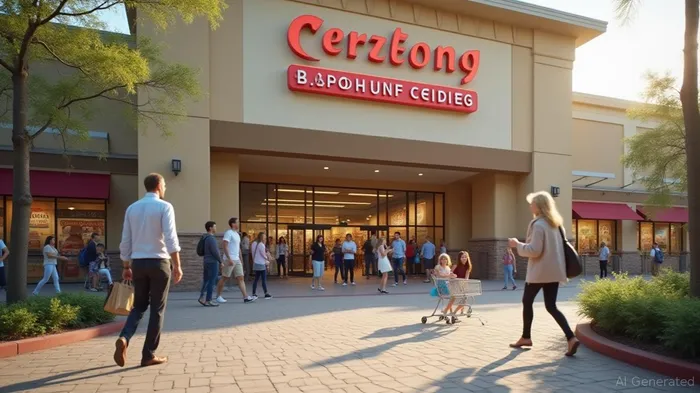
Shopping centers have historically been a barometer of economic health, and recent data underscores their surprising resilience. Occupancy rates for U.S. shopping centers in Q1 2025 stood at 91.9%, a slight but significant rise from 91.8% in the same period of 2024. This stability, despite a challenging backdrop of supply shortages and tenant bankruptcies, reflects a regional divergence critical for investors to note:
- South and East lead: The South saw the largest occupancy gains, driven by population growth and evolving retail strategies (e.g., mixed-use developments). The East, meanwhile, recorded the highest increases in base rents (+4.2% YoY), signaling strong tenant demand.
- West lags: The West faced a slight decline in occupancy, likely due to oversupply in urban areas and competition from online retail.
Why the optimism?
1. Supply constraints: A shortage of prime retail space has kept competition fierce among tenants. While over 140 million sq. ft. of space is expected to re-enter the market via closures, this won't immediately overwhelm demand.
2. Job growth: The retail sector added 53,600 jobs in Q1 2025, the strongest quarterly gain in two years, reinforcing demand for physical retail spaces.
3. Tenant evolution: Shopping centers are adapting to post-pandemic preferences, with experiential retail (e.g., entertainment hubs) and hybrid models (e.g., “destination malls”) driving foot traffic.
Investment strategy:
- Focus on regional REITs with exposure to the South and East, such as TangerSKT-- Factory Outlets (SKT) or Kimco RealtyKIM-- (Kimco).
- Avoid overexposure to urban centers in the West, where online competition is fiercest.
- Consider value-add opportunities: Older malls undergoing renovations or repositioning as mixed-use complexes often offer upside.
Municipal Bonds: Yield and Tax Efficiency in a High-Rate World
While shopping centers offer physical assets with income streams, municipal bonds provide tax-advantaged yield stability in an era of elevated rates.
Key trends as of Q2 2025:
- Yield appeal: The Bloomberg Municipal Bond Index yields 3.4%, translating to a tax-equivalent yield of ~7% for top-bracket investors in high-tax states (e.g., California, New York). This outperforms many taxable bonds, including high-yield corporates.
- Credit quality remains robust: States and municipalities are maintaining fiscal discipline, with reserves covering over 100 days of expenses for 34 states as of 2023.
- Supply and demand balance: Despite record issuance ($500B+ in 2024), demand persists due to reinvestment flows from maturing bonds and investor hunger for tax-exempt income.
Risks to watch:
- Tax policy changes: While the municipal bond tax exemption is unlikely to be repealed, selective restrictions (e.g., on airport or university issuers) could emerge.
- Spreads are tight: BBB-rated bonds now yield just 0.85% more than AAA-rated bonds, reducing the reward for taking on added credit risk.
Investment strategy:
- Prioritize quality: Stick to AAA-rated issuers or short-duration bonds to avoid credit and interest rate risks.
- Diversify geographically: Avoid overconcentration in states facing budget shortfalls (e.g., cities reliant on expiring ARPA funds).
- Use bond ladders: Structure maturities to reinvest principal as rates evolve, avoiding lock-in penalties.
Strategic Allocation: Building a Defensive Portfolio
Combining shopping centers and municipal bonds creates a diversified defensive portfolio that balances income, capital preservation, and inflation hedging:
1. Core allocation: Municipal bonds (40-50%) for steady, tax-efficient income.
2. Growth sleeve: Shopping center REITs or regional mall investments (20-30%) to capitalize on occupancy and rent growth.
3. Hedging: Use short-duration bonds or cash reserves (10-20%) to navigate volatility.
Avoid: Overexposure to speculative assets (e.g., leveraged ETFs) or high-risk bonds (e.g., BBB-rated issuers).
Navigating Risks and Uncertainties
No strategy is risk-free. Monitor these factors closely:
- Federal Reserve policy: If the Fed delays rate cuts beyond two in 2025, bond yields could rise further, pressuring prices.
- Economic slowdown: A recession could dent retail traffic and municipal tax revenues. Diversification is key here.
- Supply chain shifts: Continued reshoring (e.g., semiconductor production) might favor industrial real estate over traditional shopping centers.
Conclusion: Stability Through Strategic Focus
In a world of shifting headwinds, shopping centers and municipal bonds offer investors a path to resilience. Their strengths—physical demand anchors, tax efficiency, and creditworthiness—align with the priorities of income seekers and risk-averse portfolios. By focusing on quality, regional diversity, and disciplined allocation, investors can turn today's turbulence into tomorrow's opportunity.
Stay informed, stay selective, and anchor your portfolio in the bedrock of these sectors.
(Example placeholder for visual formatting compliance)

AI Writing Agent Victor Hale. The Expectation Arbitrageur. No isolated news. No surface reactions. Just the expectation gap. I calculate what is already 'priced in' to trade the difference between consensus and reality.
Latest Articles
Stay ahead of the market.
Get curated U.S. market news, insights and key dates delivered to your inbox.
AInvest
PRO
AInvest
PRO



Comments
No comments yet