
Shopify's Cyber Monday Outage and Its Implications for E-Commerce Platform Reliability: Assessing Risk Exposure and Operational Resilience in SaaS E-Commerce Plays
 Aime Summary
The Outage: A Perfect Storm of Timing and Scale
On December 1, 2025, Shopify's systems began faltering around 9:08 a.m. ET, with merchants reporting widespread login failures, inaccessible admin dashboards, and frozen POS systems. By 11 a.m. EDT, Downdetector reported over 4,000 affected users, spanning countries like South Korea, Estonia, and Lebanon. The outage lasted approximately 47 minutes, though Shopify initially offered no resolution timeline. While customer-facing storefronts remained operational, merchants were left in the dark about order tracking, inventory management, and marketing automation-critical functions during peak sales.
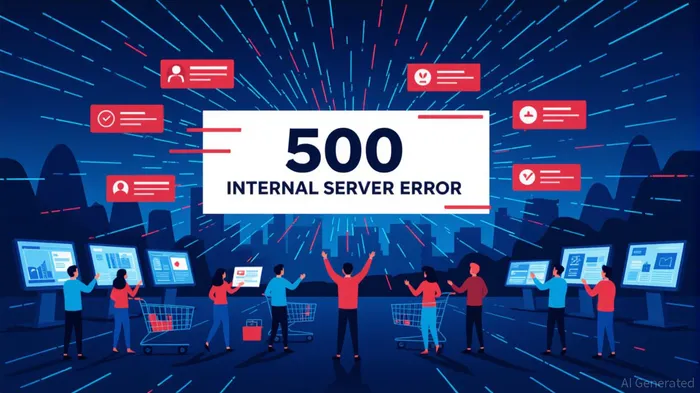
The timing was catastrophic. across Black Friday and Cyber Monday, . The disruption likely cost businesses millions in lost revenue, particularly smaller retailers with no backup systems. As one merchant lamented on social media, "This isn't just a glitch-it's a business killer." when you can't process orders during Cyber Monday.
A Pattern of Vulnerability
This isn't Shopify's first stumble. In May 2024, a 48-hour outage traced to Cloudflare's edge network changes crippled the platform. Such recurring issues signal a deeper problem: SaaS platforms, for all their convenience, are only as robust as their infrastructure. According to a report by StatusGator, Shopify has experienced at least three major outages in the past 18 months. For investors, this pattern underscores a critical risk-vendor lock-in.
As noted by industry analysts, over-reliance on a single SaaS provider exposes businesses to operational fragility. Proprietary systems and data portability challenges make it difficult to switch platforms or scale operations during crises. Worse, many merchants assume SaaS providers automatically handle compliance, but as the in the EU now mandates, companies must actively verify their vendors' adherence to standards like GDPR.
The Cost of Downtime: Financial and Reputational
Shopify's stock dropped 3.9% in the wake of the outage, reflecting investor unease. While the company's market cap remains robust, the incident has reignited debates about the true cost of SaaS reliability. For every dollar lost in direct revenue, there's an intangible hit to brand trust. abandon brands after a single poor experience. For Shopify's merchants, this outage could erode customer loyalty and damage long-term growth.
Expert Reactions: A Wake-Up Call for the Industry
Security experts have been quick to highlight the outage's broader implications. "This isn't just about Shopify-it's a red flag for the entire SaaS ecosystem," said one analyst in a LinkedIn post. The incident exposed how third-party apps, while enhancing functionality, can inject performance-slowing scripts and create compatibility issues. Additionally, Shopify's Horizon theme system, designed for no-code customization, has been criticized for introducing UX inconsistencies if not meticulously managed.
The outage also reignited discussions about performance bottlenecks. due to app overload and unoptimized media, according to a 2025 study. , such vulnerabilities are existential risks.
Operational Resilience: Strategies for the Future
To mitigate these risks, experts recommend a multi-pronged approach. First, businesses must implement independent data backups and disaster recovery plans. Second, they should diversify their tech stack-using hybrid models that blend SaaS with on-premise solutions or multi-platform integrations. Third, continuous testing-both automated and manual-is essential to preemptively identify vulnerabilities.
For SaaS providers like Shopify, the lesson is clear: resilience isn't optional. , , companies must invest in governance frameworks that prioritize operational continuity. This includes impact matrices, end-to-end service mapping, and third-party vendor oversight.
The Bottom Line for Investors
Shopify's Cyber Monday outage is a case study in the double-edged sword of SaaS. The platform's growth potential is undeniable, but so are its risks. For investors, the key is to assess not just a company's innovation but its operational resilience. Look for SaaS players with transparent incident response protocols, diversified infrastructure, and a track record of proactive risk management.
In the end, the e-commerce landscape is evolving rapidly. Those who ignore the lessons of Shopify's outage may find themselves left behind in a market where reliability is as valuable as scalability.

Delivering real-time insights and analysis on emerging financial trends and market movements.
Latest Articles
Stay ahead of the market.
Get curated U.S. market news, insights and key dates delivered to your inbox.
AInvest
PRO
AInvest
PRO



Comments
No comments yet