
From Shipwreck to Transformation: How Goldman Sachs' Exit Signals a New Era in Luxury Tourism Investing
The recent exit of Goldman SachsGS-- from its Greek hotel ventures marks more than a strategic retreat—it heralds a seismic shift in how institutional investors are recalibrating their approach to luxury tourism. After a three-year struggle with cost overruns, regulatory hurdles, and operational missteps, the Wall Street giant sold three Halkidiki resorts to the Sani/Ikos Group in 2025, effectively ceding its ambitious Mediterranean hospitality play. This move underscores a broader reckoning: in an era of rising capital costs and shifting consumer preferences, luxury tourism is no longer a playground for casual investors.
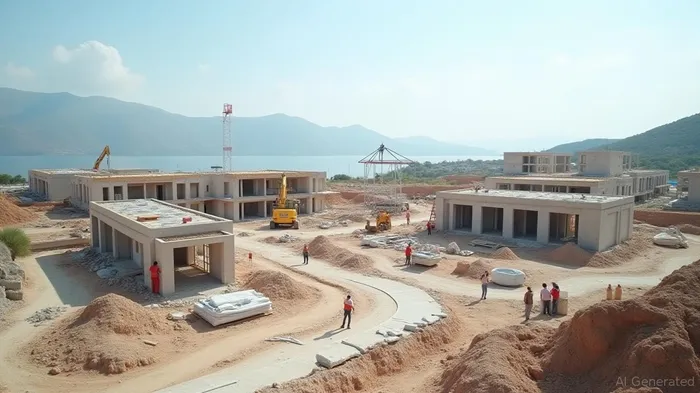
The Case of Goldman's Greek Venture: A Cautionary Tale
Goldman's 2022 acquisition of the Halkidiki resorts—Athos Palace, Pallini Beach, and Theophano Imperial—was framed as a bold bet on Greece's tourism potential. The plan called for transforming the properties into a luxury brand backed by €150–200 million in renovations. Instead, the project became a textbook example of overreach.
The pitfalls were manifold:
- Execution Gaps: GoldmanGS-- relied on an in-house team lacking local construction expertise, leading to delays and budget blowouts. Renovation costs soared to unsustainable levels, with estimates exceeding €300 million by 2024.
- Regulatory Headwinds: Permit approvals dragged on, exacerbated by Greece's bureaucratic inertia and environmental concerns over coastal development.
- Market Miscalculations: Post-pandemic demand for ultra-luxury resorts was slower to materialize, while investors grew wary of capital-intensive projects with long payback horizons.
The result? A sale at near-breakeven, with Goldman divesting all but a minor stake in Prodea, its Greek real-estate partner. Greek media dubbed it a “shipwreck”—a fitting metaphor for a venture that capsized under its own ambitions.
Luxury Tourism's Recovery: A Sector in Transition
The collapse of Goldman's venture arrives amid a paradox: luxury tourism is booming, but the path to profitability is narrowing. Post-pandemic demand for exclusive experiences has surged, with global luxury travel spending rebounding to pre-2020 levels by 2024. Yet this growth is uneven.
- Sustainability Mandates: Travelers now prioritize eco-friendly resorts, with 68% of high-net-worth individuals willing to pay premiums for carbon-neutral stays (Luxury Institute, 2024). Sani/Ikos' net-zero-by-2030 pledge positions it to capitalize on this trend.
- Operational Efficiency: All-inclusive resorts like Ikos Kassandra—where dining, spa access, and entertainment are bundled into room rates—are proving more profitable than traditional hotels. Their predictable revenue streams appeal to investors wary of volatile occupancy cycles.
- Geopolitical Risks: Supply chains for construction materials and labor remain fragile, favoring operators with local partnerships and scalable models.
Goldman's failure highlights a critical lesson: luxury tourism success now hinges not just on location, but on operational rigor and alignment with sustainability trends.
Strategic Asset Reallocation: The New Playbook for Investors
The Sani/Ikos Group's acquisition of the Halkidiki resorts offers a template for how institutional capital should be deployed in this sector. Backed by Singapore's GIC, the firm is injecting €400 million into the project—not to chase vanity assets, but to create a high-margin, repeatable model. Key takeaways:
- Focus on Scalable, Profitable Models: Ikos Kassandra's 750-room capacity and all-inclusive structure allow for economies of scale. Compare this to Goldman's fragmented approach, which lacked a replicable revenue engine.
- Leverage Local Expertise: Sani/Ikos' 30-year track record in Greek hospitality (including the iconic Sani Resort) insulates it from regulatory and cultural missteps.
- Align with Macro Trends: The resort's net-zero goals and partnerships with Thessaloniki Airport—set to expand by 2026—ensure it benefits from rising tourism infrastructure spending.
Investment Implications: Where to Deploy Capital Now
Goldman's retreat doesn't spell doom for luxury tourism—it signals a shift toward smarter allocations. Investors should prioritize:
- Sustainable Operators: Firms like Sani/Ikos, which embed ESG principles into their business models, will dominate.
- Infrastructure Plays: Airlines, airports (e.g., Thessaloniki's expansion), and rail networks in tourism hubs offer stable returns.
- Repositioned Assets: Look for distressed properties being acquired by seasoned operators at discounts. The Halkidiki sale hints at opportunities in Mediterranean markets where pricing has corrected.
Avoid:
- Greenfield projects in politically unstable regions (e.g., without local partnerships).
- Developers relying on “luxury” branding without operational depth.
Conclusion: The New Luxury Landscape
Goldman's exit isn't an outlier—it's a wake-up call. The era of speculative luxury tourism bets is ending. Investors must now seek assets that marry sustainability, scalability, and local expertise. The Sani/Ikos model—combining capital strength, operational know-how, and long-term vision—will define the winners in this rebalanced sector. For those willing to navigate the wreckage, the shores of Halkidiki may yet hold the next wave of luxury's promise.

Delivering real-time insights and analysis on emerging financial trends and market movements.
Latest Articles
Stay ahead of the market.
Get curated U.S. market news, insights and key dates delivered to your inbox.
AInvest
PRO
AInvest
PRO



Comments
No comments yet