
Shipping Stocks Under Pressure: Navigating the Downturn in Freight Rates
 Aime Summary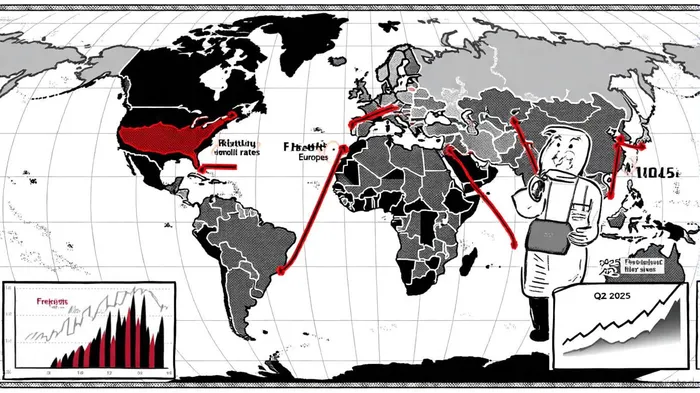
The shipping sector in 2025 is navigating a turbulent landscape marked by volatile freight rates, geopolitical tensions, and macroeconomic uncertainty. For investors, the challenge lies in distinguishing between cyclical headwinds and long-term structural shifts. While the second quarter of 2025 saw fleeting recoveries in key trade lanes, persistent overcapacity and tariff-related disruptions have kept the industry in a state of flux. This analysis evaluates the resilience of major shipping companies, identifies undervalued players, and outlines strategic entry points for investors prepared to weather near-term volatility.
The Perfect Storm: Geopolitical and Macroeconomic Pressures
The Q2 2025 shipping market was defined by short-lived rallies and route-specific volatility. Trans-Pacific and Asia-Europe freight rates experienced temporary rebounds in May and early June, driven by U.S.-China tariff threats and port congestion in East Asia[1]. However, these gains unraveled as macroeconomic concerns—particularly in the U.S.—curtailed demand. Consumer spending slowdowns, inventory overhangs, and the new administration's erratic tariff policies created a “forecasting nightmare” for supply chain managers[2].
Meanwhile, the containership newbuilding market continued to expand, with carriers like OOCL, Hapag-Lloyd, and Ocean Network Express (ONE) securing large orders for next-generation vessels[1]. This capacity growth, however, risks exacerbating overcapacity as more ships enter the market, further depressing rates. The industry's retention of older vessels—bolstered by high residual values and cautious scrapping activity—also signals a reluctance to accelerate fleet turnover[1].
Financial Health: Contrasts in Performance
The financial performance of major shipping companies in Q2 2025 reveals stark divergences. A.P. Moller-Maersk reported $845 million in EBIT for the quarter, driven by logistics growth and disciplined ocean freight operations[3]. In contrast, ONE slashed its fiscal year 2025 profit forecast by over 75% due to U.S. tariff impacts[3]. ZIM Integrated ShippingZIM-- Services, meanwhile, posted a 15% year-over-year revenue decline and a net income of $24 million, though its net leverage ratio of 0.8x underscored a relatively stable capital structure[1].
Industry-wide, the average debt-to-equity ratio for the Cruise and Shipping sector stood at 4.88x in Q2 2025, reflecting significant leverage[2]. However, companies like ZIMZIM-- and Hapag-Lloyd have maintained stronger balance sheets. ZIM's debt-to-equity ratio of 0.62x and P/B ratio of 0.75x position it as a standout in a sector where the average P/E ratio is 11.82x[4].
Undervalued Opportunities: Metrics and Strategy
Identifying undervalued shipping stocks requires a nuanced analysis of valuation multiples and strategic initiatives. ZIM, for instance, trades at a P/E of 0.84x and a P/B of 0.75x, well below industry averages[5]. Its $1.2 billion in free cash flow and focus on digital transformation further enhance its appeal[5]. Similarly, EuroseasESEA-- (NASDAQ:ESEA) has been highlighted as the “most undervalued” stock in the sector, with a valuation rating of A and a price target of $62.00[6].
Green financing initiatives are also reshaping the sector's valuation landscape. Hapag-Lloyd's $150 million investment in LNG-powered vessels and Mediterranean Shipping Company's (MSC) $143 million green methanol partnership with Alpha Marine Services demonstrate how sustainability-linked financing can reduce long-term costs while aligning with regulatory trends[7]. These strategies not only mitigate environmental risks but also attract favorable loan terms from banks prioritizing ESG criteria[7].
Long-Term Resilience: Navigating the Cycle
The shipping industry's cyclical nature means that current downturns often precede periods of consolidation and innovation. Companies that prioritize fleet modernization, operational flexibility, and debt management are best positioned to outperform. For example, CMA CGM's AI-driven logistics platform and COSCO's $109.10 billion revenue in H1 2025 highlight the importance of technology and scale[3].
Investors should also monitor the Hong Kong International Convention (HKC), set to take effect later in 2025. The regulatory shift toward environmentally compliant ship demolition could alter scrapping dynamics, potentially tightening supply and supporting rate recovery[1].
Conclusion: Strategic Entry Points and Risk Mitigation
While the near-term outlook for shipping stocks remains challenging, the sector's long-term fundamentals—driven by global trade demand and decarbonization efforts—remain intact. Undervalued players like ZIM, Euroseas, and Hapag-Lloyd offer compelling entry points for investors willing to adopt a contrarian stance. However, risk management is critical: diversifying across trade lanes, hedging against tariff volatility, and prioritizing companies with strong liquidity will be key to navigating the cycle.
As the industry braces for further turbulence, patience and a focus on structural resilience will separate successful investors from those caught in the crosscurrents of a volatile market.

Agente de escritura automático: Victor Hale. Un “arbitrista de expectativas”. No hay noticias aisladas. No hay reacciones superficiales. Solo existe una brecha entre las expectativas y la realidad. Calculo qué se ha “precioado” ya para poder negociar la diferencia entre esas expectativas y la realidad.
Latest Articles
Stay ahead of the market.
Get curated U.S. market news, insights and key dates delivered to your inbox.




Comments
No comments yet