
The Shifting Tides of U.S. Refining: Sector Rotation and Energy Market Dynamics in a Post-Pandemic Era
 Aime Summary
The U.S. refining sector has long been a barometer of energy demand, but the post-pandemic era has introduced a new layer of complexity. From 2023 to 2024, the Energy Information Administration (EIA) documented a robust recovery in crude runs, with utilization rates exceeding 90% as refineries adapted to surging global demand and domestic production growth. However, by December 2025, a stark reversal emerged: refinery crude runs fell for three consecutive weeks, signaling a structural inflection point. This shift is not merely a cyclical dip but a reflection of deepening sector rotation and the accelerating energy transition.
The Post-Pandemic Recovery: A House Built on Shifting Foundations
Between 2023 and 2024, U.S. refineries rebounded from pandemic-era disruptions, driven by expansions in the Gulf Coast and Permian Basin. The Beaumont refinery expansion, for instance, added critical capacity, while high utilization rates (90%+) underscored the sector's resilience. This period saw refining margins swell, particularly in the Midwest and West Coast, as outages created localized supply tightness. Yet, this recovery was always precarious. The underlying demand for refined products, especially gasoline and diesel, began to plateau as electric vehicle adoption and efficiency gains curbed consumption.
The 2025 Decline: A Structural Shift, Not a Cyclical Slump
By December 2025, the EIA reported a sustained decline in crude runs, with Gulf Coast utilization at 93.5% but East Coast utilization plummeting to 59%. This divergence highlights the sector's fragmentation. The Gulf Coast, with its export-oriented infrastructure and modern facilities, remains a powerhouse. In contrast, the East Coast struggles with aging refineries and the financial burden of decarbonization mandates, such as California's 2026 capacity cuts.
The decline is not just a function of policy but a symptom of broader energy market dynamics. The energy transition, once a distant threat, is now a tangible force. Renewable energy investments, such as those by Renewable Energy Group (REG) and NextEra Energy (NEE), are outpacing traditional refining capacity. Meanwhile, legacy refiners like LyondellBasell and Dow are pivoting to low-carbon technologies, signaling a sector-wide recalibration.
Sector Rotation: Where to Allocate Capital in a Fragmented Market
The refining sector's bifurcation creates asymmetric investment opportunities. Gulf Coast infrastructure firms, such as Kinder MorganKMI-- (KMI) and Schlumberger (SLB), are positioned to benefit from sustained high utilization and demand for maintenance and upgrades. These companies are also well-placed to capitalize on the region's export-driven model, which insulates them from domestic demand volatility.
Conversely, the East Coast and Midwest refineries face existential challenges. Aging infrastructure and regulatory pressures make these assets less attractive, though they may still offer value for investors with a long-term horizon and a focus on retrofitting opportunities.
Renewable energy players are another key beneficiary of sector rotation. Companies like REG and NEENEE-- are gaining traction as refining capacity in traditional fossil fuel sectors contracts. The EIA's data underscores a clear trend: capital is shifting toward sectors aligned with decarbonization goals.
Geopolitical and Macroeconomic Headwinds
The refining sector's challenges are compounded by global factors. OPEC+ production decisions and geopolitical crises continue to influence crude prices, which in turn affect refining margins. Refineries reliant on imported crude—particularly in the East Coast and Midwest—face exacerbated costs, further straining their competitiveness.
A prolonged decline in refinery throughput could also impact macroeconomic trends. Reduced gasoline price pressures may delay Federal Reserve rate hikes, creating uncertainty for investors. Airlines, automakers, and other energy-dependent industries are also feeling the ripple effects, with rising jet fuel and input costs squeezing margins.
Strategic Investment Recommendations
- Rebalance Toward Gulf Coast Infrastructure: Prioritize midstream and industrial plays like KMIKMI-- and SLB, which benefit from sustained utilization and export demand.
- Hedge Against Fuel Price Volatility: Airlines and automakers should adopt aggressive hedging strategies to mitigate margin pressures from rising jet fuel and input costs.
- Diversify Energy Exposure: Allocate capital to both traditional refiners adapting to the energy transition (e.g., LyondellBasell) and renewable innovators (e.g., NEE).
- Monitor EIA Data Closely: Weekly refinery runs and utilization rates are now critical leading indicators. A sustained decline in crude runs could signal broader sector distress.
Conclusion: Navigating the New Energy Normal
The December 2025 EIA data marks a pivotal moment in the refining sector's evolution. What was once a post-pandemic rebound is now a transition into a new energy paradigm. Investors who recognize this shift and align their strategies with the realities of declining crude runs, regional imbalances, and decarbonization mandates will be best positioned to thrive. The future of energy is not a binary choice between oil and renewables—it's a mosaic of sector rotation, innovation, and strategic foresight.
As the energy transition accelerates, the refining sector's role is evolving. For those with the insight to adapt, the opportunities are vast. For those who cling to the past, the risks are equally clear. The market is already moving—will you?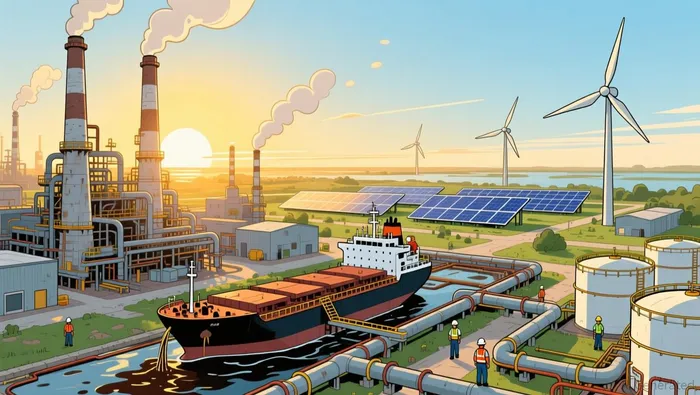

Stay ahead of the market.
Get curated U.S. market news, insights and key dates delivered to your inbox.
AInvest
PRO
AInvest
PRO



Comments
No comments yet