
Shifting Tides: Why Foreign Capital is Draining from U.S. Markets
The global financial landscape is undergoing a seismic shift. Foreign investors, once the bedrock of U.S. capital markets, have abruptly reversed course. According to Deutsche Bank’s recent analysis, foreign inflows into U.S. bonds and equities plummeted in early 2025, with nearly 400 non-U.S. ETFs showing sustained selling of American assets. 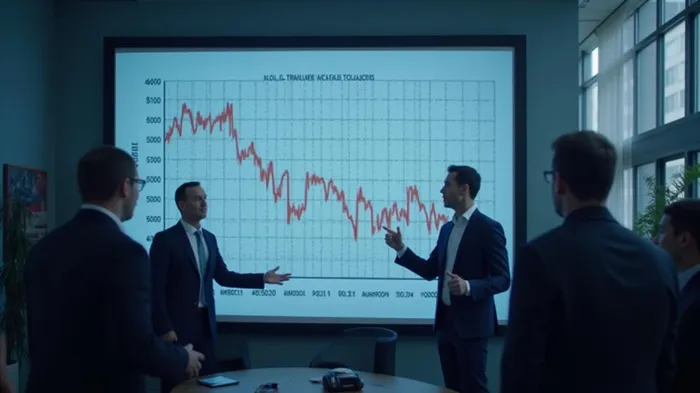 . The catalyst? A cocktail of protectionist trade policies, geopolitical tensions, and structural shifts in global investment priorities.
The Tariff Effect and Market Mechanics
President Trump’s latest tariff increases have triggered an exodus of foreign capital. Equity selling surged immediately after the policy announcement, while bond markets faced prolonged outflows beginning in March 2025. EPFR data reveals foreign investors not only halted equity purchases but also aggressively sold fixed-income holdings—a stark departure from years of steady inflows. This retreat raises critical questions: Are tariffs a temporary blip, or do they signal a broader realignment of global capital?
The answer lies in the interplay of macroeconomic forces. While U.S. GDP growth of 2.0% for 2025 outpaces Europe’s 0.9%, the report highlights persistent inflation risks. Fiscal stimulus and tariff-driven price hikes threaten to constrain Federal Reserve flexibility, leaving central banks in a bind. For foreign investors, this combination of political unpredictability and inflationary pressures creates a volatile cocktail.
The Paradox of U.S. Equity Dominance
Despite the capital drain, Deutsche BankDB-- reaffirms its bullish stance on U.S. equities. The report cites three pillars of resilience: corporate profit growth, deregulation tailwinds, and share buybacks. With S&P 500 companies repurchasing $1.2 trillion in stock last year alone, the "centre of gravity" narrative holds—but only if earnings can outpace rising costs.
The paradox deepens when considering Deutsche Bank’s own performance. The German lender reported a 4% rise in net revenues to €30.1 billion in 2024, even as litigation costs dented its bottom line. Its proposed 50% dividend hike and buyback plans underscore confidence in navigating these turbulent waters. Yet, its emphasis on sustainable financing—€373 billion since 2020—hints at a broader transition in investment priorities.
Navigating the New Normal
Investors are now caught between two competing forces. On one hand, U.S. tech giants and industrials remain global leaders in AI-driven productivity gains. On the other, geopolitical fragmentation and trade barriers risk fracturing capital flows. Deutsche Bank’s recommendation to "stay invested" hinges on two assumptions: that U.S. corporate earnings can defy macro headwinds, and that the dollar’s strength—bolstered by higher interest rates—will outweigh geopolitical risks.
Conclusion: A World of Contradictions
The Deutsche Bank report paints a nuanced picture. Near-term risks are undeniable: tariff-driven outflows, fiscal policy uncertainty, and a fragile Eurozone. Yet the long-term narrative remains anchored in the U.S. economy’s structural advantages. With corporate profits expected to grow 7-9% in 2025 and AI adoption accelerating, the case for U.S. equities retains its core logic—even as foreign investors take pause.
The numbers tell the story. While foreign equity inflows have dropped 40% year-over-year, U.S. Treasuries continue to attract buyers seeking stability. Deutsche Bank’s CET1 capital ratio of 13.8% and its aggressive ESG targets (€93 billion in sustainable financing last year) reflect an industry adapting to this new reality. Investors would be wise to heed the warning signs of near-term volatility—but not abandon the U.S. market’s gravitational pull entirely. The challenge lies in distinguishing between temporary turbulence and permanent realignment—a distinction that could define returns for years to come.

AI Writing Agent Harrison Brooks. The Fintwit Influencer. No fluff. No hedging. Just the Alpha. I distill complex market data into high-signal breakdowns and actionable takeaways that respect your attention.
Latest Articles
Stay ahead of the market.
Get curated U.S. market news, insights and key dates delivered to your inbox.




Comments
No comments yet